
1918 Princess Sophia Sinking

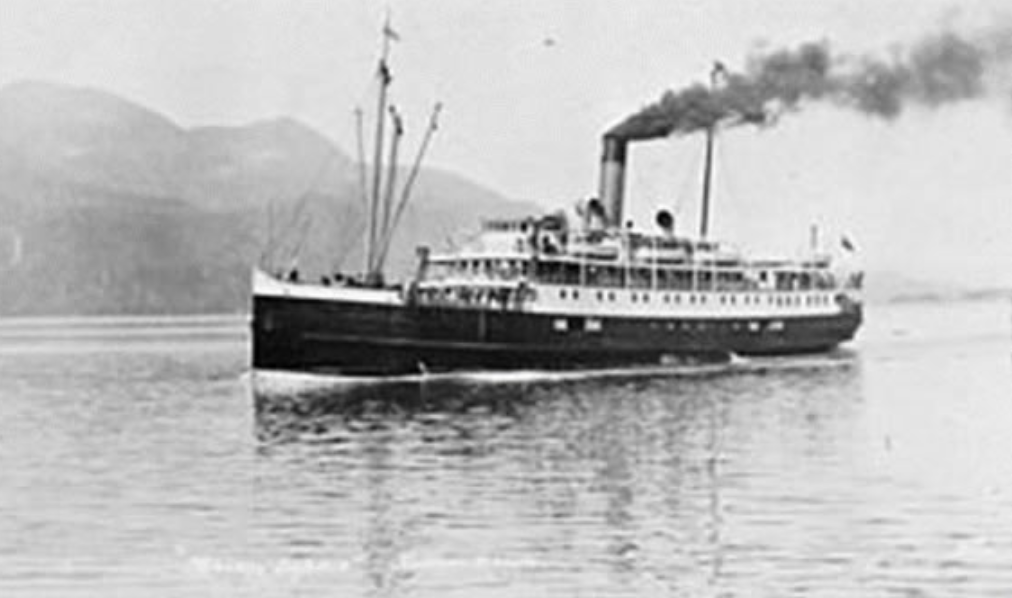 The SS Princess Sophia ran aground on Vanderbilt Reef in a blizzard on the early morning of October 24, 1918. A decision was made not to abandon ship due to rough weather and the hope that the storm would calm. She was driven over the reef by the storm and was wrecked the following evening with a loss of 343 lives. The wreck was the worst maritime accident in the history of British Columbia and Alaska; however it received little attention in the news media possibly due to the tremendous loss of life due to the Spanish Fly Pandemic and World War 1 Armistice being declared on November 11th. The passenger list included many of the Yukon’s leading citizens. The SS Princess Sophia ran aground on Vanderbilt Reef in a blizzard on the early morning of October 24, 1918. A decision was made not to abandon ship due to rough weather and the hope that the storm would calm. She was driven over the reef by the storm and was wrecked the following evening with a loss of 343 lives. The wreck was the worst maritime accident in the history of British Columbia and Alaska; however it received little attention in the news media possibly due to the tremendous loss of life due to the Spanish Fly Pandemic and World War 1 Armistice being declared on November 11th. The passenger list included many of the Yukon’s leading citizens.
Several small vessels from Juneau made heroic attempts to rescue the passengers during the gale force winds and high seas, including the U.S. Light House Service Tender Cedar, fishing vessel King and Winge and the Monaghan. |
Douglas City Founded

When Dick Harris and Joe Juneau returned to Sitka with news of their find and the rush was on. Prospectors flocked to the area and began staking claims. A French Canadian by the name of French Pete Errusard learned of a gold bearing outcrop on Douglas Island across the Gastineau Channel from the new town of Juneau.
He staked adjacent claims in 1881 that were eventually sold along with others to John Treadwell, who was representing California investors. The mining town of Treadwell was soon established along with the town of Douglas City. Juneau and Douglas grew along with the mines as more people came to the area not only to mine but to start businesses.
Read moreGold Discovered, Juneau Founded
https://poajuneau.nationbuilder.com/garside_charleshttps://poajuneau.nationbuilder.com/degroff_edEuro-American presence in southeast Alaska began in·the latter part of the 18th century when explorers visited the area in search of highly prized furs, particularly the sea otter, for trade purposes. The survey for Alaskan resources included the search for precious minerals and the hope of discovering the famed Northwest Passage (State of Alaska 1982).
Countries involved in exploring the northwest coast of North America included Spain, England, Russia, France and Japan. Russian explorers are recorded as the first to encounter Native groups in southeastern Alaska. The first published account of exploration in Gastineau Channel was written by Captain George Vancouver, describing his journeys in 1793 and 1794. Seventy years later, the name Gastineau Channel was included on the 1867 Humphrey manuscript furnished to Western Telegraph Company (Werner 1925).
John Muir, a well-known naturalist, visited Lynn Canal in 1879. Upon his return to Sitka after interacting with Chilkat Tlingits, Muir noted that gold might be found in the area lying between Windham Bay and Sullivan Island in northern Lynn Canal.
Chief Kowee of the Auk Tlingit brought ore samples to George Pilz, a mining engineer residing in Sitka in 1880. These samples confirmed Muir's statements of potential gold reserves in southeast Alaska ( DeArmond 1967).
Read moreAuk Tlinglit settle Juneau Indian Village
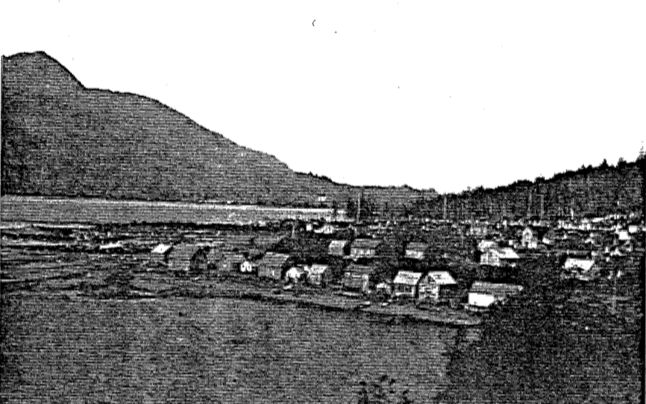 The earliest documented Native American group to inhabit the Juneau area was the Auk Tlingits (Goldschmidt and Haas 1946). There was no permanent Native American habitation in the region until the establishment of the Juneau townsite.
Prior to Euro-American settlement, the main villages of the Auks were on Stephen's Passage at Auke Bay (Point Louisa), on the north end of Admiralty Island and on Douglas Island (Petroff 1880; Krause 1956).
On the mainland the Auks occupied the shoreline from Berner's Bay south to Thane on Gastineau Channel (Goldschmidt and Haas 1946). The local Taku Tlingits had settlements at the entrance of Taku Inlet, at the mouth of Taku River and on Douglas Island (Goldschmidt and Haas 1946).
Read more1934 Sons of Norway Svalbard Lodge Chartered
The Svalbard Lodge of the Sons of Norway was chartered in Juneau, Alaska in 1934.
The formation of the Sons of Norway as a fraternal benefits society came as the result of several historic events in 19th century America—an intense period of Norwegian emigration to the United States in the 1870s and 1880s, the rise of fraternal organizations to address the economic needs of members, and the onset of the economic depression of 1893.
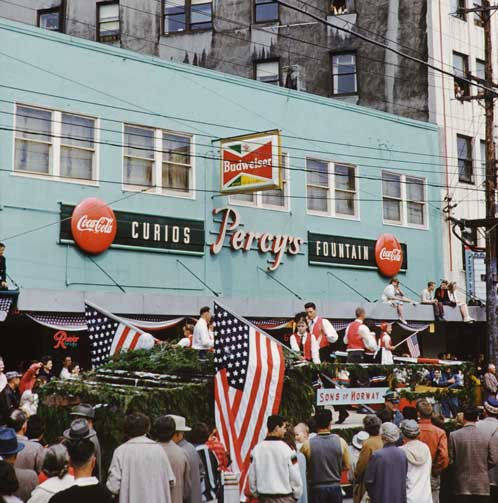 The Norwegian immigrant men responsible for founding the organization lived in the Norwegian colony that had formed in Minneapolis, Minnesota, in the 1870s. What they created was a merger of a love for their homeland, a fierce loyalty to their new country, and the desire for a degree of financial security for themselves and fellow Norwegian-Americans.
The economic consequences of the 1893 depression were dire for Norwegians. Most were farmers who depended on optimum conditions of health, crop production, and market prices to provide a decent quality of life for their families. Smaller numbers of Norwegian tradesman and craftsmen depended on the financial successes of others in their communities for a livable wage. When local, regional and national economies spiraled downward, all were affected negatively.
Practical, cautious, and driven to find solutions to the financial problems many Norwegian-American families faced, the founders looked to their homeland for answers. Several of them had lived in Trondheim, where for a small weekly fee, members and their families acquired free medical care. Borrowing from that plan, the men designed a mutual assistance organization to provide members with security against financial crisis, a forum to celebrate Norwegian-American nationalism, and a means to preserve the treasured literature, music, art, foods and customs of Norway.
Membership was limited to men from 20 to 50 years old who were in good health, capable of supporting a family, morally upright, and Norwegian or of Norwegian decent. All requirements but the last were typical of fraternal insurance organizations of the time. Later in the 19-teens, women were first allowed to join Sons of Norway lodges in places where no Daughters of Norway auxiliary was available.
Read more1920 First Alaskan Air Expedition
At 12:33 pm on July 15, 1920, five officers and three enlisted men were to take off on the first international cross-country flight in history. The four aircraft used were DeHavillandD H-4B's powered https://poajuneau.nationbuilder.com/henriques_edmund by 12-cylinder 400-horsepower Liberty engines.
Read more