
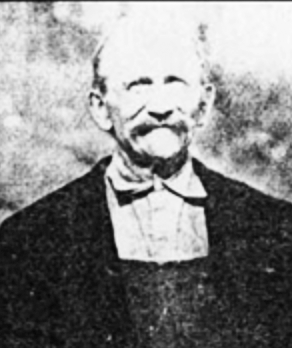
Primary Name: Pilz, George
Filed as: Pilz, George
Also known as: George Pilz
Occupation / Association: Mining engineer; prospector; Alaska mining promoter
Associated places: Saxony, Germany; Freiberg, Germany; Sitka, Alaska; Silver Bay, Alaska; Juneau, Alaska; Chilkoot Pass, Alaska; Dawson, Yukon; Katalla, Alaska; Chitina, Alaska; Forty-Mile region, Alaska; Eagle, Alaska; San Francisco, California; Michigan copper range
Keywords: George Pilz, Alaska mining engineer, Freiberg Mining Academy graduates, Silver Bay lode gold Alaska, Juneau gold discovery promoters, Joe Juneau prospecting party, Richard T Harris prospecting party, Auk Chief Kowee samples, Chilkoot Pass exploration, early Alaska mining development
Biography
George Pilz, one of the first professional mining engineers to work in Alaska, became a leading figure among the miners who entered the territory during the first decades following the United States purchase of Alaska.
Pilz was born in Saxony and educated at the renowned Mining Academy at Freiberg. After working on coal exploration in Germany, he left the country in 1867 to avoid conscription during the Franco-Prussian War.
Initially, Pilz investigated mining prospects in Canada and the United States for a German-owned company. He later left that position to work for the Calumet and Hecla Mining Company at Hancock in Michigan’s copper range. In 1869, he departed Michigan to erect a copper smelter in California.
During the following decade, Pilz worked throughout California, Arizona, and Nevada prospecting, developing mines, and erecting mills and smelters. His reputation for blunt and often cantankerous competence assured him steady employment, though it also kept him moving frequently from project to project.
In 1878, Pilz met Nicholas Haley in San Francisco. Haley, who had previously been stationed with the United States Army in Sitka, possessed rich gold-quartz specimens taken from the Stewart and other lodes near Silver Bay south of Sitka. Pilz initially suspected the samples originated from California’s Grass Valley district, but discussions with army officers and soldiers convinced him that the specimens truly came from Alaska.
Pilz secured financial backing and, in February 1879, traveled to Alaska to construct a mine and mill at Silver Bay. Gold processed by his five-stamp mill became the first lode gold produced in Alaska. The mine closed early in 1880 when the deposit proved too low-grade to sustain operations, though later events would vindicate Pilz’s belief that the region held significant mineral potential.
Seeking additional discoveries throughout Southeast Alaska, Pilz enlisted the assistance of several Tlingit communities, who supplied mineral samples from different areas. Pilz then dispatched experienced prospectors to investigate these reports, including Alaska Mining Hall of Fame inductees Joe Juneau and Richard T. Harris.
One of Pilz’s prospecting parties helped open Chilkoot Pass, which later became the principal gateway to the Klondike gold fields. The route was opened after Navy Captain Lester Beardslee negotiated with the Chilkat Tlingit to allow freighting through the pass.
Among the most promising samples received by Pilz were brought by Alaska Mining Hall of Fame inductee Auk Chief Kowee, who lived on Admiralty Island near the site of the modern city of Juneau. These specimens likely originated from the Gastineau Channel area.
Acting on Pilz’s direction, Harris and Juneau made their discovery in early October 1880 in Silver Bow Basin above present-day Juneau. Their earlier trip had taken them to Gold Creek, where they found promising placer gold and quartz fragments containing gold.
A grubstake agreement arranged by Pilz allowed Harris and Juneau to stake placer claims for themselves while granting Pilz a majority interest in the lode claims on a three-to-one basis.
After confirming the discovery in Silver Bow Basin, Harris and Juneau returned to Sitka, where Pilz joined them. Satisfied that the claims had been properly staked, Pilz approved the work and helped promote the new mining district. News of the discovery sparked a rush to the area in December 1880.
Controversy later arose involving N. A. Fuller, a Sitka merchant who had been connected with Pilz’s operations. Pilz maintained that Fuller acted only on his behalf, but the matter eventually resulted in a lawsuit in Sitka in 1886 in which Fuller obtained judgment against Richard T. Harris.
At the time, Pilz might have aided Harris, but was imprisoned in San Francisco, awaiting trial on a fraud charge he always denied. Despite later disputes between the two men, contemporary correspondence shows Pilz regarded Harris as one of his closest associates during the early Juneau mining period.
Miners from Juneau even sent gold dust to San Francisco to help Pilz post bail. The episode reflected the complicated and often contentious nature of Pilz’s career.
Pilz also likely erected the first prefabricated building in Alaska, constructing a pre-built house in Sitka. On February 7, 1881, he chaired a miners’ meeting that adopted revised mining district rules for the Harris district. He was also involved in organizing and platting the early town that became Juneau, then known as Rockwell or Harrisburg.
In later years, Pilz continued working in mining ventures across North America. He was reported in Dawson in 1906, at Katalla in 1907, working on coal projects, and in Chitina in 1911. He later spent many years in the Forty-Mile region.
George Pilz died in Eagle, Alaska, on September 15, 1926, remembered as a brilliant but often combative pioneer mining engineer who played a key role in the discovery and early development of the Juneau gold district.