
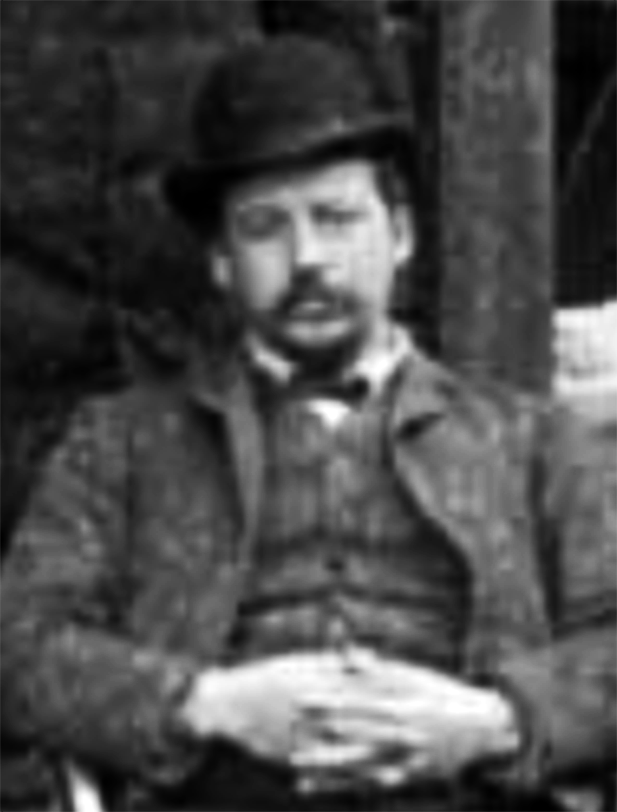
Primary Name: Treadwell, John
Filed as: Treadwell, John
Also known as: John Treadwell
Occupation / Association: Mining entrepreneur; founder of the Treadwell Mine operations on Douglas Island
Associated places: Douglas Island, Alaska; Gastineau Channel, Alaska; Juneau, Alaska; San Francisco, California; St. Andrews, New Brunswick, Canada
Keywords: John Treadwell, Treadwell Mine, Alaska Mill and Mining Company, Alaska Gold Mining Company, Douglas Island mining, Gastineau Channel gold mining, Alaska territorial mining history, Treadwell mining complex, Alaska mining pioneers
Biography
John Treadwell, a California carpenter with a background in mining, prospected, explored, developed, and operated Alaska’s first successful large-scale, low-grade gold mine. His work played a major role in stimulating the economy of the Territory of Alaska and advancing large-scale industrial mining in the United States during the late nineteenth century.
Treadwell was born in St. Andrews, New Brunswick, Canada. In 1881, he was building a house in California for a prominent banker when news arrived of a promising gold prospect across the Gastineau Channel from Juneau, Alaska, on Douglas Island. The banker, John Fry, suggested that Treadwell travel north to examine the property.
Initially unimpressed with the deposit, Treadwell planned to return to San Francisco. While waiting for a ship, however, he met a French-Canadian prospector who described the claim but was financially unable to develop it. Treadwell purchased the claim sight unseen for $400. Assay results later proved encouraging, prompting him to organize a mining venture with Fry and an associate.
In May 1882, he returned to Alaska with a five-stamp mill and formed the Alaska Mill and Mining Company. Early operations demonstrated that the deposit could be profitable if worked on a much larger scale. The experimental mill was replaced with a 120-stamp mill in 1883, and in 1887, another 120 stamps were added.
These developments marked the beginning of the Treadwell mining complex, which eventually grew into a system of four mines and five mills. Together, they produced nearly $70 million in gold. At peak capacity in 1914, the combined mills operated 960 stamps, crushing approximately 5,000 tons of rock per day—then a world record—with an average value of about $2.50 per ton.
Approximately 2,000 men worked eight-hour shifts seven days a week, 363 days per year, with only Christmas and the Fourth of July as holidays. By 1920, miners’ wages averaged about $100 per month, among the highest in the world at the time.
The mining camp that grew around the operation developed into a substantial community known as Treadwell. During its forty-year evolution, it expanded from a single claim into a thriving town with stores, bunkhouses, mess halls, recreational facilities, and even a marching band and natatorium.
Treadwell himself sold his interests in 1889 to the Alaska Gold Mining Company for a reported $1.5 million. His success attracted additional investment and settlement to Alaska and brought national attention to the region’s mineral resources. The industrial methods used in the Treadwell operations helped shape modern hard-rock mining practices.
Mining operations ended in 1917 when caving and flooding destroyed large sections of the Treadwell mines. Afterward, Treadwell briefly pursued coal development projects in western Alaska, though these ventures proved unsuccessful. Later, he became involved in banking, but the bank eventually failed, and he filed for bankruptcy.
Sources
Telephone Hill Historic Neighborhood
Alaska Mining Hall of Fame