-
Williams, Harry H.
Primary Name: Harry Williams
Filed as: Williams, Harry
Associated places: Alaska; Juneau, Alaska
Occupation / Association: Miner
Affiliation: Charter Member, Juneau Men's Igloo
Keywords: Alaska mining history, Juneau miners, early Alaska settlers, Pioneers of Alaska
Biography
Harry Williams was a charter member of the Juneau Men's Igloo.
Williams came to Alaska in 1889 and worked as a miner.
Sources
- Pioneers of Alaska Men’s Igloo No. 6 Biographical Sketch
-
Wilson, Alex
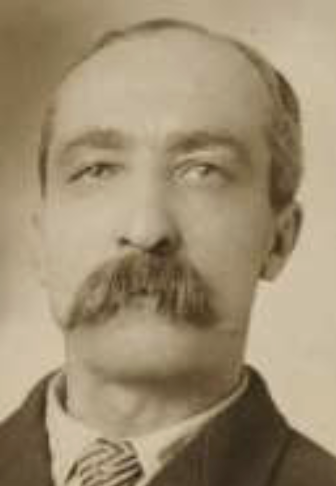 Alex Wilson was a charter member of the Juneau Men's Igloo.
Wilson was born in Oulu, Finland, on April 25, 1879. He came to the United States in 1895.
He arrived in the Copper River region in 1898 and first came to Juneau in 1902.
During his years in Alaska, he lived in Cordova, Fairbanks, Douglas, and Juneau, working as a fisherman and miner.
Source
Pioneers of Alaska Men’s Igloo No. 6 Biographical Sketch
-
Winkie, John
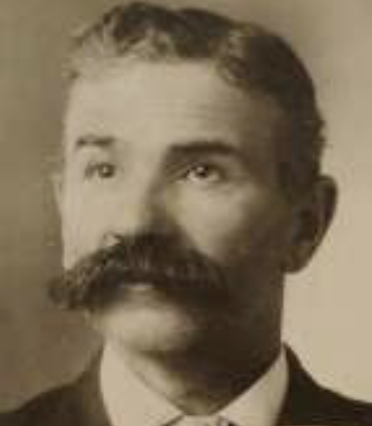 John Winkie was a charter member of the Juneau Men's Igloo.
In the passing of John Winkie early one morning at St. Ann’s Hospital, Alaska lost another true pioneer. He was a personal friend of many of the early pioneers of Juneau, including, among others, S. Zynda, B. M. Behrends, and Charles W. Carter.
John Winkie was born in Scotland in 1865. He left there with his parents and settled in Michigan. In 1883, he went to California, where he was employed on a farm.
At the age of twenty, Alaska lured him north, and he arrived in 1886. From that time, he was employed in various mining camps as a steward and cook, and for the fifteen years prior to his death, he worked at his occupation at Chichagof.
In August of his final year, he came to Juneau because his health had begun to fail. At that time, he prepared his will and entrusted it to Howard D. Stabler. About a month later, he entered St. Ann’s Hospital, where he remained until his death.
Sources
The Alaska Press, December 14, 1934
Biographies of Alaska-Yukon Pioneers 1850-1950, Vol. 5, p. 296, Ed Ferrell (May 1, 2004)
-
Winn, William M.
Colonel William M. Winn was a charter member of the Juneau Men's Igloo.
William Winn was born in February 1855 in Wiota, Wisconsin. He came to Alaska in 1889, where he worked as a druggist.
In Wisconsin, an unknown partner bore him three sons: John E. Winn, born in December 1882; and twins Milton Winn and Grover C. Winn, born in January 1886.
He married Sarah Anna Winn on December 10, 1892, in Woodford, Lafayette County, Wisconsin. They came to Juneau in 1893. Their son, Burdette A. Winn, was born on March 21, 1896, in Juneau.
William Winn died on April 5, 1914, at the age of 66.
1910 U.S. Federal Population Census; Douglas Island News, April 8, 1914; Daily Alaska Empire, April 5, 1934.
-
Winn, Grover C.
Grover Winn was a charter member of the Juneau Men's Igloo.
Winn was born Jan. 3, 1886 in Wiota, Wisconsin, the son of William C. and Mary Elizabeth (Melbourn) Winn. Grover came to Alaska with his parents and brothers John and Milt. The record is not clear but at some point Grover’s mother died and his father married Sarah Anna Melburn born in Wiota. This union produced a son, Burdette.
Grover attended school in Juneau and was one of the two first high school graduates. As a student at the University of Washington, Winn was a member of the Delta Chi fraternity and of the Fir Tree Society, historic athletic honorary society.He completed the law course at the University of Washington in 1910 and upon returning to Juneau, served as U.S. Commissioner for several years, first taking office at the youthful age of 25, under Judge Thomas R. Lyons.
On February 17, 1912, Grover Winn and Bessie Louise Anderson were married. Children born to this marriage were William, Suzy and Barbary.
Many offices have been held by Mr. Winn during his years of residence, including service for 22 years as a member of the Juneau School Board. He has served as Speaker of the House and has practiced law in Juneau for more than 30 years. For the last several years he has acted as city magistrate.
Grover Winn died in Sitka, Alaska by accidental drowning in Swan Lake on May 18, 1943.
-
Winn, Slim Jim
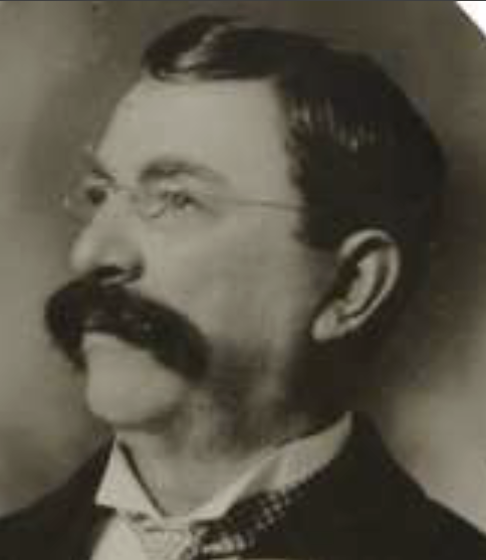 James “Slim Jim” Winn was a charter member of the Juneau Men's Igloo.
Winn was born in Cornwall, England, in 1840. He came to the United States while still a young man. In 1872, he went to the Cassiar mining district by way of Wrangell and Telegraph Creek.
He arrived in Juneau in 1882 and was reportedly the first white man to cross the Chilkoot Pass. He was accompanied on that trip by John McKenzie.
He was also said to be the first white man to run the Five Finger Rapids and other rapids of the upper Yukon River.
During his residence in Juneau, he was engaged in mining and prospecting. He made his home in Juneau continuously, with the exception of a trip to the interior in 1895, when he traveled down the Yukon River and returned by way of the coast, catching a trading vessel south from the mouth of the Yukon.
He held interests in real estate and mining property in Juneau and the surrounding area.
James Winn died in Juneau on August 24, 1916.
Anchorage Daily Times, August 24, 1949; Biographies of Alaska-Yukon Pioneers 1850–1950, Vol. 4, Ed Ferrell, p. 342 (May 1, 2009).
-
Winter, Lloyd Valentine
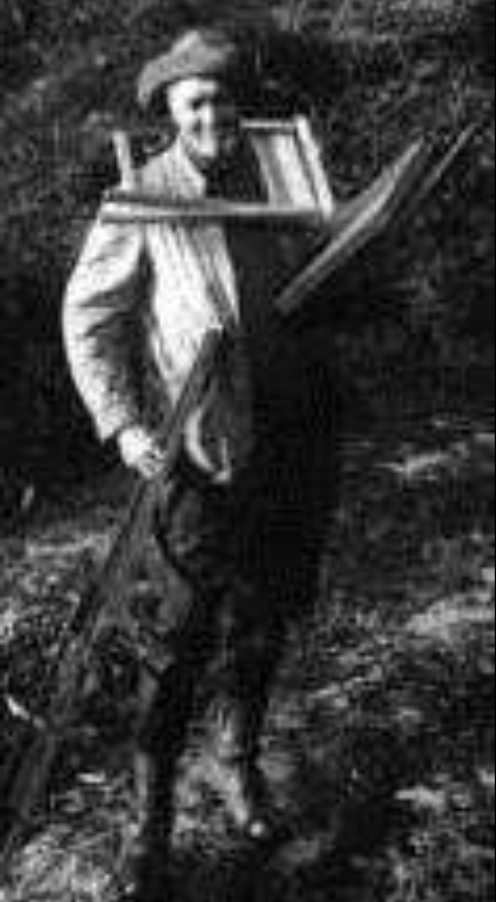 Lloyd Valentine Winter was a charter member of the Juneau Men's Igloo.
Alaska history enthusiasts familiar with outstanding archival photography will recognize the studio name Winter & Pond.
During careers spanning more than fifty years, Lloyd V. Winter (1866–1945) and Edwin Percy Pond (1872–1943) compiled a vast catalog of photographs depicting the people and places of the North, particularly in Southeast Alaska and the Klondike.
San Francisco artist Lloyd Valentine Winter was the fourth of five children born to Englishman Robert Winter, an artist and “picture dealer,” and his wife, Josephine of Maryland.
The Winters encouraged their children’s talents in art, music, and trades. Their eldest daughter Emma became a music teacher; William worked as a plumber; Charles and Lloyd attended school; and the youngest child, Henry, was born when Josephine was in her forties and Robert in his fifties.
According to the 1880 federal census of San Francisco, when Lloyd was fourteen, the Winter family shared a home with Edward Gage, a forty-year-old man who worked in a photographic gallery. This exposure may have influenced Lloyd’s later career.
Winter arrived in Juneau in March 1890 and soon partnered with photographer George M. Landerkin. Together, they established the Landerkin & Winter Studio, a partnership that lasted until 1893, when Winter’s longtime friend, Percy Pond, arrived in Juneau.
In 1894, Pond purchased Landerkin’s interest, and the Winter & Pond Studio was formed. The business expanded beyond portrait photography to include Alaska curios, special-order photography, and commercial assignments.
Unlike many photographers of their time who worked only during the summer months, Winter and Pond remained in Alaska year-round. Their subjects included Tlingit families arriving for potlatches, miners pausing along the trail with their sleds, workers laying the Juneau-Skagway telegraph cable, and Chilkat dancers wearing ceremonial regalia.
The Winter & Pond photograph collection—now held at the Alaska State Library in Juneau—contains numerous early images of Juneau, the Klondike Gold Rush, local celebrations, and mining activity.
Winter’s ability to speak a Native language proved useful when the pair secretly observed a Haida dance ceremony in 1894. When they were discovered, the dancers warned them that it was a private ceremony meant only for Haida participants. Over time, the two photographers were adopted into the tribe, and each was given a Native name. Winter was called Kinda, meaning “winter,” while Pond was given the name Kitch-ka, meaning “Crow Man.”
The photographers’ work documenting Alaska Native communities before, during, and after the Klondike Gold Rush contributed significantly to Alaska Native cultural studies. Their long association with Tlingit communities allowed them to learn about traditional practices and cultural history.
Winter and Pond published several works on Alaska Native subjects. Anthropologist Edward L. Keithahn, author of the 1945 book Monuments in Cedar, acknowledged them as a source of information about the early Chilkat people.
Winter personally followed the Trail of ’98 into the Yukon during the winter of 1897–1898, producing stereographic images for Underwood & Underwood and providing readers of Leslie’s Weekly with photographs of Gold Rush activity. Winter & Pond were also named the official Alaska photographers for the Alaska-Yukon-Pacific Exposition held in Seattle in 1909.
Both men were active in the Juneau community. They volunteered with the Juneau Fire Department, Hose Company No. 1. In 1915, Winter served as Patron of the Order of the Eastern Star, Juneau Chapter No. 7.
Pond married a woman named Hattie, who appears in several photographs from the Winter & Pond collection, and the couple raised a family.
Between 1915 and 1925, the Winter & Pond Company also owned and operated mining claims near Juneau. Photographs documenting their mining activities are preserved in the Alaska State Library archives.
The partnership ended when Percy Pond died at age seventy-one on June 1, 1943. He was buried four days later in the Pioneer section of Evergreen Cemetery in Juneau.
Lloyd V. Winter died in November 1945 at age seventy-nine and was buried on November 13 in the Masonic section of the same cemetery.
Earlier that year, Winter had transferred ownership of the Winter & Pond Company to Francis Harrison, who continued operating the business until 1956.
Today, images from the Winter & Pond studio appear on the walls of the Alaska State Capitol building in Juneau and in public and private collections across the country. The Alaska State Library in Juneau holds the bulk of the Winter & Pond Collection—approximately 3,000 images dating from 1893 to 1943.
Source
University of Alaska Anchorage, Lite Site Alaska — article by Tricia Brown
-
Wolland, Folquart

Primary Name: Folquart Wolland
Filed as: Wolland, Folquart
Born: March 20, 1847 – Inderøy, Nordre Trondhjem Stift, Norway
Associated places: Inderøy, Norway; Milwaukee, Wisconsin; Mishawaka, Indiana; Chicago, Illinois; Tacoma, Washington; Sitka, Alaska; Skagway, Alaska; Juneau, Alaska
Occupation / Association: Businessman; civic leader
Affiliation: Charter Member, Juneau Men's Igloo No. 6
Keywords: Norwegian immigrant, Skagway City Council, Juneau City Council, Alaska civic history, Pioneers of Alaska
Biography
Folquart Wolland was a charter member of the Juneau Men's Igloo.
He was born on March 20, 1847, in Inderøy, Nordre Trondhjem Stift, Norway. He was raised and educated in the Lutheran Church.
At the age of twenty-two, he emigrated to the United States. On May 1, 1869, he boarded a steamer at Trondhjem, Norway, bound for England. After arriving at Shields, he traveled through Newcastle and Glasgow and then crossed the Atlantic aboard the Cambria, landing at Castle Garden, New York, on May 20, 1869.
He then traveled to Milwaukee, Wisconsin, where he first settled and began learning English while working for low wages. After about a year and a half, he moved to Mishawaka, Indiana, and later to Chicago, Illinois, where he obtained his citizenship papers. He lived in Chicago during the Great Fire of 1871 and suffered losses in that disaster.
In 1876, he began traveling westward, working in various towns and cities before arriving in California in the early part of 1883. A year later, he moved to Tacoma, Washington, where he entered business and acquired property. The economic collapse of 1893 affected his business there.
Wolland came to Alaska in the summer of 1895. During the following three years, he made two trips back to the States, but after 1898, he remained continuously in the Territory. Sitka was his first stop.
In 1899, he moved to Skagway, where he established a small business. Active in civic affairs, he was elected to the Skagway City Council in 1902 and served two terms. He was instrumental in the development of the city's water system and the establishment of official street grades.
In 1904, he moved to Juneau and was elected to the Juneau City Council, serving three terms.
Sources
- Pioneers of Alaska Men’s Igloo No. 6 Biographical Sketch
- The Founding of Juneau, R. N. DeArmond, 1980, p. 174
-
Yo, Will E.D.
Will E.D. Yo was a charter member of the Juneau Men's Igloo.
-
York, Steven E.
Captain Steven York was a charter member of the Juneau Men's Igloo.
York was born in July 1861 in Michigan. He came to Alaska in 1887 where he worked as a sea captain and was 2nd Mate on the Steamship Georgia.
He lived in Juneau for about 25 years and owned and operated the vessel Sea Lion which ran between Juneau, William Bay, Kake and way ports.
At the time of his death, York was employed as 1st Mate on the Grand Trunk freighter Tillamook. He was struck on the head by a sling load of fish that was being unloaded at one of the canneries. York was brought to Juneau where he died about two weeks later at St Ann’s Hospital on August 14, 1919.
1900 U.S. Federal Population Census, 1910 U.S. Federal Population Census, Daily Alaska Empire, August 14, 1919, Douglas Island News, August 15, 1919
-
Historic Pioneers W-Z
Primary Name: Jack Zavodsky
Filed as: Zavodsky, Jack
Also known as: John Zavodsky
Born: May 16, 1864 – Bohemia
Died: February 17, 1951 – Chicago, Illinois
Occupation / Association: Bartender; cook; hotel worker; night patrolman
Associated places: Juneau, Alaska; Circle City Hotel; Occidental Hotel; Seattle, Washington; Chicago, Illinois
Organizations: Juneau Men’s Igloo
Keywords: Circle City Hotel, Occidental Hotel, introduction of cocktails in Alaska, Juneau pioneers, Alaska Gold Rush era
Biography
Jack Zavodsky was a charter member of the Juneau Men’s Igloo.
Zavodsky was born in Bohemia on May 16, 1864. He came to the United States in 1889 to join his father on a farm in Kansas.
At age fourteen, he had run away from home to Wild Horse, Colorado, where he worked as a railroad section hand. He later returned to Kansas and eventually made his way west to the Pacific Coast, working as a cook and bartender.
Zavodsky arrived in Juneau aboard the steamer Alki in 1896 and went to work at the Circle City Hotel, owned by George Miller and Lockie MacKinnon, where he worked in the dining room and kitchen.
According to local accounts, Zavodsky introduced the cocktail to Alaska. When a patron asked for a cocktail in the hotel bar, Jack stepped behind the bar and asked what kind he preferred. “Make it any kind,” the man replied. Zavodsky mixed a whiskey cocktail, and it quickly became popular among other patrons.
George Miller later made him head bartender until Jack Olds, owner of the Occidental Hotel, hired him at $60 per month plus room and board.
Zavodsky spent several years working for Juneau businessmen as a night patrolman for business houses.
He left Juneau around 1941, moving first to Seattle and later to Chicago. Zavodsky died at St. Anthony’s Hospital in Chicago on February 17, 1951.
Sources
- Daily Alaska Empire, February 23, 1951.
-
Dorene Lorenz published Jualpa Mining Camp in Historic Districts and Places 2023-10-22 21:51:59 -0800
Jualpa Mining Camp
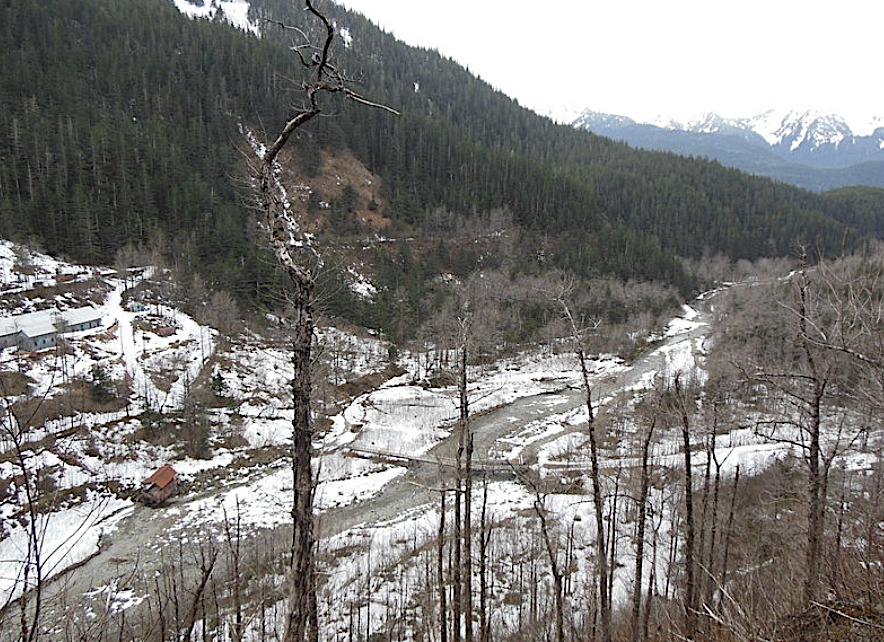
Jualpa Mining Camp is located in Last Chance Basin which is part of the Gold Creek District, one of six mining districts in southeast Alaska's Juneau Gold Belt.The city of Juneau is one mile to the west of the camp, and Silver Bow Basin is to the east. Last Chance Basin lies between Mount Roberts and Mount Juneau. There are many streams, avalanche slide paths, gullies, and colluvial slopes in the area.
Gold Creek flows west through the center of the basin.
Beginning in the 1880s, mining operations stripped the area of vegetation, but after mining ceased in 1944 many plants reestablished themselves and the area is now densely vegetated.
-
Dorene Lorenz published Holy Trinity Episcopal Cathedral in Historic Properties 2023-10-22 21:48:17 -0800
Holy Trinity Episcopal Cathedral
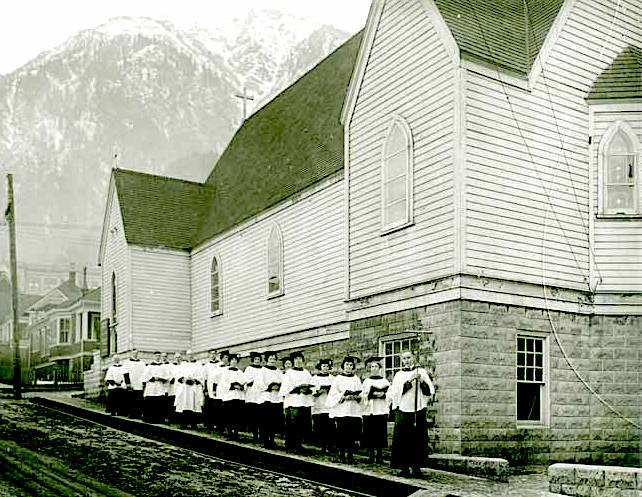 The Church of the Holy Trinity is the oldest Episcopal Church in Alaska. Among local churches, it is second in survival age only to the Russian Orthodox Church of St. Nicholas.
Just as the Episcopal Church is closely interwoven with the history of Alaska, so Holy Trinity Church has been part of that history, associated with persons and events of significance.
It especially commemorates the almost 50-year legendary career of Bishop Peter Trimble Rowe, a figure of commanding public stature beyond his ecclesiastical achievements.
Juneau developed from the raw mining camp which sprang up in 1880 following the discovery of gold on both sides of Gastineau Channel.
It was four years before the first Organic Act was passed by Congress, giving Alaska a token civil government for the vast possession purchased from Russia in 1867.
For almost two decades, American churches accepted the general myth that Alaska was an uninhabited frozen waste land. There was little attempt to send missionaries; although the Church of England, in Canada, had followed the Hudson Bay Company into the Upper Yukon River area in 1861.
The Organic Act of 1884 provided for a governor, courts, and schools. The remarkable Presbyterian missionary. Dr. Sheldon Jackson, assumed the post of education agent, but recognizing the scope of the task turned to the missionary board of other churches for assistance.
An informal regional agreement was worked out to present overlapping. With but three missionaries, stationed in widely separated places, the Episcopal Missionary District of Alaska was constituted in 1892 and a Bishop for Alaska elected in 1895.
By this time, the necessity of expanding the work of the Church to include the miners, settlers, and other whites was obvious. The discovery of gold was soon to attract hordes of people.
Peter Trimble Rowe, first Episcopal Bishop of Alaska, was born, educated, and ordained in Canada. He came to the United States in 1882 to take charge of a mission in Sault Ste. Marie, Michigan, and became an American citizen. His experience in Canada and northern Michigan helped prepare him for the rugged life ahead. Bishop Rowe received his appointment in 1895 and continued a dynamlc involvement in Alaska life until his death in 1942.
Arriving aboard the steamer, "City of Topeka", in March 1896, Bishop Rowe was accompanied by the Rev. Henry Beer from Michigan, who would stay in Juneau. Mrs. Rowe and their two sons waited in Tacoma with Mrs. Beer until there would be a place for them to live. The "City of Topeka" was crowded with more than 200 men, their sled dogs, and a few women bound for Circle City. The Bishop held services aboard ship on Sunday, and all who could crowd into the saloon did so to hear him.
The previous year Reverend R.D. Nevins had been sent ahead to Juneau by the Bishop. He had gathered several families for services, organized Sunday School classes, and a ladies guild.
It was these first services conducted by Dr. Nevlns in the old Presbyterian log cabin church, on Trinity Sunday in 1895, which suggested the name for the new congregation. The collection of frame and log buildings and muddy streets, while not attractive to newcomers, indicated Juneau's future. Gold Stamp mills were operating in the Basin and at Treadwell Mine.
The Sisters of Ann, who arrived in 1887 had started a hospital and school; the Rev. and Mrs. Jones of the Presbyterian Church operated a mission school. There were two weekly newspapers, hotels, a doctor, large business establishments, and a great many saloons. Juneau was crowded with miners getting outfitted for the coming summer. It was impossible to rent a house.
Bishop Rowe wrote, "The present population is about 1800 whites with some hundreds of Natives. Saloons and variety shows are numerous and alarmingly active and seductive. Mr. Beer and I lodge together in one small room, cold and bare, and are obliged to skirmish around for meals...to do our writing, we are obliged to resort to use the small quarters occupied by the Rev. Dr. Nevins...0ur mission here is to the white. It is the only mission to the white population in this part of Alaska...we shall be obliged to build...as soon as possible."
Leaving Rev. Beer in Juneau, Bishop Rowe then made his way north for his first inspection of Alaska. Rev. Beer set to work to build a church and rectory. Lots 8 and 9, Block 15, were purchased for $375. Contracts were let by Trustees R. D. Bently, J. J. Rutlege, C. D. Taylor, and J. Montgomery Davis, with builder George E. James. The rectory was quickly finished and Mrs. Beer arrived with the Rowe family on their way to Sitka.
The new house faced Gold Street behind the church, and cost $1,400. The Alaska Searchlight reported, "This house is one of the best residences of Juneau, and Mr. James, the builder, is to be congratulated on the style and the finish of the structure."
There was a social at the rectory May 19, 1896, to welcome Mrs. Beer. Rev. Beer and a few volunteers then assisted James with the building the church according to plans furnished by the Bishop. Labor costs were $700. Including materials the total was $2,600 for the church. As there was no kiln to dry the spruce lumber commonly used, high quality fir was imported from Tacoma, testifying to the quality construction.
On Saturday, July 25, 1896, the Searchlight advised, "The new Episcopal Church in Gold Street, which is to be known as Holy Trinity Church, is now so far completed that it is being used for services on Sundays. Stoves, seats, and other necessary articles of furniture have been put in the church, and the rector wishes the people of Juneau to bear in mind that it will be open to all every Sunday at 11 a.m. and 8 p.m. The seats are free, and it is earnestly desired that worshipers may crowd the 'Courts of the Lord's House' every Lord's Day. This beautiful building has been erected at considerable expense for the benefit of the people of Juneau, and only by attending its services can that benefit be attained."
Bishop Rowe, meanwhile, landed at Dyea, hired a helper and packed over the Chilkoot Pass. He whipsawed lumber, built a boat, and made the hazardous trip down the Yukon to Forty Mile and to Circle. During the journey, he conducted services everywhere and was an inspiration and help to the many men struggling to the Klondike and interior gold fields.
When he returned, by way of St. Michael in October, he reported to the mission board: "I found the church and the residence of the missionary completed and occupied. They do give us credit. Mr. Beer gave much personal work in their erection. It is a difficult place to get insurance. Fortunately, I succeeded... as a few weeks after, the church caught fire from cinders carried by the terrible Taku winds, which proved the wisdom of insuring...the moral condition...is not conducive to religious work. The population is transient, it is the center and metropolis of a large mining district sure to develop. Its future is certain. It is a good outfitting place for the Yukon. Meanwhile, it is a trying field for the missionary; he fills no enviable place, and well deserves the prayers, cheer, and aid of our friends. A guild and Sunday School flourish. A class of four was presented to me for confirmation."
That summer a medical missionary. Dr. A. J. Cambell, a friend of Bishop Rowe's, arrived to work in Douglas, where he later established St. Luke's. The early registers of Holy Trinity reflect the events of the day: weddings, baptisms, confirmations, and many burials. Some members of those original families of the first congregations still live in Juneau.
One instance, reported from newspaper files: the law-abiding citizens were shocked by the killing of Deputy Marshall Watts, by an escapee of the Jail in January 1897. "The most splendid funeral ever held in Juneau" took place in the new church. Bishop Rowe, who was visiting, used the occasion to suggest mercy for the wrong-doers. After an elaborate procession to the cemetery, the mourners organized a posse, and heavily armed, went out in three boats and peacefully apprehended the fugitives on Admiralty Island.
Bishop Rowe traveled north again in 1897 by reversing the Yukon route. Coming out in the fall across Chilkoot Pass, he met the tide of men going into the Klondike. When he saw the new city of Skagway which had sprung up, he recognized the necessity there.
Accordingly, both Rev. Beer and Dr. Campbell were assigned to Skagway, establishing St. Saviour's Church. The Juneau and Douglas churches were served, sporadically, for the next few years from Skagway. On his third trip north in 1898, Bishop Rowe again made the Chilkoot trek, this time in the company of thousands of gold seekers. Back in Sitka that winter, plans were made for the building of St. Peter's-by-the-Sea, and for a Bishop's residence, called the See House.
For the next decade the work in Alaska continued as what Bishop Rowe was to describe as "a mission to a movement, a procession." The Bishop and his clergy, some with families, did their best to follow the miners as they moved from old strike to new, establishing missions, building churches and hospitals where they could in the camps.
1903 saw the coming of another missionary to Alaska, who was to have a vital influence in Juneau; though not until 19 years had elapsed. This was the Rev. Charles E. Rice, who was stationed at Circle. In 1901, nine victims of the wrecked S.S. Islander, were burled from the church.
By 1906 the capital of Alaska had largely moved to Juneau from Sitka. The Rev. C. E. Renison arrived in 1910, and from that day onward the church has had a continuous ordained ministry. This was a peak period for mining, both at Treadwell Mine and the Alaska-Juneau operations.
Trinity services were also held weekly at Thane, reached by ferry; and Perseverance Mine, by wagon on the mountain road where an active congregation provided a church school, altar guild, and choir.
The establishment of territorial status for Alaska and provision for a legislature in 1912, meant even more families residing in the capital city. Continued Improvement was necessary for Holy Trinity Church.
A basement was installed, with a furnace replacing dangerous wood-burning stoves. The interior was refurbished, particularly with the addition of a series of paintings done by Mrs. J. Montgomery Davis, an accomplished English artist who had studied art in Europe. She came to Juneau as a visitor in 1891, and met and married Mr. Davis. An organist, she also taught Sunday School classes in the old log cabin church. She and her husband were among those most instrumental in establishing Holy Trinity.
The cave-in of the Treadwell Mines in 1917 and the following year, the wreck of the Princess Sophia in Lynn Canal and the deaths of hundreds, including Mr. and Mrs. Walter Harper, missionaries from Fort Yukon, are sadly reported in the Register. The Treadwell disaster diminished the population at Douglas.
When a bridge to the island was finally built in 1935, the two congregations united. The last services were held at St. Luke's in December of 1951.
The war years of 1917-1918 saw the addition of memorials to church furnishings, but the attractive rustic character of the original interior remained. In 1915, the rectory was extensively repaired and a new rector.
The Rev. Guy D. Christian, arrived from St. Mary's Church in Nome. In 1918 he became the first Dean of Holy Trinity Cathedral, so designated by Bishop Rowe. By this time, the Bishop had moved his residence to Victoria, B.C., and his office to Seattle.
In his absence, the church in the capital city was made the pro-cathedral; later when a new bishop chose to reside in Nenana, and then in Fairbanks, this was dropped, in 1944.
In 1921 the Rev. Charles E. Rice returned to Alaska to become second Dean of Holy Trinity Cathedral, a post he filled ably for 22 years. Dean Rice firmly laid foundations of the church that is today, both on composition of the congregation and improving the physical plant.
According to old timers, the Dean and his boys were regularly seen repairing, painting and maintaining the church and old rectory. Almost all of the shingles on the roof, one of the steepest in Juneau, bore his fingerprints, some said. Unlike the church, the rectory had deteriorated and was inadequate.
In 1940, the Kohlepp residence on the northeast corner of Fourth and Gold was purchased, and the old building was dismantled.
In 1942, in his eighty-sixth year, Bishop Rowe died. He had kept busy almost to the end with a trip north in the summer of 1941. He last visited the Church of the Holy Trinity in 1937. There are many memorials in his honor, and in the hearts of the many lives he touched.
The lovely "Denali" window in the Holy Trinity Church, in memory of the Bishop, was executed and donated by artist Jessie Van Brunt of New York.
In 1929. Dean Rice retired in 1943, but remained in the territory ministering to several vacant churches in southeast Alaska during the war years and after. The Dean died in 1952.
The Rev. W. Robert Webb succeeded Dean Rice in 1944 when the cathedral was returned to the status of a parish church.
Four years later the Rev. Samuel A. McPhetres came to Juneau. Inspired by his vision and enthusiam, the church moved forward in vital ways, culminating in "aided parish" status in 1955, and the building of a parish hall and extension of the church building in 1956.
A profound sense of loss was felt throughout the entire community with the sudden unexpected death of the Rev. Mr. McPhetres in June, 1959, and the laity of the church carried on for six months until a rector could be found.
The new parish hall was named McPhetres Hall in his honor, and has since filled many community needs. Several times it has been used as classroom space when there have been crises in the schools. Other community service organizations have been grateful for the use of the hall. He was replaced by The Rev. Mark A. Boesser.
In 1961 the Rev. Walter W. Hannum arrived from Fort Yukon to serve as Associate Rector, considerable time to the study of alcoholism in Alaska. He also gave It had become obvious that the Kohlepp house was not much younger than Rev. Beer's original "splendid residence" of 1896, and it, too, needed replacement.
The parish found it necessary to demolish the old building and built an attractive new rectory on the corner of Fourth and Gold in 1966. Father Hannum returned north that year, and the Rev. Charles H. Eddy, a new graduate of Virginia Theological Seminary, joined Father Boesser.
His particular interest were in activities for teenagers and young adults, both in the parish and the community, as well as regional community action programs. Father Eddy went on to St. Mary's in Anchorage in 1968, and in 1972 Father Boesser resigned as rector and, following a year of special study, became Diocesan Coordinator of Developing Programs for Ministry.
The Rev. John B. Bentley, appointed in 1930 as Archdeacon of the Yukon and as Suffragan Bishop to assist Bishop Rowe, in 1943 was named second Bishop of Alaska. In 1947 he became Vice President of the National Council.
In November 1947, the Rev. William J. Gordon, Jr., was elected third Bishop of Alaska. Bishop Gordon traveled all through the parishes and served the Church in Alaska by airplane, which he flew when he could, or by dog team, just as Bishop Rowe had, as well as by steamers, automobiles and any other mode of transportation he could find. In 1974, the Right Rev. David R. Cochran was elected the fourth Bishop of Alaska.
At Holy Trinity the present rector is the Rev. Dale G. Sarles who came with his family from Valdez in November of 1972. When fires in 1973 and 1974 destroyed both Resurrection Lutheran and the Mormon Church, Holy Trinity share facilities with the Lutherans for the two years it took them to rebuild.
The Episcopal Church in Alaska commemorated the 100th anniversary of the arrival of the first English missionary at Fort Yukon in July of 1961, and is now in its second hundred years.
-
Gruening Cabin
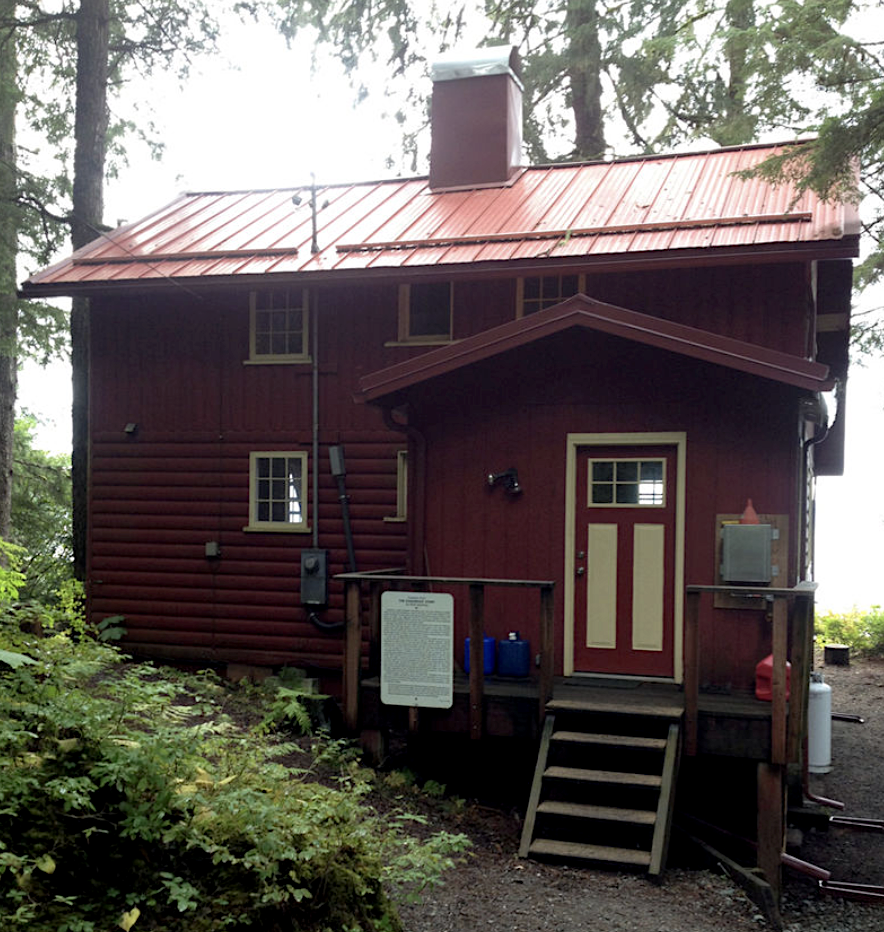 Built during the summer of 1947, the Ernest Gruening Cabin is located at Mile 26 Glacier Highway, northwest of downtown Juneau. Gruening leased the 4.9 acre tract of land on which the cabin stands from the U.S. Forest Service in 1946, under provisions of the Small Tract Act of 1935, and later received title to it.
The cabin is oriented with a view to the west and overlooks Favorite Channel of Lynn Canal in southeast Alaska. The northeastern edge of the property is bordered by Salt Lake, where a low waterfall empties into Eagle Harbor. The southern boundary adjoins Amalga Harbor Road.
In 1947, Ernest Gruening, Territorial Governor of Alaska from 1939 to 1953, had a one-and-one-half story cabin built at a site twenty-six miles north of downtown Juneau. Malcolm MacKay was the architect, Fred Jacobsen and Hunt Gruening built it. The cabin is the only building in Alaska, other than the Governor's Mansion, directly associated with Gruening.
During his years in Alaska, Gruening fought for statehood, for a strong military presence in Alaska, and for more equal treatment of all Alaskans. In the spring of 1953 when President Eisenhower appointed a new territorial governor, Dorothy and Ernest Gruening moved from the Governor's Mansion to the cabin.
The cabin served as Gruening's principal residence from 1953 until November 1958 when Alaskans elected him one of their first U.S. Senators and he moved to Washington, D.C.
In his 1974 eulogy of Ernest Gruening, Carey McWilliams observed, "The persona never engulfed the self with Ernest Gruening. The public citizen and the private person were one and the same . . . and few Americans of his generation had a richer or more varied experience in public affairs. He was a man of impeccable honor and integrity, indomitable spirit and extraordinary moral courage . . . and, more than any one person, was responsible for the successful drive to acquire statehood . . . for Alaska." (The Nation. Julv 20, 1974, pp. 36-37).
Ernest Gruening was born in 1887 in New York City. He received his medical degree from Harvard Medical School in 1912, but never practiced medicine. Instead, he pursued a career in journalism, and was managing editor of The New York Tribune newspaper and The Nation.
In 1934, President Franklin Roosevelt appointed Gruening to be the first director of the Division of Territories and Island Possessions in the Department of the Interior.
Gruening served in this position until his appointment as governor of the Territory of Alaska in 1939.Gruening first visited Alaska in May 1936, to deliver the commencement address at the University of Alaska in Fairbanks. On his tour through southeast, southcentral, and interior Alaska, Gruening noted the lack of adequate health facilities, inadequate harbors and housing, separate school systems for white and native children, and the high shipping costs between Seattle and Alaska. His interest in helping the territory get the many necessary and basic services it lacked led to his appointment as territorial governor.
As governor, Gruening pushed statehood for Alaska. He addressed the concerns expressed by members of Congress and the Department of the Interior; spearheading a personal income tax bill to show that Alaskans were willing to pay for state government, encouraging the Territorial Legislature to create a statehood commission, and promoting economic development.
Recognizing the strategic importance of Alaska in the war against Japan— and the development and revenue military activity would bring to the territory, Gruening
campaigned exhaustively for construction of air bases in Alaska. He termed Alaska the "first line of defense" for America and organized the Alaska Territorial Guard. After World War II, Gruening fought for continued military involvement in Alaska.He also worked to end discrimination against Alaska Natives, and to get funding to combat tuberculosis that was epidemic in Alaska.
In 1953, the new Republican president, Dwight D. Eisenhower replaced Gruening as territorial governor. Gruening moved from the Governor's Mansion and to his cabin. There he continued to advocate Alaska statehood and tirelessly wrote articles for national magazines and newspapers. His 606-page book. The State of Alaska, was published in 1954. The State of Alaska chronicles Alaska's history and advocates statehood for Alaska. One reviewer wrote that the book "presented a powerful argument for statehood, [and] was undoubtedly written with that purpose in view. The case it makes is all the more compelling because it is predicated not upon an
emotional plea by one whose emotions are so surely involved, but rather upon a relentless review of facts which expose with dramatic clarity the disheartening effect of Governmental neglect, confusion, and bureaucracy on the one hand and exploitation by powerful economic interests on the other" (Saturday Review. February 12, 1955, p. 17).Alaska achieved statehood on January 3, 1959. It took the combined efforts of many Alaskans, but Gruening was one of the chief architects and a
seemingly tireless crusader.While he was territorial governor and after, Gruening entertained many notable guests at the cabin, among them presidential aspirant Adlai Stevenson, New York Governor Thomas E. Dewey, novelist Edna Ferber, Supreme Court Justice William O. Douglas, and Senator John F. Kennedy.
Although away from the cabin quite a bit promoting statehood, the Gruenings lived there from 1953 until 1958, when Alaskans elected Gruening as one of the first
United States Senators from the new State of Alaska. After they moved to Washington, D.C., the couple visited the cabin whenever they were in the state. After his death in 1974, Gruening's ashes were scattered on the mountain behind the cabin, now named Mount Gruening. The family owned the cabin until 1989 when the State of Alaska purchased the property for an historic park.
-
Dorene Lorenz published Kennedy Street Mine Workers Houses in Historic Districts and Places 2023-10-22 21:36:39 -0800
Kennedy Street Mine Workers Houses
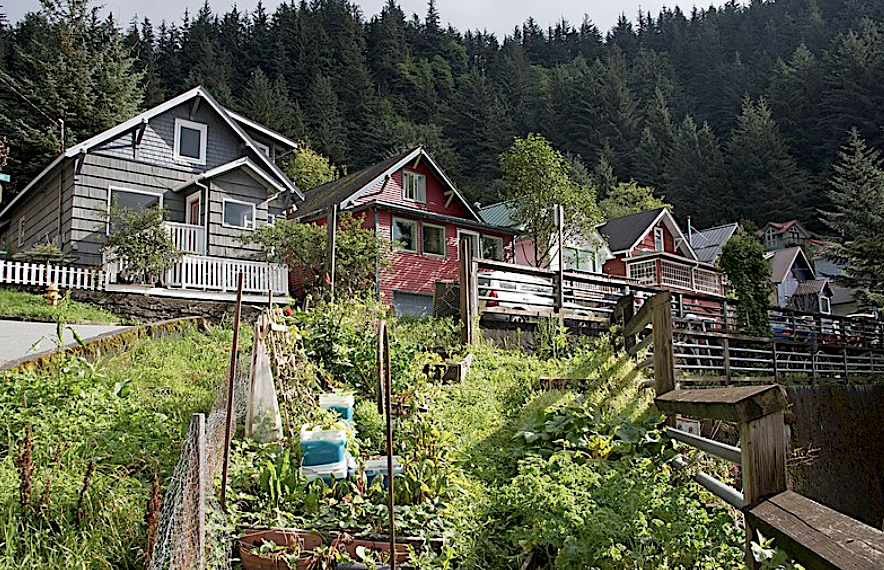
Located on Starr Hill in Juneau, the Fries Miners Cabins include six residential structures. Adjacent to one another in a row, the six structures occupy Lots 1 and 8, Block120, on Kennedy Street between 5th and 6th Streets.The historic neighborhood of Starr Hill is situated on the lower slope of Mount Roberts and overlooks downtown Juneau. At an elevation of 200 to 400 feet, Starr Hill is reached from downtown by steep stairways and narrow, winding streets.
It is characterized by sharply sloped lots, modest homes designed to adapt to the contours of the hill, and turn-of-the-century architecture.
The Fries Miners Cabins are a variation of the Craftsman Style Bungalow. They are constructed on a built-up base to compensate for the 15 foot change in elevation of the lots.
-
Frances House
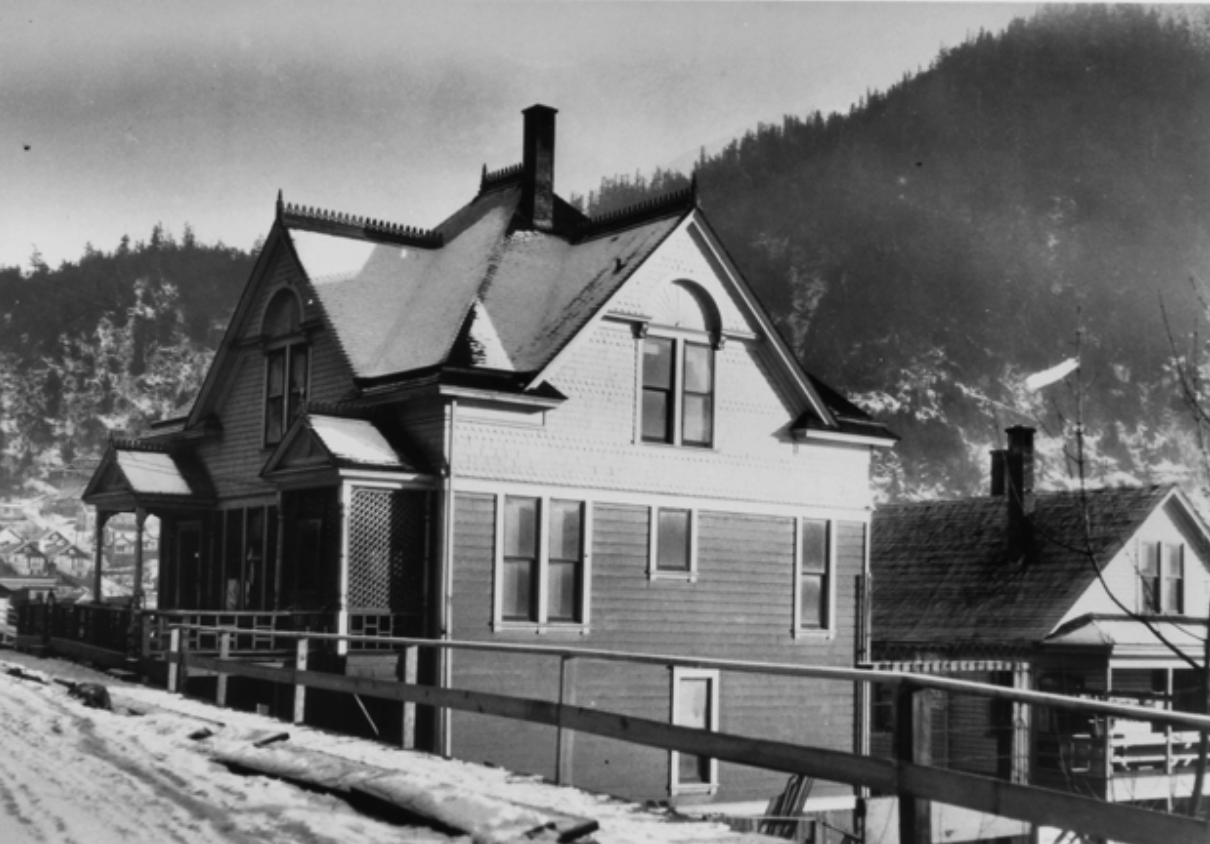 Built in 1898, the Frances House, is significant for its architectural character, its place in the historic development of the mining town, and association with important historic people who built and lived in the structure during the early development of Juneau.
Eighteen years after the discovery of gold in Juneau, Jerry Eicherly, postmaster and owner of the post office, built the Frances House. During that time, the house was leased to a Superintendent of the Perseverance Mine.
In 1911, he sold it to John Rustgard, who owned it until 1927. Mr. Rustgard was the Attorney General of the Territory of Alaska from 1920 until 1933 as well as the author of a number of books on politics and economics.
When the builidng was condemned by the city in 1927 to make way for the building of Capital School, Frances Davis purchased it. Frances, one of the first recognized Alaskan painters, was married to John M. Davis, the assistant manager of the Nowell Gold Mining Co.
Her sons moved the house fifty feet to where it rests today. The building has been known to the Community as "The Frances" since that time. The house remained in the Davis family under the stewardship of Trevor Davis, pioneer photographer and a prominent person throughout the history of Juneau in the civic and business community.
It is an outstanding example of late nineteenth century domestic vernacular architecture found in Juneau. Essentially the house is architecturally typical in materials, construction and scale for the period it was built in Juneau. It is significant for these reasons, but more so because stylistically this house is unique. A roofline like that found on the Frances House is not found elsewhere in Juneau. The design is a blending of different architectural influences from the continental U. S. with improvised changes to make it appropriate for Juneau.
Detailing embodies unusually good design composition, and the quality of the craftsmanship is time-tested, in spite of minor changes in detailing that were made when the single family house was converted to boarding rooms in the early 1900's, when and the basement converted to an apartment in 1929.
The relationship of house to street is uniquely adapted to Juneau's topography and represents an interesting solution to a street regrading. The house is in a historic residential area where many of the "best" homes of early pioneers were located. It is a well known local landmark, appreciated for its reminder of Juneau's history. The structure retains character individually and as a significant example of Juneau's residential stock. The original fabric is intact and therefore its historic integrity as well.
-
Fort Durham site
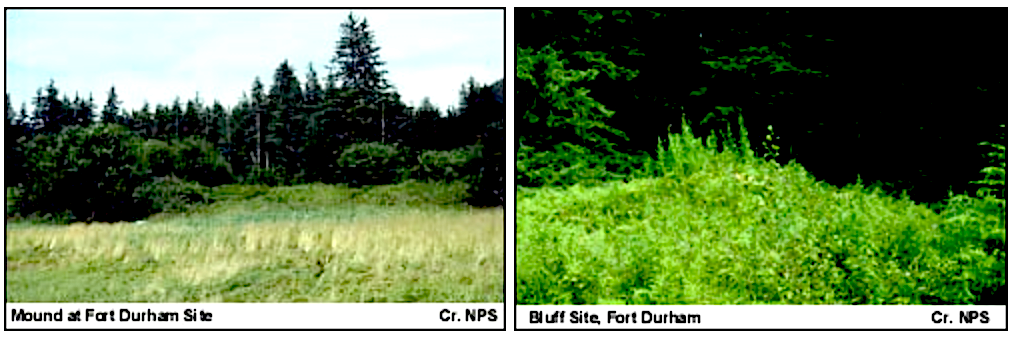
Constructed in 1840, Fort Durham (Fort Taku) was one of three posts established in Russian America by the British Hudson's Bay Company. Fort Durham Site National Historic Landmark represents the British role in the great struggle between major maritime powers, England, the United States, and the Russian Empire. Each raced for control of the North Pacific fur trade.
Built under the provisions of a lease negotiated between the Russian American Company and the Hudson’s Bay Company, it gave the British firm control of a ten mile wide strip of Russian Alaska. The stockade post served as a trading post for Hudson’s Bay Company until 1843, when the fort was abandoned in favor of yearly visits by a company ship.
The remains of Fort Durham are no longer visible, but archaeological investigations have encountered remnants of the fort walls and interior buildings.Additional Information
A History of Fort Durham, Hudson's Bay Company Trading Post Located in Taku Harbor, 1840-1843, Within the Boundaries of Present Day Juneau, Alaska. By Wallace M. Olson, Heritage Research, 1994.
Trading Beyond the Mountains: The British Fur Trade on the Pacific, 1793-1843. By Richard Mackie, UBC Press, 1997
National Historic Landmark designated on June 2, 1978
-
Davis House
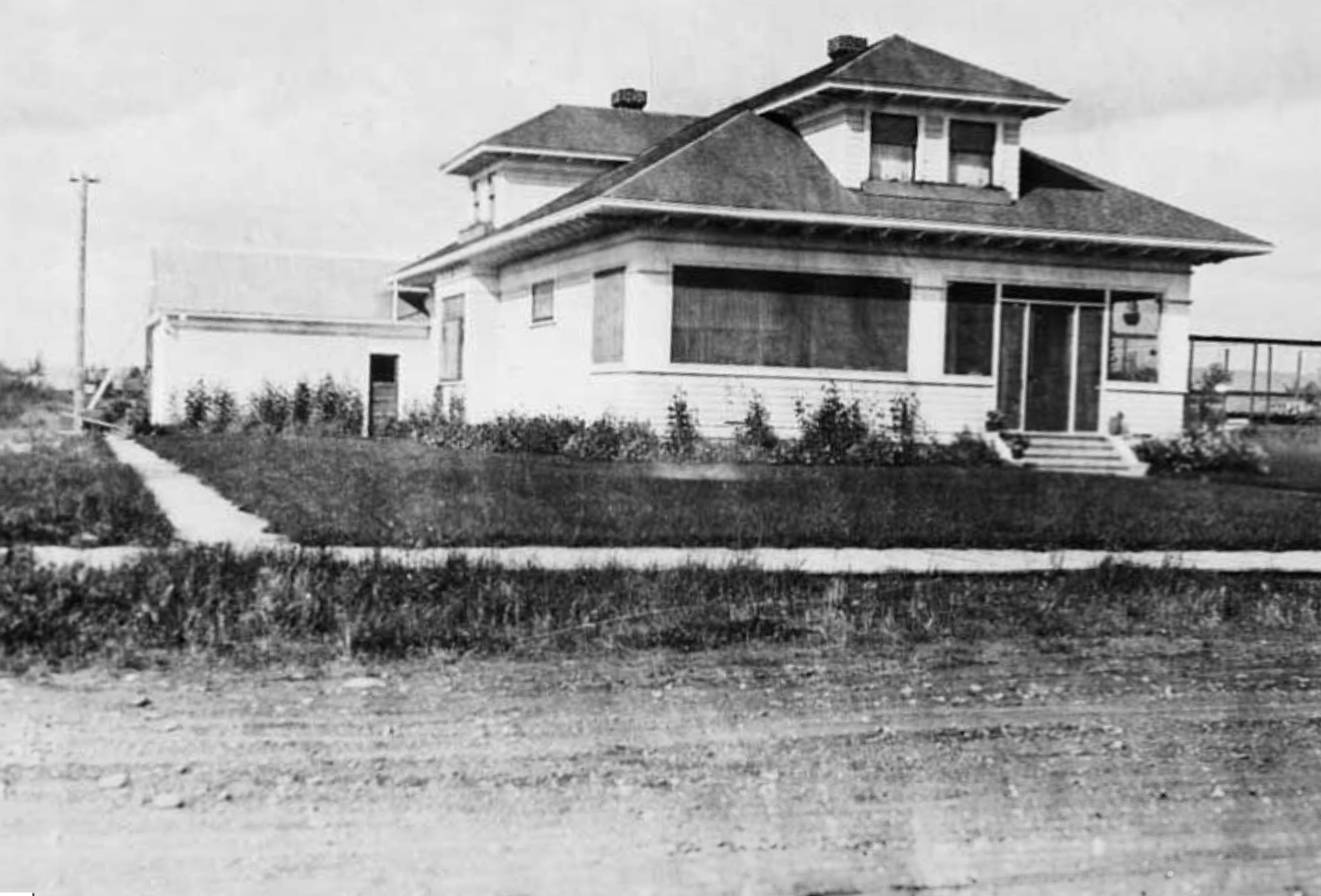
Rare among the oldest quality residences built in early-day Juneau, the John M. Davis House ranks as the first mansion of exceptional architectural charm and distinction.
This building bears rich association with the history and lifestyle of Juneau after 1892, including many persons of prominence (including the builders) and significant events. It has been considered a "landmark" structure by Juneauites through most of this century.
Frances Davis—wife of the builder—was a wealthy artist from England who visited early-day Juneau to paint and to observe the frontier gold rush camp. She met miner and prospector Mr. Davis on the ship which brought her into Juneau.
After their marriage, the Davis's built the "mansion" on the further side of the old Boston Mining Claim—paying $25 to clear title in order to build on this choice view site.
Because Mrs. Davis was wealthy they also had 6th Street cleared in order to better proceed with their ambitious home-building project. There were no other residences then on the conmanding part of Sixth Street, prior to this construction of the J.M. Davis House.
The west wing of the large, at the time, pretentious "Mansion" was added by the Davis's about 1900 to provide Mrs. Davis with a studio for her painting. Some of her oil paintings were considered the best in the Alaska State Museum collection at Juneau.
The impressive house was the childhood residence of the Davis's son, Trevor, who was educated at the U.S. Naval Academy at Annapolis, and became a pioneer photographer of Alaskan scenes, prominent in civic and business affairs in Juneau.
For some years the house was later leased to be the residence of the Admiral commanding the U.S. Coast Guard District, with headquarters in Juneau.
Mrs. Trevor Davis, septugenarian daughter-in-law of the J.M. Davis's is a former Poet Laureate of Alaska, who has also written and studied the music, art and poetry of the Tlingit lndians--and has other made significant cultural contributions to Alaska. She is a noted long-time musician and teacher, active in Juneau public, social and cultural affairs.
-
Bergmann Hotel
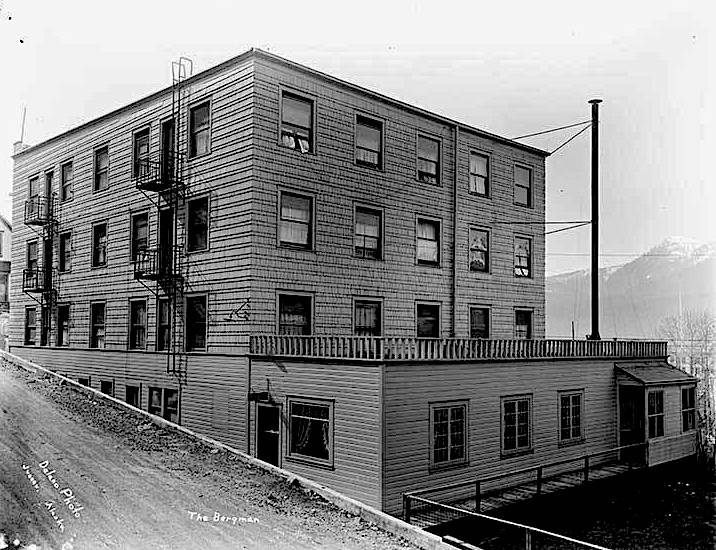 The Bergmann Hotel is significant for the role it has played in state and local history; and for commemorating the name of a pioneer Alaskan woman, prominently associated with leading Juneau hotels from 1896 to 1916.
The present capital city of Alaska came into existence with the first major placer gold strike in the Territory, in 1880.
As the placers declined, hard-rock mining developed and eventually these consolidated into two world-famous properties, the Treadwell Mine and the Alaska-Juneau Mine.
Juneau was made the capital in 1900, but the executive offices were not moved from Sitka until 1906. Because of gold, fisheries, shipping and government, Juneau has played a prominent role in Alaska's 19th and 20th Century history.
The Bergmann Hotel, built in 1913, is among the oldest surviving hostelries in Juneau. It was built by Marie E. Bergmann, a German emigrant who came to the Gastineau Channel in 1896 following the death of her husband in Seattle.
Her initial employment was at the Franklin House, a pioneer board-and-rooming establishment for miners. She then worked at the Perseverance Mine and as a nurse at the Simpson Hospital, established in 1886 by a prominent early-day physician.
About 1907, she began managing the Circle City Hotel, owned by businessman George Miller; acquiring the location, she selected a new site, just off the principal business district and central to the leading residential area and built the 50 room, rectangular, three-story, full basement apartment-hotel, which held its grand opening on December 16, 1913.
Her initial hopes, with outside capital, was to build a 64 room structure, steam-heated, with electric lights, hot and cold water in every room, with both baths and showers on every floor, it was considered—even in its scaled down version—as the best in Juneau.
Widow Bergmann, however, did not long enjoy the fruits of her success. Stricken with brain hemorrhage, she died on March 18, 1916. The hotel was left to relatives in Germany, but management was placed with a former employee, Mrs. Mary Bernhofer.
The Alaskan Daily Empire in a front page obituary story, called Mrs. Bergmann "one of the best known and best loved women of the city. . .friend, comforter and counsellor, and often banker, to those in need."
-
Alaskan Hotel
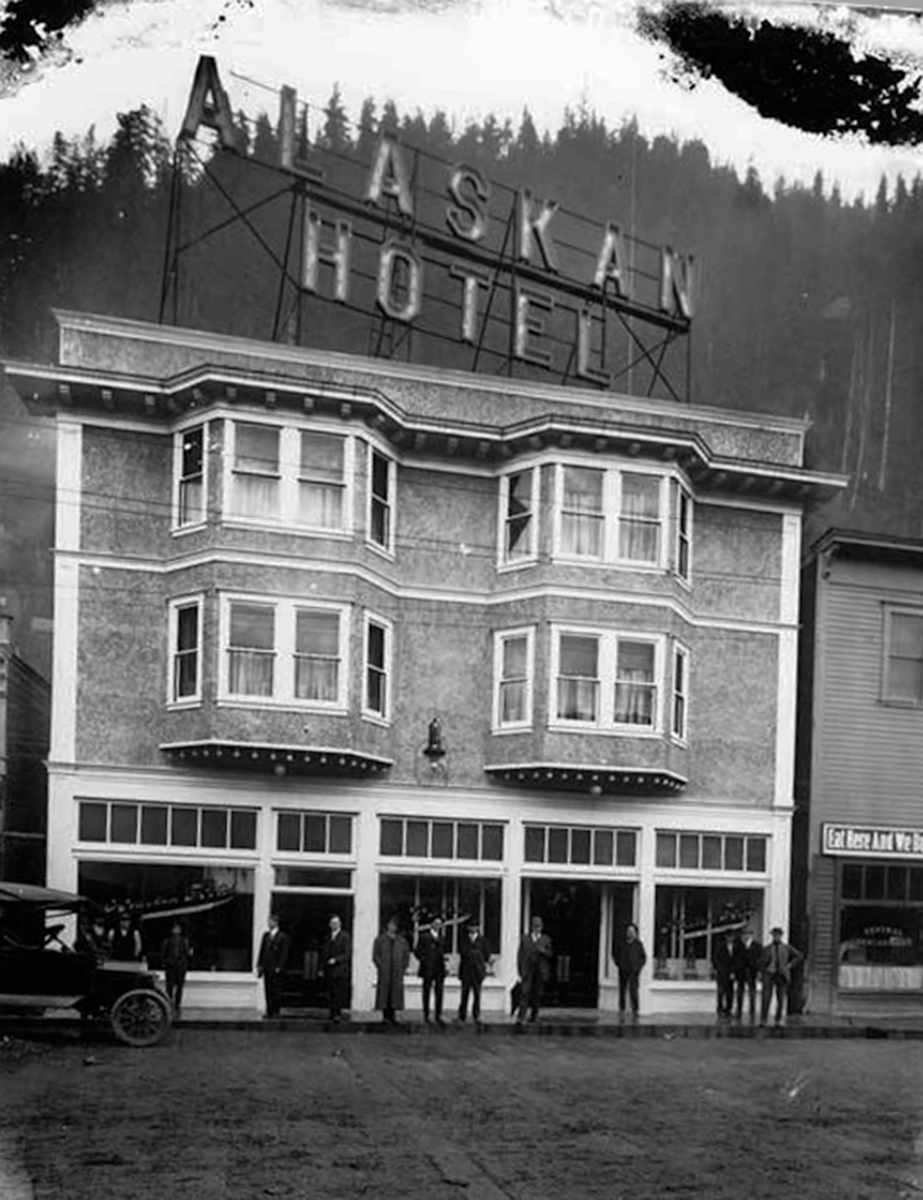
The Alaskan Hotel is the oldest operating hotel in the Capital City of Juneau, and is among the oldest in continous operation in Alaska.
It is associated with events that have made significant contributions to local and state history; and is an excellent architectural example of the transitional change between 19th and early 20th century.
Although Juneau came into being as a placer gold boom camp, in 1880, unlike many subsequent "boom and bust" camps, it became apparent that a city of some consequence would develop here. Placers, expectedly, were soon mined out; but the presence of vast deposits of quartz lode was established.
This developed into two large world- famous hard-rock mining and milling properties—the Treadwell Mines on adjacent Douglas Island, and the Alaska-Juneau Gold Mining Company —whose extensive surface works were within view of the Alaskan Hotel when it was built.
Juneau also diversified. It had five of the 27 newspapers in Alaska in 1907. It became a regional shipping and distribution point, with extensive docks and warehouses; fisheries, hydro-electric power, banking and lumbering adding to the economic affluence.
In 1900 the Territorial capital was moved from Sitka; Juneau also became one of the three District Court division headquarters; and in 1909, one of four. The City incorporated at that time.
The capital move from Sitka was slow, and occupied almost the first decade. Indeed the present capital building, although partially funded in 1911, was not completed until 1931.
A governor's mansion was planned, and several other executive buildings were built or leased, during the first decade, as government became an important part of Juneau's cosmopolitan life style.
By 1905 the population of Juneau and Douglas had exceeded 6,000 and was growing. The first Territorial Legislature convened in 1913. As a frontier mining camp, Juneau had developed a coterie of miner's boarding and rooming houses; but few hotels.
In the earliest years, the few transient hostelries— Franklin House, Caine, Circle City and Central Hotels were more in the pattern of sourdough roadhouses. Franklin House, and Caine were upgraded and the Occidental and Gastineau added. There was an obvious need for more modern and quality hostelries.
It was known that Marie Bergmann, associated with two of the older hotels since 1896, was seeking outside financing for a 64 room structure. Into this breach, in 1912, stepped an interesting triuvirate: Jules B. Caro, promoter-entrepreneur, and the McCloskey brothers, James and John.
Veteran miners of the Canadian Cariboo, the McCloskey's had finally struck a rich pay-streak in the $25,000,000 diggings at Atlin, across the mountains northeast of Juneau in British Columbia. They acquired a prime location, next door to the declining Central, in close proximity to the steamship docks and central to the business district.
Ground was broken in late 1912; and the well-furnished, attractive modern hotel opened with a champagne gala on September 1, 1913.
Its place in the community was noted in an editorial under the masthead of the Daily Alaska Dispatch:
THE NEW HOTEL The owners and lessees of the Alaskan Hotel are to be congratulated at giving Juneau a modern hostelry. Juneau has needed more hotels. Our old time favorite, the Occidental, has worked faithfully to accommodate an overflowing town during the past twelve months. With the new Caine hotel there should be ample hotel accommodations for the traveling public until next spring. There is room in Juneau for all the new hotels. All will do their share and the traveling public will not be forced to seek shelter here and there, much to their discomfort.
A pioneer resident—then a teenager—Trevor Davis, recalls his plate-glass observation of the exciting Grand Opening: the McCloskey brothers milling among a well-dressed crowd, shaking magnums of champagne, the corks aimed at the newly-installed chandeliers and the gleaming ceiling of the lobby. Thereafter the McCloskey's maintained an extremely low and silent profile.
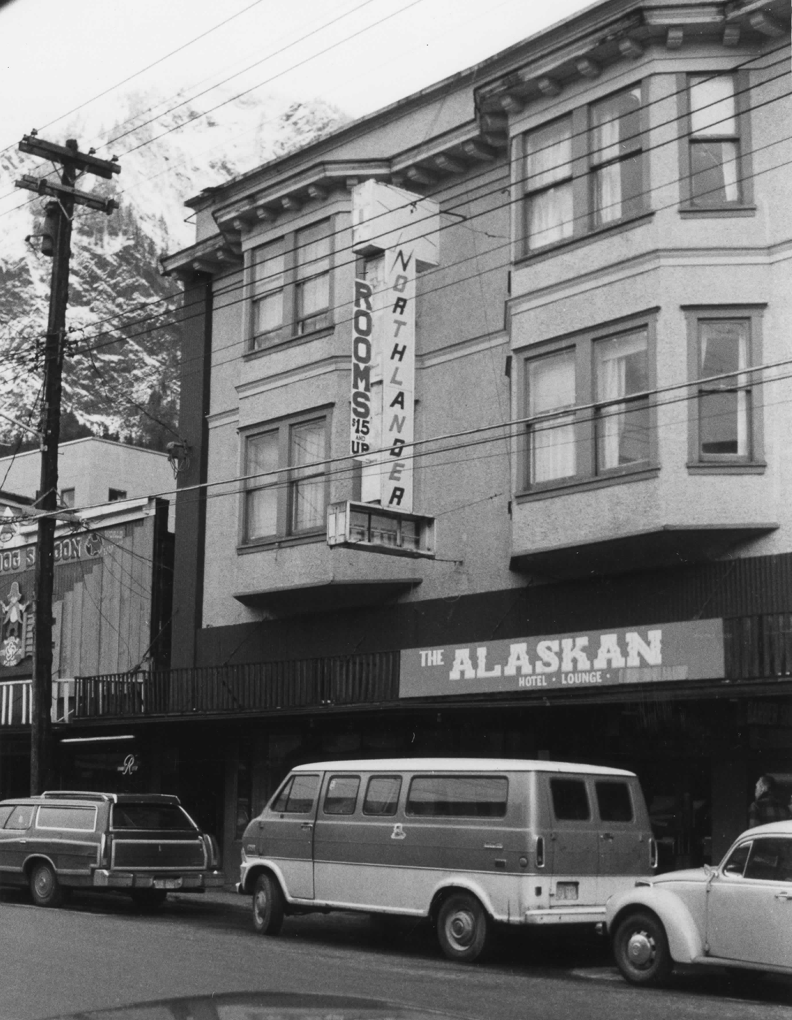 The Hotel opened under a management arrangement with P.L. Gemmett as President and Manager and F.H. McCoy, Secretary-Treasurer. In 1915, they were replaced by M.P. Goodman and E.E. Burlock, and in 1918 by a single manager, A.T. Spatz.
James McCloskey then assumed his first and only active management, for three years; until a long-term lease arrangement with local businessmen Charles Miller and Mike Pusich was announced.
After 18 months this was cancelled and Dave Housel assumed management until eventual sale by the McCloskey's. Management, thereafter, stabilized.
The Bergmann Hotel, which opened within four months after the Alaskan, quickly found its roll as an apartment-residential hotel. Later generations saw the building of the substantial Baranof, further up Franklin Street, and most recently The Prospector and Hilton.
By this time the Alaskan had become the Northlander. Now under new management and its original name, a restored Alaskan Hotel looks forward to perpetuating its landmark status into the second century of Juneau's history.
2025-2026 Chairman, 2024 Commissioner, Alaska State Commission for Human Rights. 2025 United Nations Geneva Human Rights Crisis State & Local Panelist. 2024 Alaska State Delegate, America 250 Convening of the States. 2023-2024 Commissioner, Alaska Historical Commission. 2025-2026 Chairman, 2019-2024 Committee Member, City & Borough of Juneau Historic Resources Advisory Committee. 2024-2025-2026 Sons of Norway Svalbard Lodge Juneau Historian. 2024-2025-2026 Filcom Member. 2018-2020 Committee Member, City & Borough of Juneau Sister Cities Committee. 2019-2020 Member, AVTEC Institutional Advisory Committee. 2006-2020, President & COB, Friends of Jesse Lee Home. 2012 Member, Anchorage Arts Advisory Commission. Anchorage International Film Festival Features Committee Chair/Host/Award Presenter. Balto Film Fest Founder.
2004 Seward City Council. 2002-2006, Seward Centennial Legacy Committee, Seward Economic Development Committee, Seward Waterfront Committee, Seward Alternate Energy Committee, Seward Long-term Care Replacement Facility Committee, and Seward Historic Preservation Commission.