-
Newsletters
2022 WI Annual Report November
2022 Gastineau Chatter Summer Newsletter
2022 Gastineau Chatter Winter Newsletter
2021 Gastineau Chatter Fall Newsletter
2021 Gastineau Chatter Summer Newsletter
2021 Gastineau Chatter Spring Newsletter
2020 Gastineau Chatter Winter Newsletter
2020 Gastineau Chatter Fall Newsletter
2018 Gastineau Chatter Fall Newsletter
2018 Gastineau Chatter Spring Newsletter
2017 Gastineau Chatter Fall Newsletter
2017 Gastineau Chatter Spring Newsletter
2016 Gastineau Chatter Fall Newsletter
2015 Gastineau Chatter Fall Newsletter
2015 Gastineau Chatter Spring Newsletter
2014 Gastineau Chatter Fall Newsletter
2014 Gastineau Chatter Spring Newsletter
-
Dorene Lorenz published 2023 Grand Igloo Convention Juneau President's Report in Grand Igloo Convention 2023-10-05 19:17:00 -0800
2023 GIC Juneau President's Report
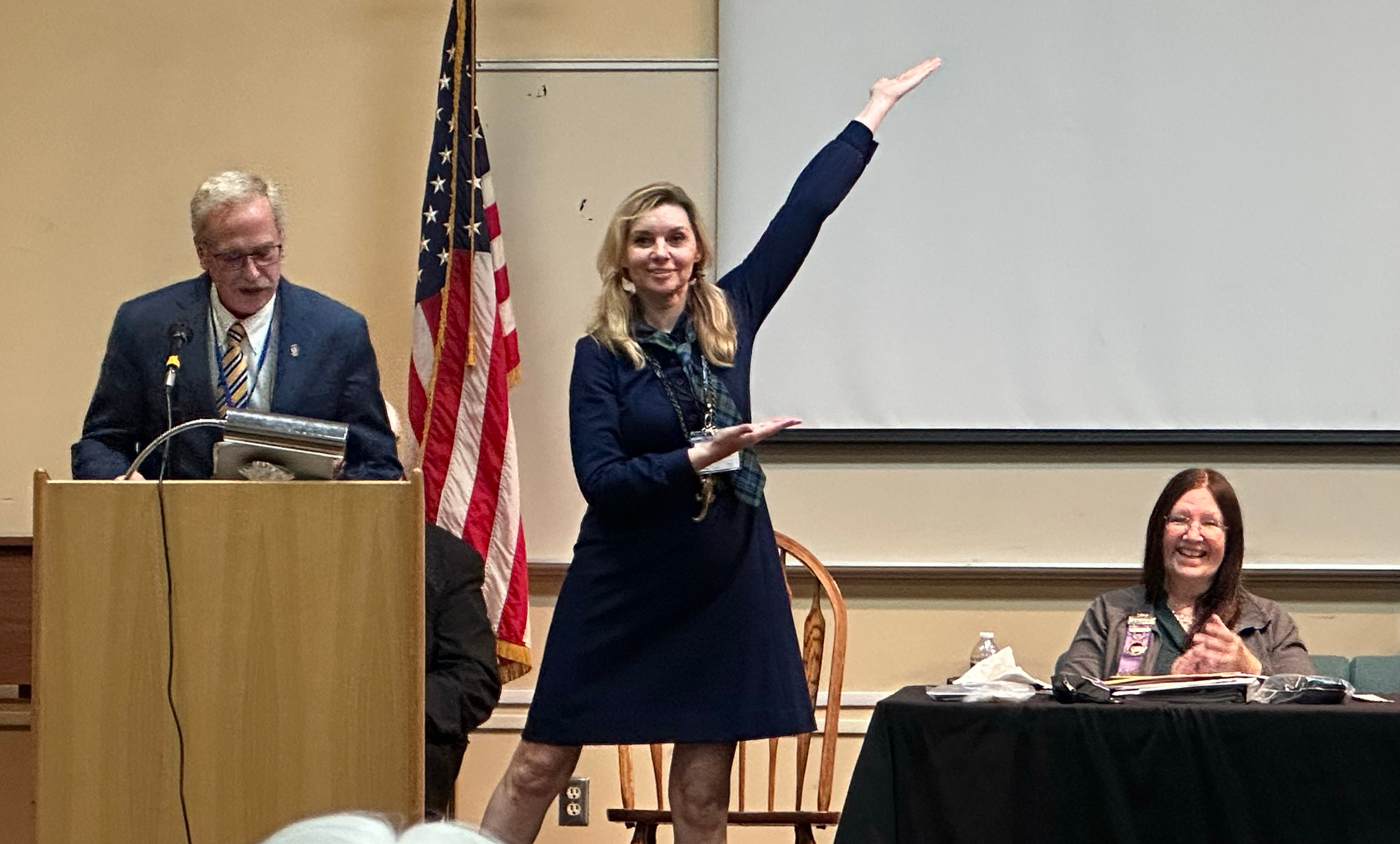
Juneau Igloos No. 6 Presidents Report was submitted to the Grand Igloo by Juneau Men's President Brad Austin and Juneau Women's President Dorene Lorenz at the 2023 Grand Convention in Seward. Grand Igloo Secretary Dawn Campbell accepts the report in the spirit it was given.
Read more
-
Dorene Lorenz published 2023 Grand Igloo Convention at Seward in Grand Igloo Convention 2023-09-29 15:08:37 -0800
2023 Grand Igloo Convention at Seward
Juneau cruised into the Grand Igloo Convention at Seward as the by far grooviest Igloo. Fred Thorsteinsen and Janice Holst had blue sweatshirts with our Igloo logo fashioned and the two rows of blue at the back of the auditorium were often remarked on favorably in comments from the stage.
Read more
-
Dorene Lorenz published 2022 Grand Igloo Convention in Juneau in Grand Igloo Convention 2023-09-29 14:58:39 -0800
-
-
Little Sister of Liberty
She is iconic, sweet-faced, liberty-loving, an All-American girl next door, even after seventy years of neglect. Along with the light of Democracy and Freedom she carries an impeccable pedigree and a sketchy province.
How the Little Sister of Liberty came to be in Juneau, and why she was rejected by the Capitol city and the State of Alaska when she was received with great honors and respect at over 200 other locations around the county is a mystery to be solved. Her final resting place is yet-to-be resolved.
Read more
-
Current Projects
Lone Sailor Memorial
Posted by Dorene Lorenz · August 05, 2024 10:09 AMDouglas Cemetery Restoration
Posted by Dorene Lorenz · October 30, 2023 1:37 PMLittle Sister of Liberty
See all posts
Posted by Dorene Lorenz · September 29, 2023 1:33 PM
-
Delta Junction Igloo
The Pioneers of Alaska established an Igloo in Delta Junction on June 15, 1987. The Pioneers developed a community park at the juncture of the Richardson and Alaska highways, they support youth programs and offer scholarships, and they are involved in multiple community events. Meetings are held in the Senior Lounge at the Community Center on the first Tuesday of each month. For more information contact Igloo #19 Secretary Jackie Nelson (907-341-9942), Treasurer Mary Woodbury (803-3310), Men’s Igloo #35 President Nat Good (907-388-3754), or Women’s Igloo #19 President Ruth Benson (895-4372). Mail inquiries to Pioneers of Alaska, PO Box 445, Delta Junction, Alaska 99737.
-
Igloo History
How did the Pioneers of Alaska come to be?
A:History is often considered to be a collection of dates, old photographs, buildings and events. However, dates and events fade in memory, photographs are lost, and buildings burn down or are torn down.
There is another type of history which lives forever. It is the record of the deeds of men. Their dreams, the life they followed, their accomplishments, their families.
On the vast ocean of time, history that is made of dates, events, photos, buildings is a ripple on the water but history based on the people whose hearts and blood and spirit of adventure who settled this Alaska is a great tsunami of the sea of years. It is to these people that the Pioneers of Alaska Fraternity is dedicated.
The organization seeks to preserve the names and memory of those who have gone before and have crossed the great divide and those who are still on the trail and are making a difference in our State. People are the history of our Great Land.
The Pioneers of Alaska was and still is an organization formed from the need of helping each other survive. Helping by providing food, care, medical, legal assistance, recreational opportunities and social interaction was vital for life in this new and sometimes extremely harsh environment. Conditions of life in this rugged frontier made necessary mutual associations. This northern spirit lives and is the base for the Pioneers of Alaska.
The Pioneers of Alaska was not the first of its kind in the North. Several organizations formed in the early Territorial days to meet the civic and social needs of the growing population.
At that time there are a notable lack of government, both Territorial and local and an absence of a viable court system. The affairs of people and their community were handled by themselves, often through miners meetings. These organizations provided physical help--food, shelter, medical, and other assistance, while also promoting civic order--government, courts, and education.
Social and moral needs were met by hosting church services and school activities, and providing dances, dinners, holiday celebrations, and gathering places for conversation for those who spent many lonely days and months out in the Alaska bush. Rituals and ceremonies of these fraternal organizations were established and were very entertaining in keeping with the characteristics of life in the country.
Early organizations included the ‘Sons of the Northwest’, founded in Sitka in 1887; ’Alaska Pioneers’, founded in Kodiak in 1887; ‘87 Pioneers Association’ founded in Juneau in 1887; and ‘Yukon Order of the Pioneers’, established at Forty-Mile on the Yukon River in 1893, who became the largest and most prominent in the area—Lodge No. 1 was at Dawson, Yukon Territory; ‘Arctic Brotherhood’ was established on the Steamboat Seattle bound for the Klondike in 1899—Camp No. 1 was at Skagway—“No boundary line here” was their motto; and ‘Order of the Alaska Moose’─not associated with the Loyal Order of Moose—was established in Valdez in 1899—Tent No. 1 was at Valdez.
Because of the number of similar orders in Alaska and the Northwest Territory, the Grand Igloo adopted the Latin phrases “Ecce Novum Astrum” for use on its logo.
The Pioneers of Alaska began as a similar organization but outlined an idea for a strictly Alaska order to promote not only civic and social interaction but in addition promote ideas that work for the benefit of the territory. Included were promotions for better transportation, statewide education, medical care, court systems, and help for older Alaskan residents.
-
Igloo Locations
Where are all the active Igloos located?
A:Cordova
Homer
Kenai
Ketchikan
Kodiak
Nome
Palmer
Sitka
Wrangell
-
Emblem
What is the meaning behind the features of the emblem?
A:The official emblem of the Pioneers of Alaska is a circular gold button. The most prominent feature of this emblem is a pair of snowshoes, crossed on the face of the button. They represent one of the means of travel in the North so familiar to the Pioneers.
One can easily distinguish the button of the Pioneers from that of any other organization, and no other country could have a similar emblem for each mark distinctly typifies Alaska.
Behind the snowshoes is the North Star, which appears to shine more brightly in Alaska than anywhere else. Under the star is a low mountain range at the base of which is the sea.
The mountain range depicts Alaska as it appears geographically – with its mountains both inland and on the coast.
The Aurora Borealis, so frequently seen in Alaska, is also pictured behind the snowshoes.
This is our little emblem. We have Alaska represented in several different ways; the snowshoes, representing the Pioneers themselves, the North Star and the Aurora Borealis, the beauty from the heavens, and the mountains and the sea, the beauty of the land.
It is, on the whole, a beautiful button, carefully colored and beautifully composed. We should be proud of the emblem of the Pioneers of Alaska, not only because we are permitted to wear it but for what it stands.
Pioneers of Alaska, The Trail Blazers of Bygone Days,
William Henry Chase, 1951
-
2025-2026 Chairman, 2024 Commissioner, Alaska State Commission for Human Rights. 2025 United Nations Geneva Human Rights Crisis State & Local Panelist. 2024 Alaska State Delegate, America 250 Convening of the States. 2023-2024 Commissioner, Alaska Historical Commission. 2025-2026 Chairman, 2019-2024 Committee Member, City & Borough of Juneau Historic Resources Advisory Committee. 2024-2025-2026 Sons of Norway Svalbard Lodge Juneau Historian. 2024-2025-2026 Filcom Member. 2018-2020 Committee Member, City & Borough of Juneau Sister Cities Committee. 2019-2020 Member, AVTEC Institutional Advisory Committee. 2006-2020, President & COB, Friends of Jesse Lee Home. 2012 Member, Anchorage Arts Advisory Commission. Anchorage International Film Festival Features Committee Chair/Host/Award Presenter. Balto Film Fest Founder.
2004 Seward City Council. 2002-2006, Seward Centennial Legacy Committee, Seward Economic Development Committee, Seward Waterfront Committee, Seward Alternate Energy Committee, Seward Long-term Care Replacement Facility Committee, and Seward Historic Preservation Commission.