-
Sparkling, Sidonia Elizabeth
Reck, Sidonia Elizabeth
Association: Juneau Igloo Women's Auxiliary No. 6
Role: Charter Member
Biography
Sidonia Elizabeth Reck was a charter member of the Juneau Igloo Women's Auxiliary No. 6.
She was born on February 10, 1900, in Juneau, Alaska, to John and Mary A. Reck.
She married Edward Berto Sparling on September 5, 1917. They had a daughter, Corrine, who was born in Juneau in 1922. The marriage later ended in divorce. Sidonia later married Armand Ray Duncan on January 17, 1925, in Juneau.
She worked as a bookkeeper for a coal company and later as a dispatcher for a taxi company.
Sidonia Elizabeth Reck died on February 2, 1981, in Juneau, Alaska. She is buried in Warrenton, Oregon.
Sources
- 1900, 1920 U.S. Federal Census, Juneau, Alaska
- Alaska Daily Empire, September 6–8, 1917
- Alaska Daily Empire, January 9, 1925
-
Juneau Igloo Royalty
The first elected queen, Gussie Byington, made a homemade crown that was used 1980-1983. After that a metal and jeweled crown was purchased for the Queen Regent.
The King Regent was presented with a gold-plated No. 2 "muck stick" or round-pointed shovel for the Royal Scepter, and he has always worn a black derby hat of felt material. In mid-1987 materials were purchased and the auxiliary made new King and Queen Regent robes. None had been used before this date.
Each year the names of the King and Queen Regent of that year are engraved on small brass plates, and are attached to the shovel handle.
The first gold colored round-pointed shovel was used by then Gov. Bill Sheffield and Grand President Max Wells at the ground breaking ceremony of the Juneau Pioneers Home on
September 25, 1986.
-
English, Joseph E.
Primary Name: English, Joseph E.
Filed as: joseph_e_english
Also known as: Joseph E. English
Occupation / Association: Master Sergeant; Aircraft Mechanic; Honorary Member, Pioneers of Alaska Juneau Igloo No. 6
Born:
Died:
Parents:
Spouse:
Children:
Associated places: Juneau, Alaska
Keywords: Joseph E English, Joseph English, English Joseph E, Around the World Flyers mechanic, Pioneers of Alaska honorary members
Biography
Master Sergeant Joseph E. English was a mechanic for Plane No. 4 of the Around the World Flyers, which was piloted by Lieutenant Ross C. Kirkpatrick.
He was made an honorary member of Pioneers of Alaska Juneau Igloo No. 6.
Sources
Pioneers of Alaska, Juneau Igloo No. 6 records
Tags: Joseph E English, English Joseph E, Around the World Flyers, Pioneers of Alaska Honorary Members, Juneau Igloo No 6
-
Kirkpatrick, Ross C.
Primary Name: Kirkpatrick, Ross C.
Filed as: kirkpatrick_ross_c
Also known as: Lieutenant Ross C. Kirkpatrick, Ross C Kirkpatrick
Occupation / Association: U.S. Army Air Service officer; Around the World Flyers expedition pilot; Honorary Member, Pioneers of Alaska Juneau Igloo No. 6
Born:
Died:
Parents:
Spouse:
Children:
Associated places: Alaska; Juneau, Alaska
Keywords: Ross C Kirkpatrick, Lieutenant Ross C Kirkpatrick, Around the World Flyers expedition, Pioneers of Alaska Juneau Igloo No. 6 honorary member
Biography
Lieutenant Ross C. Kirkpatrick served as a pilot in the Around the World Flyers expedition. He flew Plane No. 4 during the historic flight, with Master Sergeant Joseph E. English serving as his mechanic.
In recognition of his role in the expedition and his connection with Alaska, Kirkpatrick was made an honorary member of the Pioneers of Alaska, Juneau Igloo No. 6.
Sources
Pioneers of Alaska Juneau Igloo No. 6 records; historical accounts of the Around the World Flyers expedition
-
Long, James D.
Primary Name: Long, James D.
Filed as: james_d_long
Also known as: James D. Long; Sergeant James D. Long
Occupation / Association: U.S. Army Air Service Mechanic; Honorary Member, Pioneers of Alaska Juneau Igloo No. 6
Born:
Died:
Parents:
Spouse:
Children:
Associated places: Juneau, Alaska
Keywords: James D. Long, Sergeant James D. Long, Long James D., Around the World Flyers mechanic, Plane No. 3 mechanic, Pioneers of Alaska honorary member
Biography
Sergeant James D. Long served as the mechanic on Plane No. 3 piloted by Lieutenant C. E. Crumrine during the Around the World Flyers expedition. In recognition of his association with the historic flight, Long was made an honorary member of the Pioneers of Alaska, Juneau Igloo No. 6.
Sources
Pioneers of Alaska, Juneau Igloo No. 6 records
Tags: James D. Long, Sergeant James D. Long, Long James D., Around the World Flyers, C. E. Crumrine, Pioneers of Alaska Juneau Igloo No. 6 honorary members
-
Crumrine, C. C.
Primary Name: Crumrine, C. E.
Filed as: crumrine_c_e
Also known as: Lieutenant C. E. Crumrine
Occupation / Association: U.S. Army Air Service pilot; aerial photographer; honorary member, Pioneers of Alaska Juneau Igloo No. 6
Born:
Died:
Parents:
Spouse:
Children:
Associated places: Juneau, Alaska
Keywords: C E Crumrine, Lieutenant Crumrine, Around the World Flyers, Juneau Igloo No 6 honorary member
Biography
Lieutenant C. E. Crumrine piloted Plane No. 3 and served as the aerial photographer for the Around the World Flyers. His mechanic was Sergeant James D. Long.
Crumrine was later made an honorary member of the Pioneers of Alaska, Juneau Igloo No. 6.
Sources
Pioneers of Alaska Juneau Igloo No. 6 records
Tags: C E Crumrine, Lieutenant Crumrine, Around the World Flyers, Pioneers of Alaska honorary members
-
Nelson, Erik H.
Nelson, Erik H.
Biography
Lieutenant Erik H. Nelson served as the navigating officer for the U.S. Army Around the World Flyers expedition, the first successful aerial circumnavigation of the globe.
Nelson served aboard Plane No. 2 of the expedition, which was piloted by Lieutenant Clifford C. Nutt. The flight was part of the historic 1924 mission organized by the United States Army Air Service to demonstrate the potential of long-distance aviation.
The Around the World Flyers expedition marked a major milestone in aviation history, completing the first aerial circumnavigation of the globe and establishing the United States as a leader in early aviation exploration.
Sources
- Historical records of the U.S. Army Around the World Flyers expedition
-
Henriques, Edmund
Primary Name: Henriques, Edmund
Filed as: henriques_edmund
Also known as: Sergeant Edmund Henriques
Occupation / Association: Around-the-World Flyer; mechanic; honorary member, Juneau Pioneers of Alaska
Born:
Died:
Parents:
Spouse:
Children:
Associated places: Juneau, Alaska
Keywords: Edmund Henriques, Sergeant Edmund Henriques, Henriques Edmund, Around the World Flyer, St. Clair Streett mechanic, Juneau Pioneers of Alaska honorary member
Biography
Sergeant Edmund Henriques was an Around-the-World Flyer. He served as mechanic to Squadron Leader Captain St. Clair Streett, who piloted Plane No. 1.
Henriques was made an honorary member of the Juneau Pioneers of Alaska.
Sources
Pioneers of Alaska records
Tags: Edmund Henriques, Sergeant Edmund Henriques, Henriques Edmund, Around the World Flyer, St. Clair Streett, Juneau Pioneers of Alaska
-
Nutt, Clifford C.
Primary Name: Nutt, Clifford C.
Filed as: Nutt, Clifford C.
Also known as: Clifford C. Nutt
Occupation / Association: First Lieutenant, United States Army Air Service; pilot, Around the World Flyers expedition
Associated places: United States; Alaska
Keywords: Clifford C Nutt pilot, Around the World Flyers 1924, U.S. Army Air Service aviators, Erik H Nelson navigator, early aviation Alaska connections
Biography
First Lieutenant Clifford C. Nutt served as a pilot in the United States Army Air Service and participated in the historic Around the World Flyers expedition. He flew Plane No. 2 during the expedition, with Lieutenant Erik H. Nelson serving as navigating officer.
The Around the World Flyers expedition was one of the earliest attempts to circumnavigate the globe by aircraft and represented a significant milestone in the development of long-distance aviation.
Sources
Historical records related to the Around the World Flyers expedition.
-
Streett, St. Clair
Streett, St. Clair (Captain)
Occupation: U.S. Army Air Service officer; aviator
Notable role: Squadron Leader, 1924 U.S. Army Round-the-World Flight
Association: Honorary Member, Pioneers of Alaska
Biography
Captain St. Clair Streett was a United States Army Air Service officer and aviator who participated in the historic 1924 U.S. Army Round-the-World Flight, the first successful aerial circumnavigation of the globe.
Streett served as the Squadron Leader for the expedition and piloted Plane No. 1. His aircraft crew included Sergeant Edmund Henriques, who served as his mechanic during the flight.
The round-the-world expedition was a landmark achievement in early aviation history and demonstrated the growing capabilities of long-distance military aviation during the 1920s.
In recognition of his accomplishments and his connection with Alaska during the expedition, Captain Streett was made an honorary member of the Pioneers of Alaska.
Sources
- Pioneers of Alaska records
- Historical accounts of the 1924 U.S. Army Round-the-World Flight
-
1920 First Alaskan Air Expedition
At 12:33 pm on July 15, 1920, five officers and three enlisted men were to take off on the first international cross-country flight in history. The four aircraft used were DeHavillandD H-4B's powered https://poajuneau.nationbuilder.com/henriques_edmund by 12-cylinder 400-horsepower Liberty engines.
Read more
-
Nowell, Wills Everett
Primary Name: Nowell, Willis
Filed as: Nowell, Willis
Also known as: Willis Nowell
Occupation / Association: Charter member, Pioneers of Alaska Juneau Men's Igloo; violinist; steamship agent; miner
Associated places: Portsmouth, New Hampshire; Juneau, Alaska; Seattle, Washington
Keywords: Willis Nowell, Nowell Willis, Alaska Steamship Company Juneau agent, Pioneers of Alaska Juneau Men's Igloo charter member, Juneau musicians, Nowell family Juneau Alaska
Biography
Willis Nowell was a charter member of the Pioneers of Alaska Juneau Men's Igloo.
He was born in Portsmouth, New Hampshire, in April 1859 and came to Alaska in 1900.
When he arrived in Juneau at the age of forty-one to visit his father, Thomas Nowell, he was already an internationally known virtuoso violinist. Shortly after arriving, he abruptly changed careers and entered the mining business with members of his family.
Later, he entered the steamship industry and served as the agent for the Alaska Steamship Company in Juneau for nearly twenty-five years. Throughout his years in Juneau, he continued to perform as a violinist, frequently entertaining local audiences at special occasions.
Willis Nowell died in Seattle, Washington, on November 11, 1942.
Pioneers of Alaska Men’s Igloo 6 Biographical Sketch; 1900 U.S. Federal Population Census; Alaska Historical Collection, Nowell Family Papers ca. 1883–1950 MS 18
-
Committees
STANDING COMMITTEES
Audit/Finance Committee
Chair: Kara Johnson Members: Irene Gallion/Trisha Dawson/Dorene Lorenz
Membership Committee
Chair: Virginia Calloway, Members: Karen Bonnett-Petersen/Melinda Bugayong
Resolutions Committee
Chair: Mary Ann Welp, Members: Summer Putnam/Irene Gallion
SPECIAL COMMITTEES
Activities Committee
This is ad hoc committee is comprised of members and community members who are interested in working on projects and activities. All are welcome and encouraged to participate in whatever projects or activities interest them, including enterprising new projects and activities.
Subcommittees:
Charter Birthday Tea and Fashion Show
Co-Chairs:Dorene Lorenz-Jessica Coullard, Sub-Committee Chairs: Shannon Crossley/Cordova/Fashion Show; Janice Hoist & Mindy Bugayong/Decorations; Deborah Wood/Pioneer Choir
Fourth of July Parade Float
Chair: Fred Thorsteinson, Members: Brad Austin/Tom Dawson
Fourth of July Pine Box Derby Cars
Chair: Fred Thorsteinson, Members: Dorene Lorenz/Jessica Coullard,/Kara Johnson/Brad Austin/Tom Dawson
King & Queen Regent Tea
Chair: Lorinda Kassner
Chair: Tom Dawson, Members: Brad Austin/Dorene Lorenz/Irene Gallion/Fred Thorsteinson/
Bruce Botelho/Virgina Calloway/Barbara Potter/Denise Carroll/Deborah Wood
Movie Night
Chair: Brad Austin
Picnic Committee
Chair: Fred Thornsteinson
Pioneer Book Committee
Chair: Jim Carroll
Pioneer Trail Tales Video
Chair: Karen Bonnett-Peterson. Members: Dorene Lorenz
Social Media
Chair: Kate Austin, Members: Kara Johnson/Dorene Lorenz/Summer Putnam
Swag Committee
Chairs: Fred Thorsteinson-Dorene Lorenz, Members: Dan Kassner/Irene Gallion
Treadwell Disk Golf Course
Chair: Shannon Crossley, Members:Dorene Lorenz/Kate Austin
Website Committee
Chairs: Fred Thornsteinson-Dorene Lorenz, Members: Kara Johnson/Irene Gallion
Chair: Kara Johnson, Members:Summer Putnam/Shannon Crossley/Dorene Lorenz
Decorating Committee
Chair: Janice Holst
Delegate Committee
Chair: Irene Gallion
Gaming:
Chair: Fred Thornsteinson Members: Virgina Calloway
Legislative Committee
Chair: Darwin Peterson, Members:Bruce Bothelo/Brad Austin/Dorene Lorenz
Chairs: Fred Thornsteinson/Irene Gallion,
Nominating Committee
Chair: Robin Brenner/Dee Brenner, Members:Dorene Lorenz, Lorinda Kassner
King & Queen Regent Selection Committee
Chairs: Janice Hoist-Tom Dawson
Scholarship Committee
Chair: Fred Thornsteinson, , Members:Dorene Lorenz/Brad Austin
Sunshine Committee
Chair: Dee Brenner, Members: Irene Gallion/Robin Brenner/Jean Hunt/Donna Hurley
-
Twin Glacier Camp
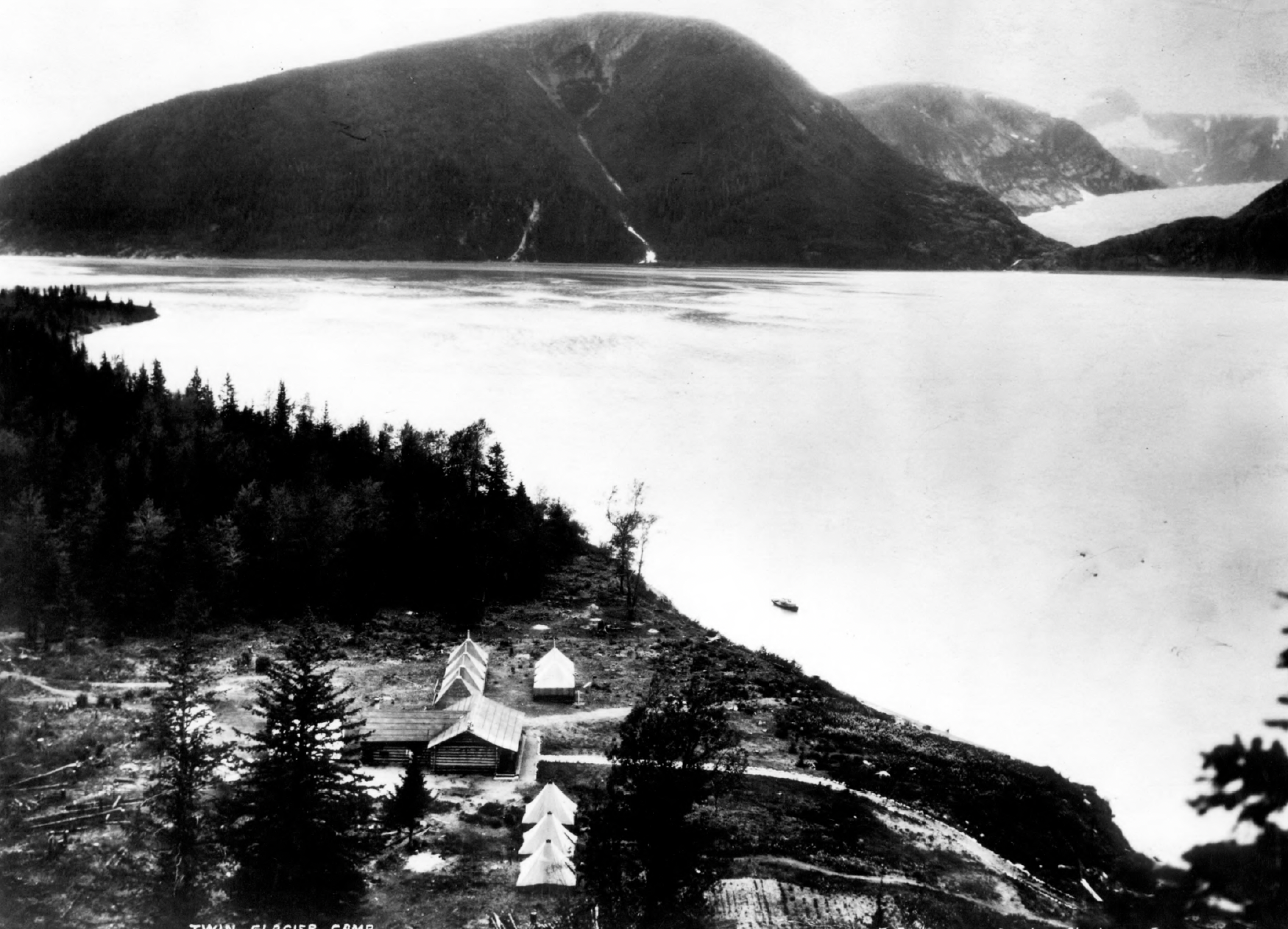 Twin Glacier Camp, 30 miles northeast of Juneau, opened in 1923. From the site visitors could view the nearby glacier, hike, hunt and fish, and enjoy the Alaska wilderness.
The camp was built and operated by the Taku River Trading Company, a commercial venture of Alaska physician and businessman Harry Carlos DeVigne. It is one of a number of wilderness camps and lodges that opened around Alaska during the 1920s when the visitor, fishing, and big game hunting industries greatly expanded.
Visitors began traveling to Alaska to view its scenic beauty, wildlife, and Native cultures in the 1870s. Before the end of the century, four steamship companies serving Alaska were advertising tours through southeast Alaska's Inside Passage. These tours included viewing and walking on glaciers in their itineraries.
The most accessible and popular glaciers in southeast Alaska was Taku Glacier, described in tourists as "two miles wide and 300 feet high, gleaming in green and blue." After World War I, the Alaska tourist industry rapidly expanded. More people became visiting Alaska as its big game hunting and fishing opportunities became better known, and as these opportunities became more limited in the western United States. A nationwide boom in leisure activity and a multiplication of Alaska travel routes lured people northward in dramatically increasing numbers.
Alaskans began to reap substantial financial benefits from tourism as visitors began to explore more of Alaska than could be seen from the deck of a steamship. Originally a gold rush town and then the territory's capital, Juneau attracted a number of visitors. Local residents supported the establishment of a territorial museum in 1921. Others began to offer excursion packages to fishing and hunting sites or to view the area's natural beauty.
Advertisements of excursion trips from Juneau to Taku Glacier appeared in the Alaska Daily Empire in 1919 and 1920. Dynes' Tours of Alaska in 1921 not only extolled the beauty of the glacier, but said: "The Taku Region abounds in large game of all species for the hunter and angler. In an hour he can fill his bucket with large cutthroat trout."Two lodges have been built here by Winter and Pond, photographers of Juneau, who run excursions to this point almost every week in the summer season."
Twin Glacier Camp retains its integrity of location because none of the buildings has been moved. Integrity of design has also been maintained. The contributing buildings have undergone minor modifications but their massing, outline, materials, color, and finishes are still those of the original buildings.
The non-contributing buildings complement the original buildings in the historic district. While their design is compatible with the original ones, the non-contributing buildings do not imitate the older ones.
Integrity of setting has been maintained. The wilderness location is virtually unchanged from the 1920-1930 period. Twin Glacier Camp remains an isolated hunting, fishing, and recreational lodge; not even the trails and paths have been paved. Integrity of materials and workmanship has been kept.
The buildings have been well-maintained, a few, minor changes have been made with appropriate materials to both the contributing and non-contributing buildings. The camp evokes the feelings of a comfortable lodge, where people are free from distractions and can focus on a healthy, outdoor lifestyle. There is little about the camp or its setting to detract from Integrity of feeling or association.
-
Dorene Lorenz published Sentinal Island Light Station in Historic Properties 2023-11-02 01:14:39 -0800
Sentinal Island Light Station
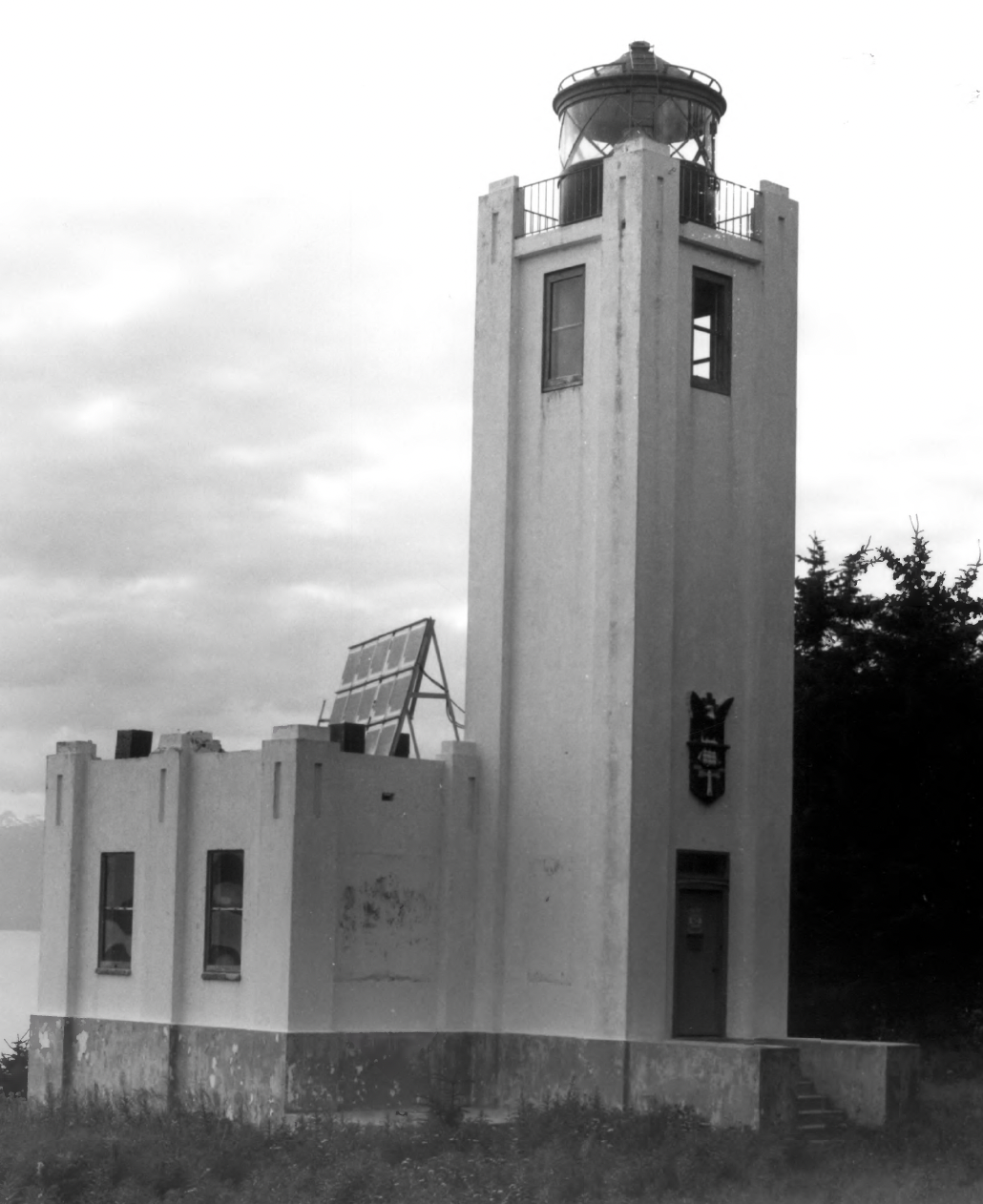 Sentinel Island Light Station is a guide on an important water passage for Alaskan transportation and commerce, and the lighthouse is an excellent example in Alaska of Art Deco architecture.
Sentinel Island and Five Finger light stations along Southeast Alaska’s Inside Passage started operating on March 1,1902. They were the first American lighthouses built in Alaska.
Sentinel Island Light Station stands at the entrance to Lynn Canal, a heavily used marine transportation corridor from near the city of Juneau north to the cities of Haines and Skagway.
The U.S. Lighthouse Bureau added a concrete Art Deco style lighthouse building to the site in 1935 that is an excellent example in Alaska of the popular architectural style. Sentinel Island Light Station continues to guide recreational and commercial vehicles through the Inside Passage today.
The discovery of rich gold deposits in the upper Yukon River area at the close of the nineteenth century prompted a massive rise in the number of ships navigating Lynn Canal. The canal was part of the Inside Passage, a safer route for ships to travel than the open ocean route to the west through the eastern Gulf of Alaska.In the late 1890s, watercraft of every description converged upon the Pacific Northwest ports to sail north. Once they passed British Columbia waters, there were few guides through the Inside Passage. Fog, rain, strong tides, and a rocky shoreline made this passage particularly difficult, especially for large steamers overloaded with prospectors and freight.
Over three hundred accidents in Inside Passage waters were reported in 1898. Although Alaska’s governors had been urging the U.S. Government to install navigation aids along Alaska’s coasts for over a decade, only a few markers and buoys had been installed. In a report to Congress dated October 13, 1900, the inspector and engineer for the Thirteenth Lighthouse District, headquartered in the Pacific Northwest, gave Sentinel Island highest priority.
Congress appropriated funds for two lighthouses in Alaska, one at Sentinel Island, that year. George James, a Juneau resident, received the contract and began construction of the Sentinel Island station in 1901. Construction costs were $21,267.
Sentinel Island Light Station started operating on March 1,1902, sharing the honor with Five Finger Light Station south of Juneau, as one of the first two American-built lighthouses operating in Alaska. In the next three years, seven other lights would be established along the inside passage.
-
Dorene Lorenz published Point Retreat Light Station in Historic Properties 2023-11-02 01:01:14 -0800
Point Retreat Light Station
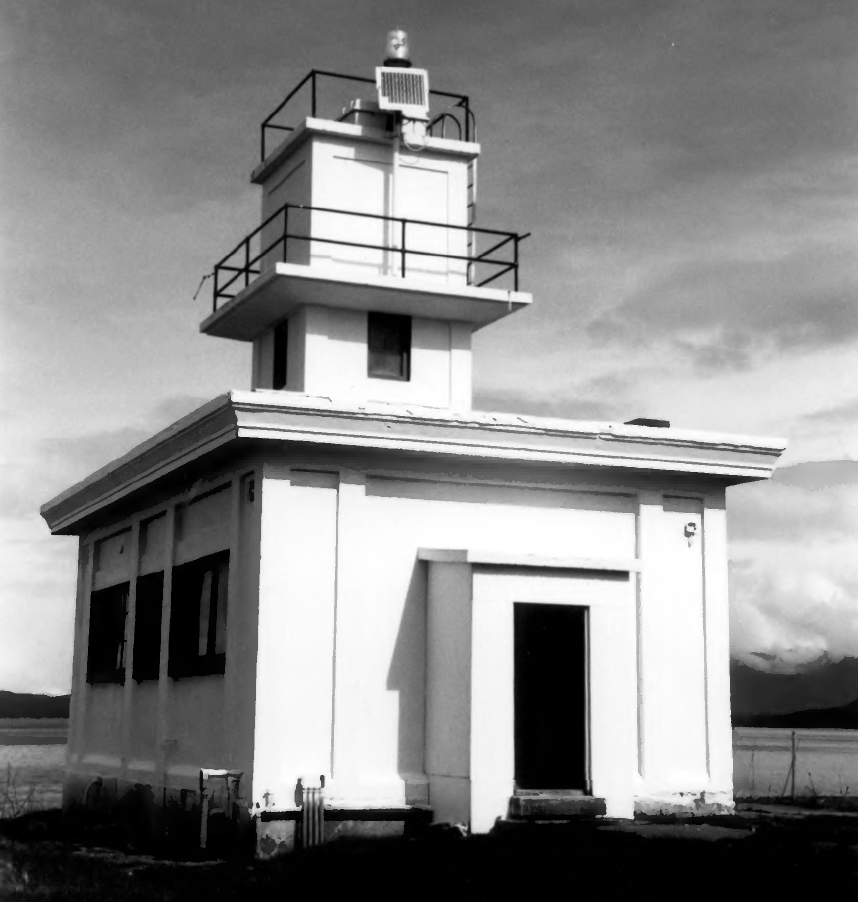 Point Retreat Light Station is one of sixteen staffed navigational lights established by the U.S. Government in Alaska.
Lighted on September 15, 1904, it has been part of a system of navigational aids to safely guide commercial and recreational vessels through the dangerous and heavily traveled southeast Alaska waterway known as the Inside Passage.
It is located a short distance north of the City of Juneau and is accessible only by water or air. The U.S. Lighthouse Service constructed the existing light tower and support buildings and structures in 1924.
One of the first concrete lighthouses built in Alaska during the 1920s, often to replace older wood frame buildings. Point Retreat's architecture is influenced by the Art Moderne.
Keepers sought assignment to Point Retreat because they could bring their families with them and because of the station's close proximity to the cities of Juneau and Douglas.
In 1973, the U.S. Coast Guard automated Point Retreat Light Station and removed the remaining staff. Although the light continues to guide commercial and recreation vessels through Southeast Alaska's Inside Passage, the period of significance ends in 1953.
The discovery of rich gold deposits in upper Yukon River tributaries at the close of the nineteenth century prompted a huge increase in the number of ships navigating Southeast Alaska's Inside Passage, a safer route for ships to travel than the open unprotected ocean route to the west.In the late 1890s, watercraft of every description converged upon the Pacific Northwest ports to sail north. Once they passed British Columbia waters, there were few guides. Fog, rain, strong tides, and a rocky shoreline made the Inside Passage particularly difficult, especially for large steamers overloaded with prospectors and freight.
Over three hundred accidents in Inside Passage waters were reported in 1898. Although Alaska's governors had been urging the U.S. Government to mark navigation hazards along Alaska's coasts for over a decade, only a few markers and buoys had been installed.
In 1901, President William McKinley issued executive orders reserving land specifically for lighthouse purposes in Alaska. One of the reserves was of 1,505 acres at the northern end of Admiralty Island known as Point Retreat, near the junction of Stephens Passage and Lynn Canal.
The original lighthouse built at the site was a white hexagonal wood tower topped by a black hexagonal lantern. Beginning operation September 15, 1904, the site did not initially house a fog-signal as would many Alaskan light stations.
Other site buildings included a one and one-half story dwelling south of the light tower and a boathouse east of the dwelling.
Prior to 1917, the station was not staffed and reduced to a minor light. A new acetylene light was established on site. Annual light reports from 1920-1923 indicate that the light was found extinguished at each visit.
-
Dorene Lorenz published St Nicholas Russian Orthodox Church in Historic Properties 2023-11-02 00:49:35 -0800
St Nicholas Russian Orthodox Church
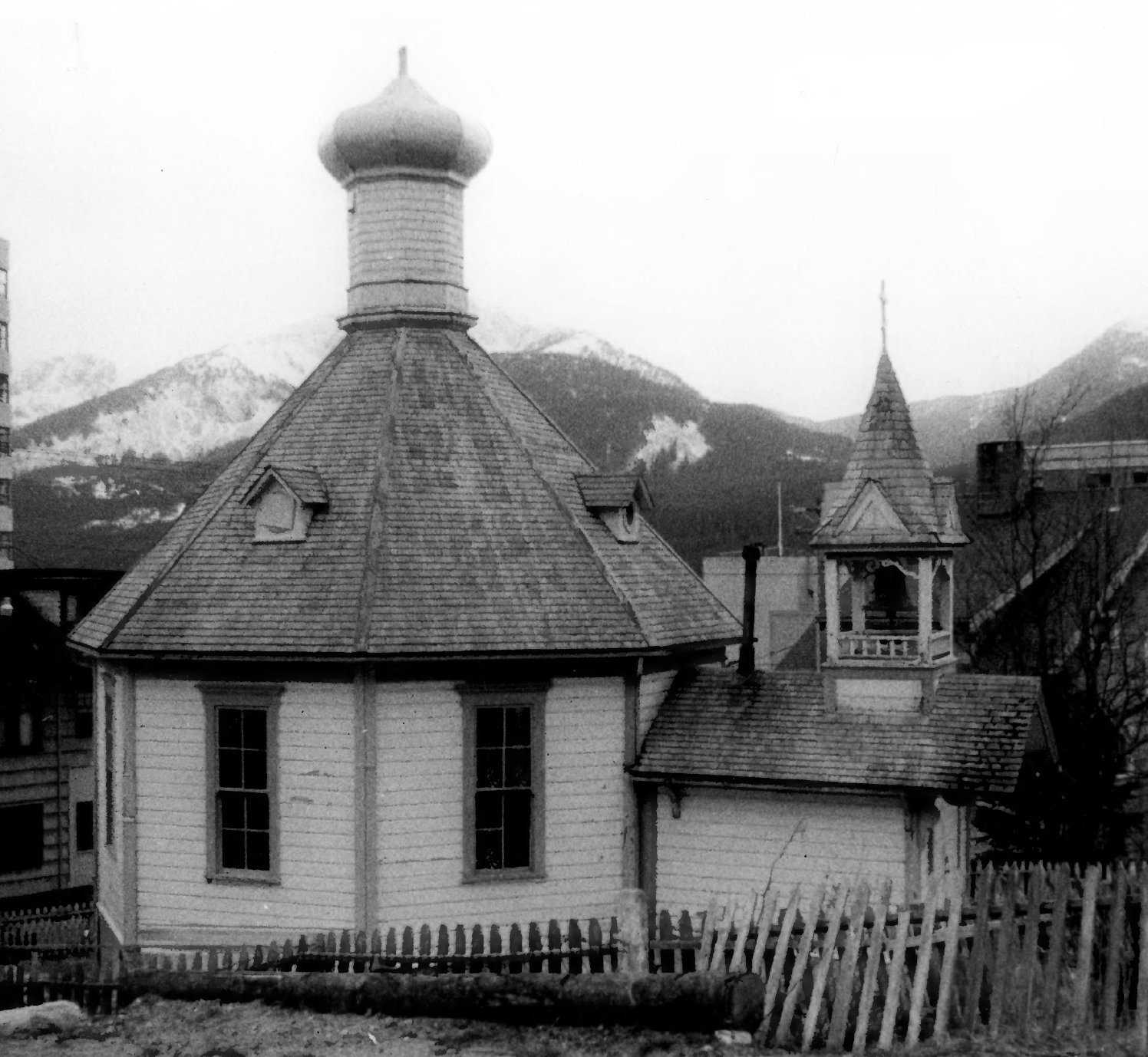 Believed to be the oldest surviving Russian Orthodox church in Alaska, St. Nicholas is significant in local history as a material record of the influence of the Orthodox Church.
The principal chief of Juneau, Ishkhanalykh, is reported to have contacted the Russian priest at St. Michael's Cathedral in Sitka, Father V. Dukhov, in 1890, expressing a wish to join the Orthodox faith.
The Sitka Indian chief, Khliantych, who was acting as intermediary, added his own belief that if Chief Ishkhanalykh were baptized first, the other Juneau natives would join the Church.
On July 26, 1892, Nicholas, Bishop of Alaska, visited Juneau and was met by a delegation of Juneau chiefs who said they wished to be baptized and that they would donate land, lumber, and labor for a church.
Asking the reason for this enthusiasm, Nicholas was told of a local tradition: A young Indian man had a vision. A venerable old man came to him and advised him to go to Sitka and to be baptized. The young man followed the advice.
A few years later he became sick, and on his deathbed he called for the elders of his tribe and told them that the same venerable old man came to see him again and told him to advise all other Indians to be baptized. The young man died, but his message did not die with him. Other Indians started to have the same vision, and the urge to be baptized spread like a wild fire.
Nicholas, impressed, agreed to the construction of a church and left a priest at Juneau. Three days later, Chief Ishkhanalykh and his wife were baptized and received the Christian names Dimitrii and Elizaveta.
St. Nicholas Russian Orthodox Church is a small wood frame structure built on an octagonal plan with a small covered entryway extending from one of its eight sides. Seven of the eight sides have large eight-light windows running from just below the eaves of the shingled roof to halfway down each side.
Above the eaves small cupolas on four of the eight panels elaborate the roof as it slopes up to the onion dome which is capped by an Orthodox cross.
A smaller cross tops the belfry that is on the covered entryway.
-
McKinnon Apartments
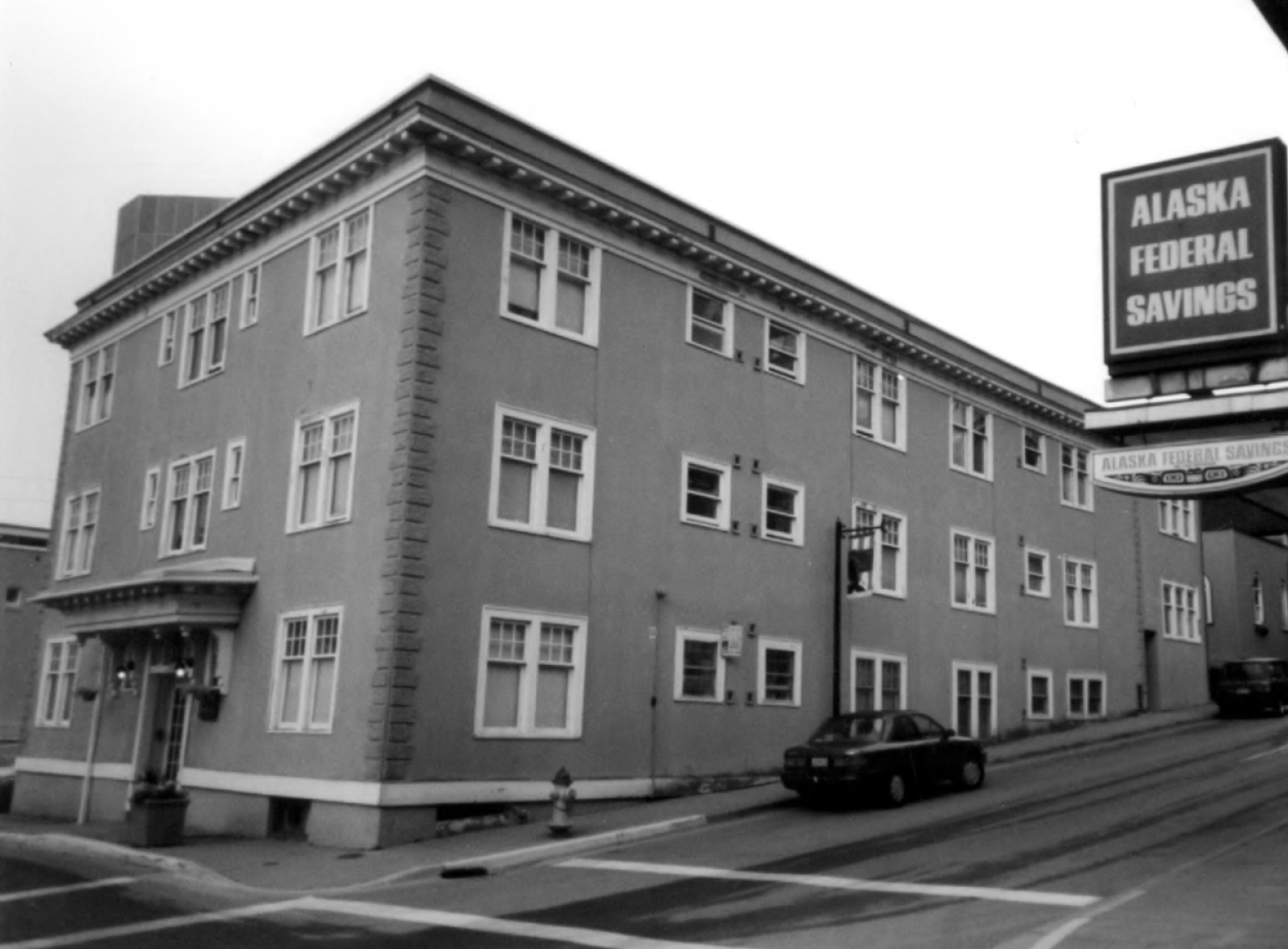 The MacKinnon Apartments is a historic apartment building at 236 Third Street. The building is a three-story wood-frame structure, finished in stucco with corner quoining and a dentillated cornice.
The MacKinnon Apartments provided modern housing in Alaska's capital and largest city, and is representative of the size and scale of the buildings constructed during the boom that occurred in Juneau during the 1920s.
When it opened in 1925, it was 80 feet (24 m) long and housed six single-bedroom and 12 studio apartments. In 1959, 20 feet (6.1 m) allowed five more studio units to be added. The building is representative of Juneau's boom years in the period between World Wars I and II, 1921 to 1939, which been defined as Juneau's Peak Gold Mining Era.
During that period, the town was the center for the territorial government, for the Alaska-Juneau Gold Mining Company's huge hard rock operations, for salmon and halibut commercial fishermen, and for supplying southeast Alaska.
Following placer gold discoveries in Silver Bow Basin in 1880, prospectors and businessmen established the town of Juneau. Within a decade, companies organized to mine the hard rock gold deposits in the area. Between 1880 and 1944, the three major mining companies in the Juneau area produced $158 million in gold. The Alaska Juneau Gold Mining Company was the largest low grade ore gold producer in the world from 1910 to 1944.
Juneau quickly grew to be the largest community in southeast Alaska. In 1920, with a population of 3,058, it was the largest city in Alaska. The federal government designated Juneau the capital for the District of Alaska in 1900, although the move from Sitka was not made until 1906, and in 1912 designated it the capital for the Territory of Alaska.
After a cold storage plant opened in 1913, Juneau became the home port for a number of fishermen. The timber industry flourished with the building of a sawmill around 1910. Juneau became the regional trading center for communities in southeast Alaska. Steamships arrived and departed regularly.
In the summer months, steamships brought visitors to town. World War I created shortages of skilled labor to work in the mines and materials needed for mine operations. Production slowed. After the war, with new capital and improvements in technology, the Alaska-Juneau Gold Mining Company was profitable and expanding operations. As a result, the town prospered. Juneau business people invested in new, more substantial buildings. One of the new buildings was the three story MacKinnon Apartments.
Lauchlin "Lockie" MacKinnon, an immigrant from Nova Scotia, constructed the apartment building. He came to Alaska in 1886, MacKinnon drifted around mining camps in Alaska and the Yukon, working as a miner and businessman. For a few years in the 1890s he mined at Porcupine north of Haines. In 1893, he crossed the Chilkoot Trail to seek gold in the Fortymile.
Back in Juneau, in 1895 and 1896 he and George Miller, his partner at Porcupine, built and operated the Circle City Hotel on Third Street. The hotel had eighty rooms, a bar and dining room.
He married Martha Maline Lokke, who came to work at the hotel, in April 1896. The family continued to move around the north, spending several years at Atlin, B.C. and in the Fairbanks area, before settling in Juneau around 1911. Back in Juneau, MacKinnon managed the Zynda Hotel, later known as the Juneau Hotel, on Main Street.
In the 1920s, MacKinnon sensed that apartments were replacing boarding houses and hotels, and built the MacKinnon Apartments. He and his wife lived in an apartment in the building until their deaths in the late 1940s.
The MacKinnon Investment Company prospectus appeared August 17, 1925, seeking investors in a three-story frame apartment house to be located at the corner of Third and Franklin Streets.
An article in Stroller's Weekly, a local newspaper, dated October 10, 1925, noted that the new MacKinnon Apartments offered numerous modern conveniences. In particular, the article said the builder wired each apartment for electricity.
After his second term as territorial governor ended in 1933, George Parks lived in the MacKinnon Apartments for three years. The building has been continuously used as an apartment house since construction.
Sons J. Simpson MacKinnon and Donald L. MacKinnon operated the apartment house after their parents' deaths. In 1959, perhaps anticipating the increased need for housing in the new state's capital, they added five studio units to the back of the building. Other than this addition, the building has not been significantly changed since its construction.
The apartment building is located two blocks outside of the Juneau Downtown Historic District, which were listed in the National Register of Historic Places in 1994. The McKinnon Apartments were listed on the National Register of Historic Places in 2000.
-
Mayflower School
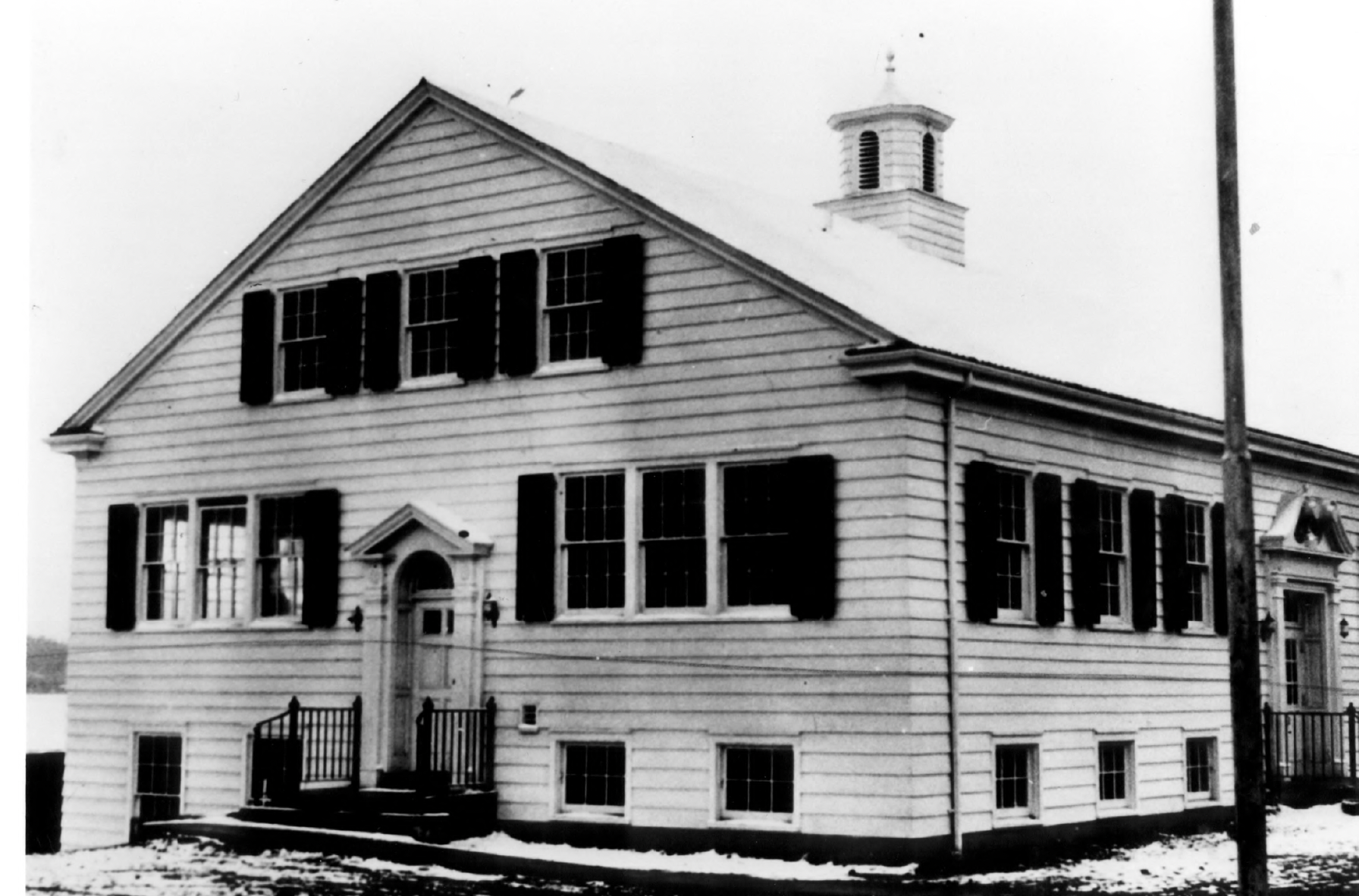 The Mayflower School aka the Douglas Island Community Center is a two-and-one-half story, wood frame structure is at the corner of St. Anns and Savikko Road on the northwest corner. The building sits on a banked slope overlooking Gastineau channel, and Juneau can be seen to the northwest.
The U.S. Bureau of Indian Affairs built Mayflower School in 1933-1934 to serve as a model for Native schools in Alaska. The Bureau wanted the school to provide vocational education for Native children and to serve as a community center for the Douglas Tllngits.
The Daily Alaska Empire (10/13/35) informed its readers that the operation of Mayflower School was a "radical departure from the old."
The handsome building represents a significant tie with the past for many in the Douglas Native community and is the only Native school building in the Juneau-Douglas area still standing. It is the only Colonial Revival Bureau of Indian Affairs school in Alaska.
Education of Alaska Natives began when the Russian-Amerlcan Company and Russian Orthodox Church opened schools in Alaska at their major posts to provide education and vocational training for Creole and Native children. After the transfer of Alaska to the United States in 1867, the church continued to support several schools around Alaska.
The U S Government did not undertake responsibility for educating all Alaska Native children although it required the Alaska Commercial Company to operate schools for the Aleut children on the Pribilof Islands as a condition of the company’s 20-year exclusive lease to hunt fur seals on the Islands. Shortly after the transfer, the residents of Sitka supported a public school for all children interested in attending, but it closed in 1870 when the city's economy declined.
The Presbyterian Home Mission Society was the first American missionary group to open schools in Alaska for the Native children. In 1877, their first school opened at Fort Wrangell, and by 1884 the Presbyterians had schools at Sitka, Haines, Hoonah, Fort Tongass and Howkan.
Finally, in 1885 Congress provided for the establishment and support of public schools in Alaska "for Native and non-native children and appropriated $25,000 for this purpose. After Alaska became a territory, the Territorial Legislature established a Department of Education in 1917. Most of the schools supported by the Territory were in the larger non-Native communities. Control of education for Alaska Natives was transferred from the Secretary of the Interior to the Bureau of Indian Affairs.
The community of Douglas started as a mining camp in 1881 and grew due to the success of the adjacent lode gold Treadwell Mines. Many Natives moved to Douglas and worked at the mines.
The Friends Society of Kansas sent Elwood W. Weisner and Francis W. Baugham to Douglas to establish a school and home for Natives in the summer of 1887. The home accommodated 14 boarding students and the same number of day students. Because it was the only school on Douglas Island, it was attended by both Native and non-Natlve children. It operated until 1902, when the missionaries moved to Kake, another Southeast Alaska community.
The federal government built a school in Douglas for Native children in 1890 at a cost of $900. In 1902, a second school was constructed on the beach near the Native village that served until it burned in 1926. In their annual reports to the Bureau of Education, teachers repeatedly complained about the poor condition of the school.
The fire of October 11, 1926 burned the entire Douglas Indian village that included 42 homes, the school, stores and churches, as well as a number of homes outside of the Native village. After the fire, the teacher, Rose Davis, requested permission to rent quarters for herself and the school.
From 1926 to 1934 Native children in Douglas attended school in a variety of locations. One informant recalls classes being held in the upstairs of an old theater. In 1933-1934 the U.S. Bureau of Indian Affairs constructed a number of school buildings throughout Alaska from a Public Works Administration grant of $175,000 supplement ed by $30,000 in Territorial funds. By September 1934, new schools stood at Teller, Buckland, Little Diomede Island, Hydaburg, and Douglas. The Douglas School cost $9,500.
The name Douglas Indian Community Center was replaced with Mayflower School. This name was derived from Mayflower Island, a tiny island located in Gastlneau Channel off Douglas Island. The school built by local citizens under the direction of the Southwestern District of the Bureau of Indian Affairs, Alaska region, was a handsome white-bodied, green-shuttered, Colonial Revival building. Mayflower School operated as a school for Douglas Native children only for six years.
In 1940, it merged with the Juneau Government School. Native children from Douglas and Juneau were divided by grades between the two schools. In 1948, the school system for Native children merged with the local public school system. The Bureau of Indian Affairs turned over the school to the City of Douglas to be used for school purposes. Douglas and Juneau public schools consolidated in 1955, Juneau and Douglas city governments consolidated in 1970, and Mayflower School was added to the real estate holdings of the new political incorporation.
Rose Davis taught Native children in Douglas for 20 years, and was the principal teacher at Mayflower School from 1934 to 1942. The Dally Alaska Empire reported on June 2, 1934 that starting July 1st Mrs. Davis would advance to all-year service because the Bureau of Indian Affairs envisioned Mayflower School as a "real community center in connection with the wonderful facilities of the new school building."
The newspaper quoted Charles W. Hawkesworth, Chief of the Bureau, in its October 13, 1935 issue on the new approach to education that Mayflower School would pursue. It would have a more home like setting, and emphasize "a practical type of education." Children would learn vocational skills such as taxidermy, boat and furniture building, coffin making, weaving, and rug making. In the classroom, the children had tables and chairs suited to their size instead of benches and desks.
Mrs. Davis opened the library to the community in the evenings. The recreation room had a basketball hoop, and was also open after school hours. The Native community was encouraged to use the showers, laundry facilities, and kitchen in the school. The Alaska Native Brotherhood and Alaska Native Sisterhood regularly held meetings at the school, and the organizational meeting of the Douglas Indian Association took place in the recreation room.
-
Juneau Memorial Library
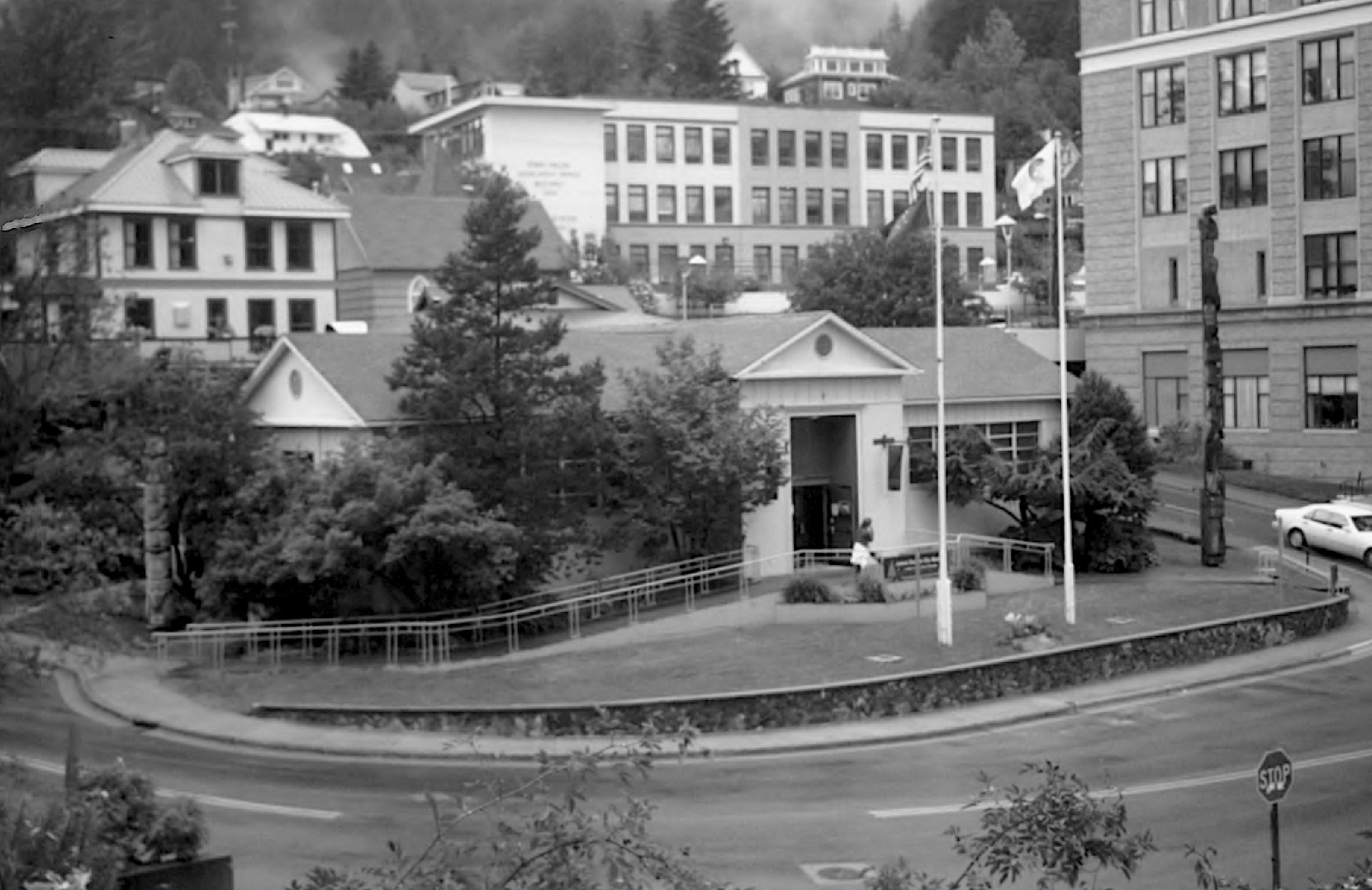 The Juneau Memorial Library, aka the Veterans Memorial Building, located at 114 W. Fourth Street, has a commanding presence, sitting on a hillside at the corner of Fourth and Main streets, across from the Alaska State Capitol and overlooking downtown Juneau.
The building stands on a prominent location in the community, next to Alaska's state capitol, on a hill overlooking downtown Juneau with a residential area behind it.
The Juneau Memorial Library, completed in 1951, was the first major community project initiated by Juneau residents. The Juneau Rotary Club undertook construction of a library building for the town's residents as a memorial to the men and women of the area who fought in World Wars I and II.
A local architectural firm designed the stately reinforced concrete building incorporating Neo-Classical Revival architectural elements.
The building housed the community's library until the mid-1980s. It is now the city's museum, continuing to be a public facility serving the community. The period of significance starts in 1951 when the library opened and ends in 1959 to encompass the statehood event.
Following the discovery of gold on Gold Creek in Silver Bow Basin in 1880, the town of Juneau was established. It became a center for large scale hard-rock mining. The city incorporated in 1900 and became Alaska's capital in 1906. It was Alaska's largest community from 1920 to 1950.
In 1897, the Juneau Public Library Association, comprised mainly of local ministers, organized and provided a library collection that was housed in the federal courthouse. In 1898, the building burned and the library with it. A library was not reestablished.
In 1906, a party of American Library Association visitors met with Juneau's mayor and left a collection of books. The mayor told the group he would try to get the City Council to pass an ordinance to establish a free library. Apparently, the Carnegie Library Foundation Association made an offer of a building to the city after the visit.
Juneau did not have a public library again, however, until 1914 when the Juneau Draper Club, a civic group, founded one. The club bought books, rented a small building, and hired a librarian. They opened a reading room in August 1914 and a circulation department in December 1914.
A Juneau Library Association organized in April 1915, and at the end of the year reported 141 monthly subscribers and 55 yearly subscribers to the association. In a letter to the librarian at the Seattle Public Library, dated May 18, 1915, the Association's president wrote that "Our library is small, consisting of about fifteen hundred books, and at present the position pays $75 per month. It is a free circulating library with a reading room. We prefer a lady, one not too young, and a Protestant, If you know of any person or persons who would like this position, will you please have them apply as soon as possible?"
On the first anniversary the library cited impressive statistics. They had 1,180 borrowers, 350 of whom were children. During December 1915 there had been 700 people visiting the reading room. The Draper Club paid $150 to operate the library, and in 1915, the president, Ben D. Stewart, said the group could not continue to support it. Stewart, however, also was the city's mayor. He persuaded the City Council to pledge $1,800 a year for library support.
The City of Juneau took over the library on August 16, 1918, and housed it in two rooms on the top floor of Juneau City Hall. The Juneau librarian wrote an article, "Libraries in Alaska," that appeared in the American Library Association's journal in 1918. The librarian mentioned that Juneau "has not been able to accept the generous offer of a $20,000 building" made the year before by the Carnegie Library Foundation. By the end of World War II the two rooms were badly overcrowded.
The Juneau City Hall was razed in 1950 for construction of the Alaska Office Building, and the library moved temporarily to the Teen Age Club on South Seward Street.
Rev. Herbert Hillerman, Juneau Rotary Club president, announced at the August 28, 1945, meeting shortly after World War II ended that building a library as a memorial and tribute to area veterans of the World Wars would be the Club's top priority.
The next year, under the leadership of B. Frank Heintzleman, Ben D. Stewart, and James C. Ryan, the Rotary Club purchased the Olds family property at the corner of West Fourth and Main streets and hired architects Ross and Malcolm to design a building to be the community library.
The federal Public Works Administration advanced funds to pay for architectural services. The architects completed the drawings in 1946 and the Juneau Memorial Library Board of the Rotary Club sold the land that year for $2,500.00 to the city.
In 1949 a new Alaska Public Works program allowed the architects to increase the size of the building and add the basement to the plans. The Rotary Club then called upon members of the community for donations to construct the building. "Want to buy a ticket?" was heard throughout town. Service clubs, fraternal organizations, church groups and members of the community sold tickets to bazaars, hosted home cooked food sales, dinners, card parties, dances, white elephant sales, minstrel shows and even peddled chances to win an automobile. The Alaska Native Brotherhood and Sisterhood performed tribal dances and the Filipino Community held a special dance and costume exhibition.
Residents raised $82,000 and the federal Public Works Administration provided another $71,000 for construction. Ann Coleman, longtime and beloved community librarian, broke ground for the building on September 10, 1950.
At the dedication ceremony November 11, 1951, Heintzleman said, "this project represents I think the finest example in this territory of community spirit and enterprise working for a cultural project to benefit 'old and young, rich and poor'".
The construction of the library was the first major community effort to "obtain a facility of major size by the direct method of public contributions," making it an example of community planning and development in Juneau. Heintzleman insisted the library serve some twenty smaller communities in the Juneau area as well.
Many local residents view the building as a landmark in the community and have fond memories of it. In 1951, Mike Blackwell was eleven and remembers being paid twenty-five cents an hour to work for Miss Lomen, the librarian, after school each day for two hours and on Saturday afternoons.
The first floor housed fiction and non-fiction and had a high shelf with books children were not allowed to check out. Blackwell remembers that one could examine the loan record in the books, and he often looked at who had checked out a particular book. He also recalls that the new building was spacious and "for a long time there was a lot more room than books."
The library was designed to house 18,000 volumes. The children's section in the basement was called the Ann Coleman Room.
Today, the building is home to the Juneau-Douglas City Museum. According to former librarians Donna Pierce and Barbara Berg, because of the strong emotional attachment to the building the City Museum was the only suitable tenant.
At the May 16, 1989, assembly meeting, local Veterans of Foreign Wars and Donna Olds Barton suggested the building be rededicated as the Veterans Memorial Building. The rededication ceremony was held July 1, 1989, as part of the opening of the Juneau-Douglas City Museum in the building. The building is now dedicated to "all the men and women of the Juneau Area who served in our country's Foreign Wars."
On the library property is the Alaska Statehood Site, significant as the official site of the statehood ceremony and first raising of the 49 star flag on July 4, 1959.
Non-voting territorial delegate James Wickersham introduced the first bill for Alaska statehood in the U.S. House of Representatives in 1916. Low population, geographical separation from the other states, and how Alaskans would pay the expenses of statehood delayed statehood for more than forty years.
Finally, President Dwight D. Eisenhower signed the proclamation admitting Alaska as the 49tb state of the union on January 3, 1959. By executive order the new 49 star national flag did not become the official ensign until July 4th of the year.
An estimated three thousand people stood at attention as the first 49-star flag was raised in front of the Juneau Memorial Library by a military honor guard on July 4, 1959.
Author, lecturer, world traveler and New Yorker, Lowell Thomas was master of ceremonies. At 3:00 p.m. Governor Bill Egan spoke to the crowd while the flag was being raised. One of the territorial governors, Waino E. Hendrickson, was present. The site, marked with a commemorative plaque between the flagpoles, was dedicated at the ceremony.
Two large weather balloons carrying flags of Alaska and the nation were released in the hopes they would carry the news of Alaska statehood to the rest of the world. A parade went past the front of the library after the ceremony.
The July 6, 1959, edition of the Juneau newspaper reported "Special guests from across the nation observed the 49th star flag raising ceremonies from stands at one wing of the State Office Building. The State signs were carried by members of a delegation of Westinghouse appliance dealers who flew to Juneau for the ceremonies." The flagpoles at the site fly a 49 star flag and an Alaska flag and the plaque can be read by people passing on the sidewalk.
Only two other sites in Alaska associated with Alaska statehood have been documented and designated historic places. Constitution Hall on the University of Alaska campus at Fairbanks was listed in the National Register of Historic Places on November 3, 2005, for its association with the 1955-1956 Constitutional Convention.
The American Flag Raising Site at Sitka, designated a National Historic Landmark on October 15, 1966, is another site of an official statehood ceremony, but it is better known as the site of the ceremonial transfer of Alaska from Russian to U.S. administration in 1867.
Two totem poles, Harnessing the Atom by Amos Wallace installed in 1970 and Four Story-Pole by John Wallace installed in 1994, are on the property and counted as non-contributing objects to its placement on the National Register of Historic Places.
2025-2026 Chairman, 2024 Commissioner, Alaska State Commission for Human Rights. 2025 United Nations Geneva Human Rights Crisis State & Local Panelist. 2024 Alaska State Delegate, America 250 Convening of the States. 2023-2024 Commissioner, Alaska Historical Commission. 2025-2026 Chairman, 2019-2024 Committee Member, City & Borough of Juneau Historic Resources Advisory Committee. 2024-2025-2026 Sons of Norway Svalbard Lodge Juneau Historian. 2024-2025-2026 Filcom Member. 2018-2020 Committee Member, City & Borough of Juneau Sister Cities Committee. 2019-2020 Member, AVTEC Institutional Advisory Committee. 2006-2020, President & COB, Friends of Jesse Lee Home. 2012 Member, Anchorage Arts Advisory Commission. Anchorage International Film Festival Features Committee Chair/Host/Award Presenter. Balto Film Fest Founder.
2004 Seward City Council. 2002-2006, Seward Centennial Legacy Committee, Seward Economic Development Committee, Seward Waterfront Committee, Seward Alternate Energy Committee, Seward Long-term Care Replacement Facility Committee, and Seward Historic Preservation Commission.