-
Pilz, George
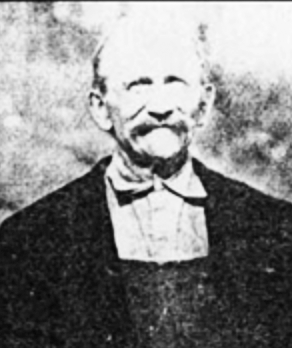
Primary Name: Pilz, George
Filed as: Pilz, George
Also known as: George Pilz
Occupation / Association: Mining engineer; prospector; Alaska mining promoter
Associated places: Saxony, Germany; Freiberg, Germany; Sitka, Alaska; Silver Bay, Alaska; Juneau, Alaska; Chilkoot Pass, Alaska; Dawson, Yukon; Katalla, Alaska; Chitina, Alaska; Forty-Mile region, Alaska; Eagle, Alaska; San Francisco, California; Michigan copper range
Keywords: George Pilz, Alaska mining engineer, Freiberg Mining Academy graduates, Silver Bay lode gold Alaska, Juneau gold discovery promoters, Joe Juneau prospecting party, Richard T Harris prospecting party, Auk Chief Kowee samples, Chilkoot Pass exploration, early Alaska mining development
Biography
George Pilz, one of the first professional mining engineers to work in Alaska, became a leading figure among the miners who entered the territory during the first decades following the United States purchase of Alaska.
Pilz was born in Saxony and educated at the renowned Mining Academy at Freiberg. After working on coal exploration in Germany, he left the country in 1867 to avoid conscription during the Franco-Prussian War.
Initially, Pilz investigated mining prospects in Canada and the United States for a German-owned company. He later left that position to work for the Calumet and Hecla Mining Company at Hancock in Michigan’s copper range. In 1869, he departed Michigan to erect a copper smelter in California.
During the following decade, Pilz worked throughout California, Arizona, and Nevada prospecting, developing mines, and erecting mills and smelters. His reputation for blunt and often cantankerous competence assured him steady employment, though it also kept him moving frequently from project to project.
In 1878, Pilz met Nicholas Haley in San Francisco. Haley, who had previously been stationed with the United States Army in Sitka, possessed rich gold-quartz specimens taken from the Stewart and other lodes near Silver Bay south of Sitka. Pilz initially suspected the samples originated from California’s Grass Valley district, but discussions with army officers and soldiers convinced him that the specimens truly came from Alaska.
Pilz secured financial backing and, in February 1879, traveled to Alaska to construct a mine and mill at Silver Bay. Gold processed by his five-stamp mill became the first lode gold produced in Alaska. The mine closed early in 1880 when the deposit proved too low-grade to sustain operations, though later events would vindicate Pilz’s belief that the region held significant mineral potential.
Seeking additional discoveries throughout Southeast Alaska, Pilz enlisted the assistance of several Tlingit communities, who supplied mineral samples from different areas. Pilz then dispatched experienced prospectors to investigate these reports, including Alaska Mining Hall of Fame inductees Joe Juneau and Richard T. Harris.
One of Pilz’s prospecting parties helped open Chilkoot Pass, which later became the principal gateway to the Klondike gold fields. The route was opened after Navy Captain Lester Beardslee negotiated with the Chilkat Tlingit to allow freighting through the pass.
Among the most promising samples received by Pilz were brought by Alaska Mining Hall of Fame inductee Auk Chief Kowee, who lived on Admiralty Island near the site of the modern city of Juneau. These specimens likely originated from the Gastineau Channel area.
Acting on Pilz’s direction, Harris and Juneau made their discovery in early October 1880 in Silver Bow Basin above present-day Juneau. Their earlier trip had taken them to Gold Creek, where they found promising placer gold and quartz fragments containing gold.
A grubstake agreement arranged by Pilz allowed Harris and Juneau to stake placer claims for themselves while granting Pilz a majority interest in the lode claims on a three-to-one basis.
After confirming the discovery in Silver Bow Basin, Harris and Juneau returned to Sitka, where Pilz joined them. Satisfied that the claims had been properly staked, Pilz approved the work and helped promote the new mining district. News of the discovery sparked a rush to the area in December 1880.
Controversy later arose involving N. A. Fuller, a Sitka merchant who had been connected with Pilz’s operations. Pilz maintained that Fuller acted only on his behalf, but the matter eventually resulted in a lawsuit in Sitka in 1886 in which Fuller obtained judgment against Richard T. Harris.
At the time, Pilz might have aided Harris, but was imprisoned in San Francisco, awaiting trial on a fraud charge he always denied. Despite later disputes between the two men, contemporary correspondence shows Pilz regarded Harris as one of his closest associates during the early Juneau mining period.
Miners from Juneau even sent gold dust to San Francisco to help Pilz post bail. The episode reflected the complicated and often contentious nature of Pilz’s career.
Pilz also likely erected the first prefabricated building in Alaska, constructing a pre-built house in Sitka. On February 7, 1881, he chaired a miners’ meeting that adopted revised mining district rules for the Harris district. He was also involved in organizing and platting the early town that became Juneau, then known as Rockwell or Harrisburg.
In later years, Pilz continued working in mining ventures across North America. He was reported in Dawson in 1906, at Katalla in 1907, working on coal projects, and in Chitina in 1911. He later spent many years in the Forty-Mile region.
George Pilz died in Eagle, Alaska, on September 15, 1926, remembered as a brilliant but often combative pioneer mining engineer who played a key role in the discovery and early development of the Juneau gold district.
Sources
-
Juneau, Joseph
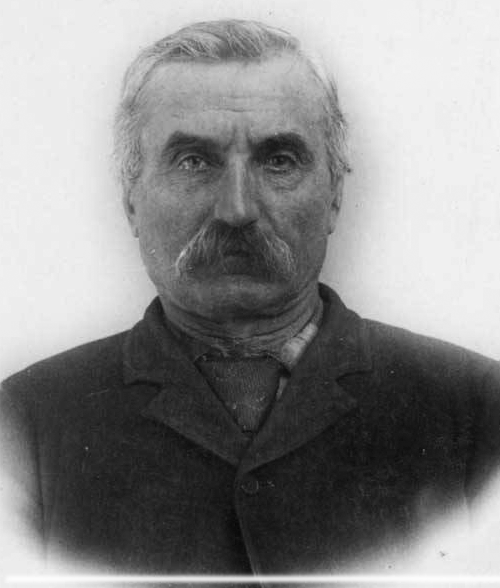
Primary Name: Juneau, Joseph
Filed as: juneau_joseph
Also known as: Joe Juneau; Joseph “Joe” Juneau
Occupation / Association: Prospector; co-discoverer of gold at Juneau
Born: May 1836, Lower Canada (Quebec)
Died: January 1899, Dawson, Yukon Territory
Parents:
Spouse:
Children:
Associated places: Quebec, Canada; Schenectady, New York; Sitka, Alaska; Juneau, Alaska; Dawson, Yukon
Keywords: Joseph Juneau, Joe Juneau, Juneau Alaska founder, Juneau gold discovery 1880, Richard Harris, Chief Kowee, Silver Bow Basin, Alaska Juneau Gold Mine
Biography
Joseph “Joe” Juneau was one of the discoverers of gold in the Juneau area in 1880 and the man for whom the city of Juneau is named.
Juneau was born in May 1836 in Lower Canada (Quebec). As a young man he moved to the United States and worked as a miner and prospector throughout the American West.
In 1879, he joined Richard “Dick” Harris in prospecting for gold in southeastern Alaska for Sitka merchant George Pilz. Their guide in the region was Chief Kowee, who led them into the mountains behind Gastineau Channel.
In October 1880, Harris and Juneau discovered rich placer deposits in Silver Bow Basin. Within a short period, they staked claims on some of the richest ground in the basin, discoveries that eventually led to the development of the Alaska-Juneau Gold Mine.
The settlement that developed near the discovery was first called Harrisburg, then Pilzburg, and later Rockwell. In 1881, the miners voted to rename the town Juneau in honor of Joe Juneau.
Juneau later sold his interest in the mining claims and continued prospecting in other northern districts, eventually traveling to the Yukon during the Klondike Gold Rush.
He died in Dawson, Yukon Territory, in January 1899.
Sources
Alaska Consortium Library — Joseph Juneau Correspondence
Tags: Joseph Juneau, Joe Juneau, Juneau Alaska founder, Richard Harris, Chief Kowee, Silver Bow Basin discovery, Alaska Juneau Gold Mine
-
Harris, Richard Tighe Jr.
Richard Tighe Harris, Junior was born on November 10, 1885, the youngest surviving son of Kitty Harris and Richard "Dick" Tighe Harris.
His older brother, William John Harris, also survived. A younger sister Mary Kelchine Harris, died at 11 months old.
They family lived at 219 Second Street on the Telephone Hill Historic Neighborhood. Upon his father's death, William inherited this house.
He attended the native school in Juneau. In the mid-1890’s, he began to study at the Indian School at Chemawa, Oregon. The first correspondence in the Alaska Consortium Library's collection between them while at school and their father begins in late 1897.
Dick Harris’ eyesight began to fail by mid-1904, so Richard, joined his father in Juneau in August of that year. A month later, he wrote to his brother at Chemawa that their father had liver and eye trouble.
During this time, Richard helped his father at the Customs Office. He became a musician and carpenter, lived in Juneau for most of his life and raised a large family.
-
Harris, William John
Primary Name: Harris, William John, Jr.
Filed as: harris_william_j_jr
Also known as: William John Harris Jr.; William J. Harris Jr.; William Harris
Occupation / Association: Guide; Sign Painter; Political Cartoonist
Born: March 29, 1884, Juneau, Alaska
Died:
Parents: Richard "Dick" Tighe Harris; Kitty Harris
Spouse:
Children:
Associated places: Juneau, Alaska; Telephone Hill; Chemawa Indian School, Oregon
Property / Address: Harris Family Home, 219 Second Street, Telephone Hill, Juneau, Alaska
Keywords: William John Harris Jr, William Harris Jr, Richard Dick Harris family, Kitty Harris, Telephone Hill residents, Alaska Native rights cartoonist, Chemawa Indian School students
Biography
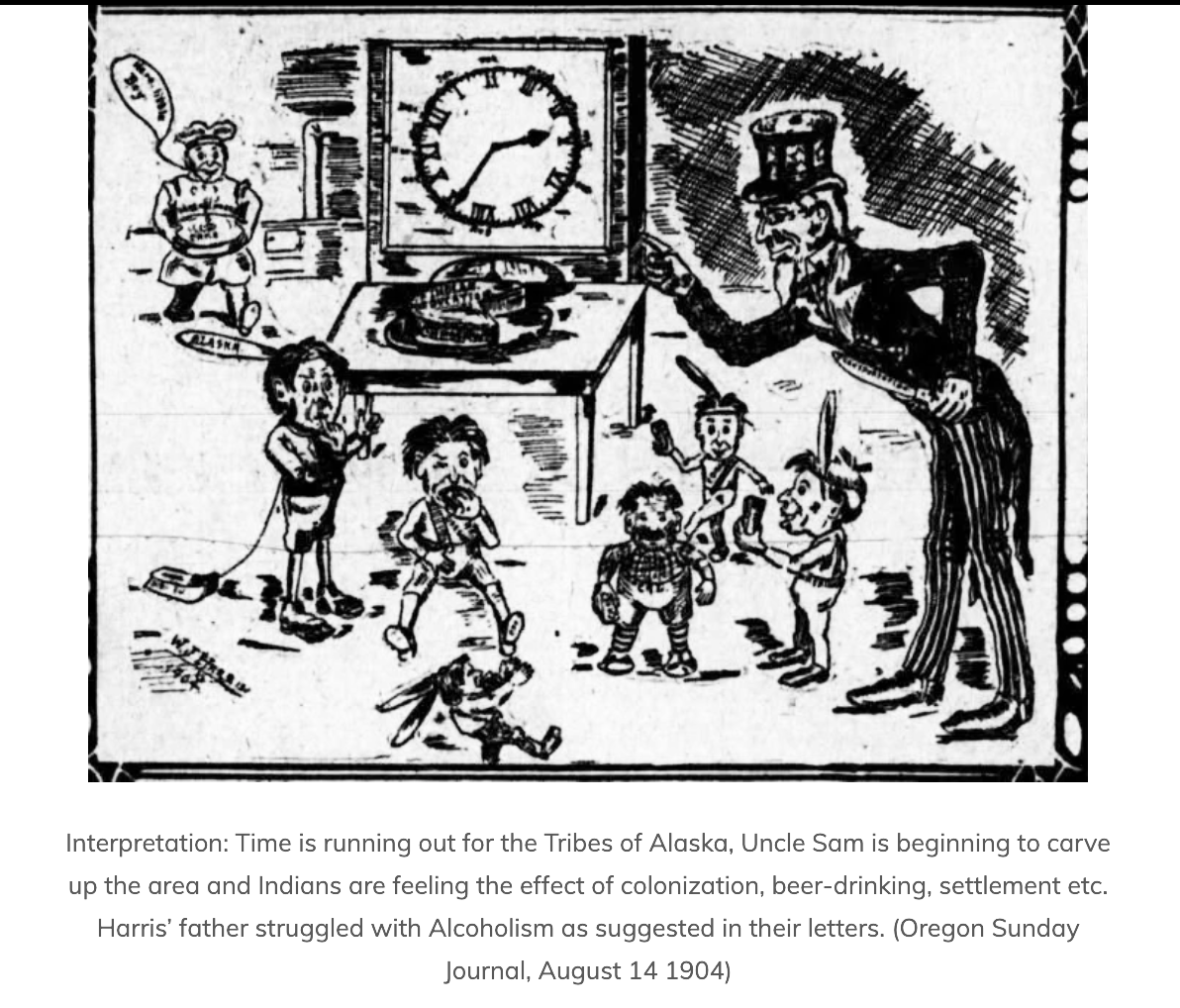
William John Harris, Junior was born on March 29, 1884, the oldest surviving son of Kitty Harris and Richard "Dick" Tighe Harris. He was named after Dick Harris's nephew, William John Harris, Senior. An older brother with the same name died in infancy.
His younger brother, Richard Tighe Harris, Jr., also survived. A younger sister, Mary Kelchine Harris, died at 11 months old.
The family lived at 219 Second Street in the Telephone Hill Historic Neighborhood. Upon his father's death, William inherited this house.
He attended the Native school in Juneau. In the mid-1890’s, he began studying at the Indian School at Chemawa, Oregon. The first correspondence in the Alaska Consortium Library's collection between the boys and their father begins in late 1897.
William Harris was a guide and sign painter in Juneau. He inherited the house after his father's death in 1907.
Although 1901 tax records show “lots and a building” and site improvements valued at $1,000, the Edward Bayless House, located on Lot 2 at 211 Dixon Street, is visible in an 1885 photograph. It is recorded that in 1912, Claire Bayless and Edward Bayless purchased Lot 1 and built the Edward Bayless House.
William was a nationally published political cartoonist whose caricature drawings demonstrated involvement in early Alaska Native rights efforts. While at school, he drew cartoons for the Salem Capital Journal, including a lampoon which helped cover his school expenses while he studied caricature.
He lived in Juneau most of his life and raised a large family.
Sources
Alaska Consortium Library – Harris Family Papers
Telephone Hill Historic Site and Structures Survey
Tags: William John Harris Jr, Harris William John Jr, Kitty Harris, Richard Dick Harris, Telephone Hill residents, Alaska Native rights advocates, Juneau pioneers
-
Harris, Kitty
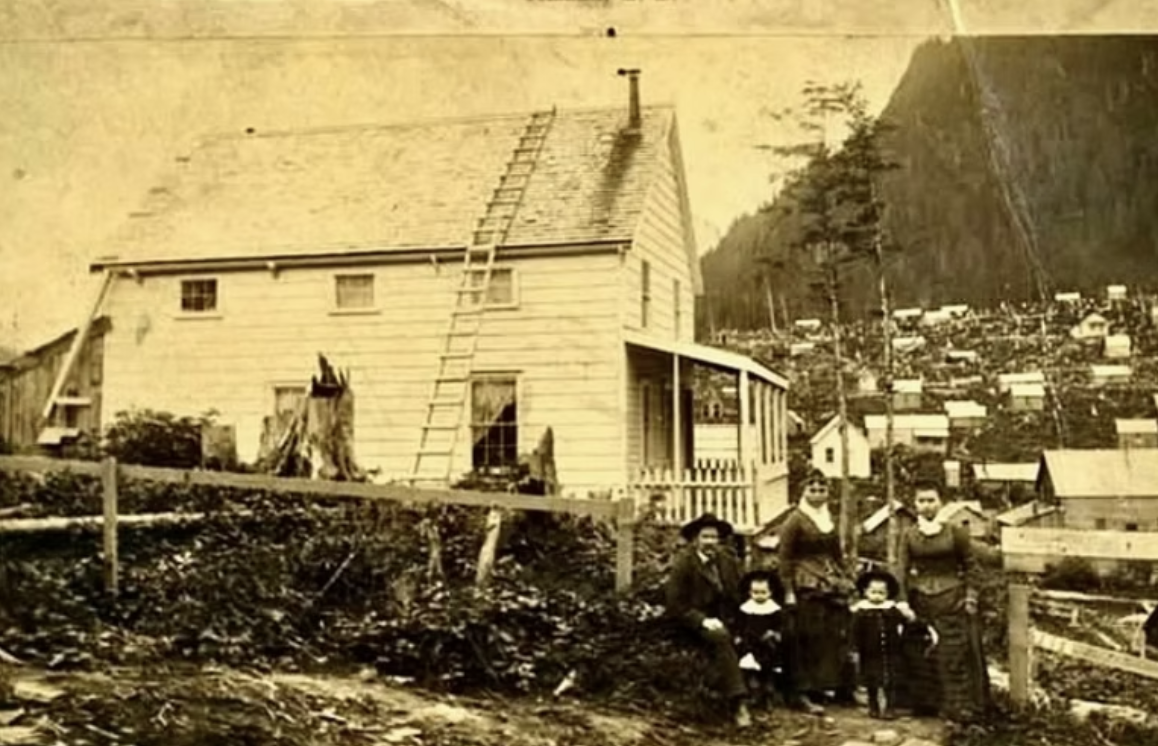
Primary Name: Harris, Kitty
Filed as: harris_kitty
Also known as: Kitty Newcomb Harris; Katherine Harris, Kate Harris,
Occupation / Association: Early resident of Juneau; Tlingit resident of Hoonah
Born: circa 1867, Hoonah, Alaska
Died: February 1893, Juneau, Alaska
Parents:
Spouse: Richard Harris (m. circa 1880)
Children: William J. Harris (1882–1882); William J. Harris, Jr.; Richard Tighe Harris, Jr.; Mary Kelchine Harris (1888–1889)
Property / Address: 219 Second Street, Telephone Hill, Juneau, Alaska
Associated places: Hoonah, Alaska; Juneau, Alaska; Harrisburg (Juneau), Alaska; Telephone Hill Historic Neighborhood
Keywords: Kitty Harris, Katherine Harris, Harris Kitty, Richard Harris wife, Telephone Hill residents, Harrisburg Alaska families, Tlingit residents Juneau, Hoonah Alaska families
Biography
Kitty Harris, a Tlingit woman from Hoonah, believed to be of the Wooshkeetaan clan, married Richard Harris around 1880.
In March 1881, the couple purchased Lots 1 and 2 on Telephone Hill from George Pilz and his wife. They later sold Lot 1 and built a home on Lot 2 at 219 Second Street.
The couple had four children. Their first son, William J. Harris, was born on May 14, 1882, but died two days later. A second son, William J. Harris, Jr., was born on March 29, 1884. On November 10, 1885, their son Richard Tighe Harris, Jr. was born. Their daughter Mary Kelchine Harris was born on March 22, 1888.
Kitty Harris and three of her children were baptized on Sunday, July 15, 1888, by Reverend Eugene S. Willard in the Presbyterian Church in Harrisburg, Alaska.
Mary Kelchine Harris died on February 24, 1889, at the age of eleven months. Kitty Harris died in February 1893 at the age of 26.
Sources
Alaska Consortium Library; Telephone Hill historical records; Juneau Independent, "Telephone Hill Was Built Around a Tlingit Home"
Tags: Kitty Harris, Katherine Harris, Harris Kitty, Richard Harris, Telephone Hill residents, Hoonah Alaska families, Harrisburg Alaska families, Tlingit residents Juneau
-
Harris, Richard
Primary Name: Harris, Richard Tighe
Filed as: richard_tighe_harris
Also known as: Richard Harris; Dick Harris
Occupation / Association: Prospector; Miner; Founder of Juneau
Born: October 31, 1837, Drummadonald, County Down, Ireland
Died: October 11, 1907, Portland, Oregon
Parents: John Harris; Mary Anderson Harris
Spouse: Kitty Harris
Children: William J. Harris; Richard Tighe Harris, Jr.; Mary Kelchine Harris
Associated places: County Down, Ireland; Pittsburgh, Pennsylvania; Kansas Territory; Bannack, Montana Territory; British Columbia; Juneau, Alaska; Douglas Island, Alaska; Portland, Oregon
Keywords: Richard Tighe Harris, Dick Harris, Richard Harris Juneau founder, Harris Mining District, Alaska Juneau Gold Mine discovery, Silver Bow Basin discovery
Biography
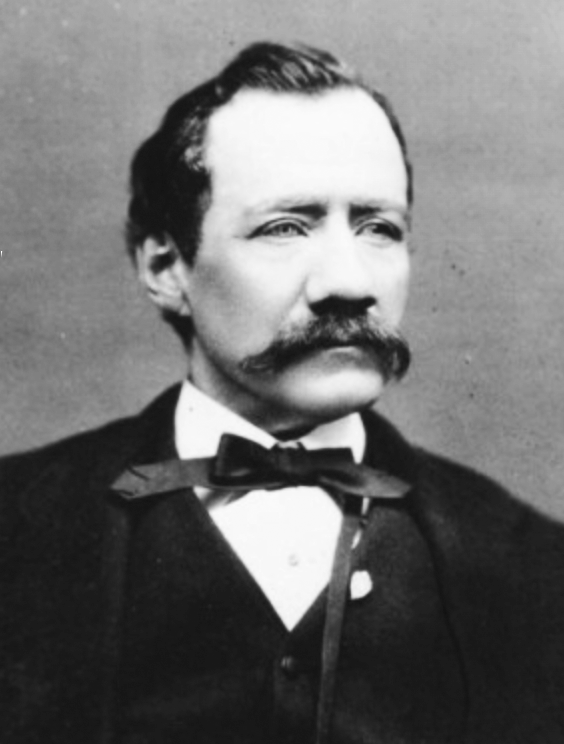
Richard "Dick" Tighe Harris was born on October 31, 1837, in or near Drummadonald, County Down, Ireland, to John Harris and Mary Anderson Harris. He immigrated to the United States by 1855 and was naturalized by about 1858.
Harris lived in Pennsylvania and Ohio, where he stayed with his uncle, Caldwell Anderson. He attended Duff’s Merchant’s College in Pittsburgh. In 1858, he went west, first to Missouri and Kansas Territory and then to the mining regions of the Rocky Mountains.
From 1859 forward, Harris lived the life of a frontier miner, working placer and lode mines in Idaho, Colorado Territory, Virginia City, Silver Bow, and Butte before recording claims near Bannack City in Montana Territory.
By 1877, Harris was in British Columbia. In the winter and spring of 1879, he began prospecting for George Pilz, a Sitka entrepreneur. Harris was guided in southeastern Alaska by Chief Kowee of the Auk Tlingit.
In October 1880, Harris, with partner Joe Juneau, made one of the most significant discoveries in American prospecting. Guided by Kowee, the men crossed Gold Creek into Silver Bow Basin, where they discovered rich placer deposits and the lode system that later became the Alaska-Juneau Gold Mine.
Harris named the new settlement Harrisburgh after the capital of Pennsylvania, though the town was later renamed Juneau. The Harris Mining District was named in his honor.
Harris married Kitty Newcombe, a Tlingit woman from Hoonah, around 1880. They had several children, including William J. Harris and Richard Tighe Harris, Jr.
In March 1881, just a few months after gold was discovered, Richard and Kitty purchased three lots in the Telephone Hill Historic Neighborhood. The Harris family residence stood near 219 Second Street.
After losing a legal dispute over mining claims in Silver Bow Basin in 1884, Harris lost most of his mining interests and property. He later worked for Thomas L. Nowell, managing the Alaska Union Mining Company mill on Douglas Island, and later held positions with the District Court, U.S. Customs Service, and as a Special Deputy Marshal.
Harris served on the first Grand Jury in Alaska in 1885 and remained active in mining ventures throughout his life.
By 1904, Harris’s eyesight had begun to fail, and his health had declined. He was eventually sent to a Masonic nursing home in Portland, Oregon, where he died on October 11, 1907.
Harris Street in Juneau bears his name, and the Richard Harris and Joseph Juneau Memorial commemorates the two men credited with the discovery of gold that led to the founding of Juneau.
Sources
Alaska Mining Hall of Fame; Alaska Consortium Library
Tags: Richard Tighe Harris, Dick Harris, Joe Juneau, Chief Kowee, George Pilz, Alaska Juneau Gold Mine discovery, Silver Bow Basin pioneers, Juneau founders
-
Bayless, Edward
Primary Name: Bayless, Edward
Filed as: bayless_edward
Also known as: Edward Bayless
Occupation / Association: Attorney; Republican Party member
Born:
Died:
Parents:
Spouse: Claire Bayless
Children:
Associated places: Juneau, Alaska; Telephone Hill Historic Neighborhood
Keywords: Edward Bayless, Bayless Edward, Edward Bayless House, Juneau attorneys, Telephone Hill Historic Neighborhood
Biography
Edward Bayless was married to Claire Bayless.
Bayless was a registered Republican and practiced law in partnership with Louis P. Shackleford.
The Bayless family was the original owner of the Edward Bayless House in the Telephone Hill Historic Neighborhood. Bayless purchased Lot 1 from Juneau founder Richard Harris in 1912.
Tax records from 1913 indicate that a building was situated on the Bayless lot, and a 1916 entry lists a law library on the premises valued at $175. The Bayless family retained ownership of the property until 1921.
Sources
Juneau tax records; Telephone Hill Historic Site and Structures Survey, 1984
Tags: Edward Bayless, Bayless Edward, Edward Bayless House, Telephone Hill Historic Neighborhood, Juneau attorneys
-
Bayless, Claire
Primary Name: Bayless, Claire
Filed as: bayless_claire
Also known as: Claire Bayless
Occupation / Association: Resident; Early owner of Bayless House
Born:
Died:
Parents:
Spouse: Edward Bayless
Children:
Associated places: Juneau, Alaska; Telephone Hill Historic Neighborhood
Keywords: Claire Bayless, Bayless Claire, Bayless House owners
Biography
Claire Bayless was the wife of Republican attorney Edward Bayless.
She was the first owner of the Edward Bayless House located in the Telephone Hill Historic Neighborhood in Juneau, Alaska.
Sources
Telephone Hill Historic Site and Structures Survey, 1984
Tags: Claire Bayless, Bayless Claire, Telephone Hill Historic Neighborhood, Bayless House
-
Bayless House
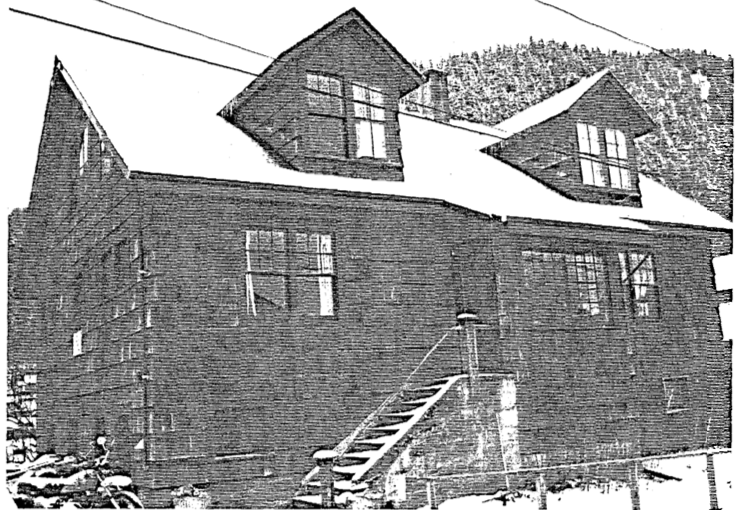 The Edward Bayless House is located at 211 Dixon Street in the Telephone Hill Historic Neighborhood.
Ownership documentation of Lots 1 and 2 reveals that George Pilz and his wife sold the property to Juneau co-founder Richard T. Harris in March 1881.
Pilz grubstaked Joe Juneau and Richard Harris during their search for southeast Alaska gold. When Juneau's two founders discovered gold and reported to Pilz, he joined the others in staking local claims.
Although 1901 tax records show "lots and a building" and site improvements valued at $1,000, the Edward Bayless House located at on Lot 2 at 211 Dixon Street is reportedly visible in an 1885 photograph.
In a October 13, 1904 letter Richard wrote his brother that their father, "wants to sell the back lot so he can put up a new house and have money in case anything should happen to him." The boys own the place and he asks his brother to send permission for their father to sell the land. The permission was given but Harris did not sell the property as it will increase in value because the town is growing fast as was revealed in a November 20, 1904 letter.
The Harris family lived in a house on an adjacent lot at 219 Second Street, although Kitty Harris died in 1893 and Richard Harris died in 1907. William John Harris, Junior inherited the property on his father's death.
The original residence was replaced around 1910; the second structure stood until the late 1950s. Harris married Kitty, a Tlingit from Hoonah, in the 1880s. They raised four children in the Telephone Hill home. William Harris, the oldest surviving child, inherited the house after his father's death in 1907 (Walle, 1981). William was nationally published political cartoonist who was involved in early Alaska Native Rights efforts.
Harris maintained property ownership until 1912, when Claire Bayless and Edward Bayless purchased Lot 1 and built the Edward Bayless House. In 1913, tax records indicate a building was situated on the Bayless lot, and a 1916 entry lists a law library on the premises valued at $175.
Bayless, a registered Republican, engaged in a law partnership with Louis P. Shackleford. The Baylesses retained property ownership until 1921, selling to Thomas J. McCaul, owner of a cigar store on Front Street. McCaul continued ownership until 1933.
In 1941, Senna Paul Powers bought Lots 1 and 2 and the house.
The Bayless House, a rectangular, 30'x44.5', 1½-story Craftsman Shingle structure, has retained its architectural integrity. The post-and-beam frame is covered with cedar shakes and rests on a poured concrete foundation. The gabled roof is composition shingle-covered, and a chimney sits on the ridgeline. Extended eaves with fascia boards are visible.
The west facade features two gabled dormers. The original, double-hung sash windows with upper multi-lites are symmetrically arranged on all facades. Some original, wood storm windows are evident.
A small entry vestibule, oriented west, is centrally located on the main facade. Vintage doors appear here and at the basement entrance on the north facade. Small, multi-lite windows are located on the front entry, and smaller units appear on the basement level. The main floor is divided into two apartments; the upper floor contains one unit.
Telephone Hill Historic Site and Structures Survey, 1984, found that this well-built, unpretentious residence is important architecturally. A fine example of the Craftsman-Shingle style popular on the West Coast during the early 20th century, it has retained its architectural integrity. This distinctive design is evident in the building's original craftsman-like use of local and natural materials.
The most striking characteristic of this natural style is the dark-stained shake shingles covering the entire residence. The prolific use of shingles makes decorative trimming unnecessary. Other stylistic features include a moderately pitched, rectangular roof with gabled dormers. The eave overhangs were kept short for maximum display of the shingled walls. The original double-hung sash windows are grouped in twos and threes.
The house has undergone minimal structural alterations. It was found to be a contributing member of the Telephone Hill Historic Neighborhood.
-
Garside, George
Primary Name: Garside, George
Filed as: garside_george
Also known as: George Garside
Occupation / Association: Mining engineer; surveyor; developer of Silver Bow Basin lodes
Born:
Died:
Parents:
Spouse:
Children:
Associated places: Juneau, Alaska; Silver Bow Basin, Alaska
Keywords: George Garside, Garside George, Charles W Garside, Perseverance lode developers, Silver Bow Basin mining
Biography
George Garside and his brother, Charles W. Garside, came to Juneau in 1884. They were mining engineers and early surveyors of the Juneau townsite.
George Garside was one of the original developers of the Perseverance, Atla, and Jumbo lodes in the Silver Bow Basin.
Sources
Stone, 1980; DeArmond, 1967
Tags: George Garside, Garside George, Charles W Garside, Silver Bow Basin miners, Juneau mining engineers
-
Bosch, William
Property / Address: William Bosch House, 214 Dixon Street
Location: Telephone Hill Historic Neighborhood, Juneau, Alaska
Constructed: 1913–1914
Builder / Owner: William Bosch
Keywords: William Bosch House, 214 Dixon Street Juneau, Telephone Hill historic neighborhood, Garside lots Juneau
History
The William Bosch House at 214 Dixon Street sits on the west slope of Telephone Hill. The residence was constructed between 1913 and 1914 by William Bosch.
The 1894 plat map of the Juneau Townsite shows Charles W. Garside as the owner of Lots 3 and 4 at the turn of the century. Charles and his brother, George Garside, arrived in Juneau in 1884. Both men were mining engineers and early surveyors of the Juneau Townsite. George Garside was also one of the original developers of the Perseverance, Atla, and Jumbo lodes in the Silver Bow Basin.
City tax records indicate that Charles Garside sold the two lots to William Bosch in 1912. Bosch was the proprietor of the Old Stand Saloon on Front Street in 1983, located next to the 20th Century Market.
The estate of William Bosch later sold Lots 3 and 4 to Joseph Stocker in the 1950s.
Sources
Stone, 1980; DeArmond, 1967; City of Juneau tax records
Tags: William Bosch House, 214 Dixon Street, Telephone Hill, Telephone Hill Historic Neighborhood, Charles W. Garside, George Garside, William Bosch, Joseph Stocker, Juneau historic houses, Juneau townsite surveyors
-
Garside, Charles
Primary Name: Garside, Charles W.
Filed as: garside_charles_w
Also known as: Charles Garside
Occupation / Association: Mining engineer; Surveyor
Born:
Died:
Parents:
Spouse:
Children:
Associated places: Juneau, Alaska; Silver Bow Basin, Alaska
Property / Address: Lots 3 and 4, site of the William Bosch House, Telephone Hill, Juneau, Alaska
Keywords: Charles W Garside, Charles Garside, Garside Charles W, George Garside, Juneau Townsite surveyor, Silver Bow Basin mining engineers, William Bosch House, Telephone Hill residents
Biography
Charles W. Garside and his brother, George Garside, came to Juneau in 1884. Both were mining engineers and among the early surveyors involved in laying out the Juneau Townsite.
George Garside was one of the original developers of the Perseverance, Atla, and Jumbo lodes in the Silver Bow Basin (Stone 1980; DeArmond 1967).
The 1894 plat map of the Juneau Townsite shows Charles Garside owning Lots 3 and 4 at the turn of the century. City tax records indicate that Charles Garside sold the two lots to William Bosch in 1912.
The property later became the site of the William Bosch House, which is now recognized as part of the Telephone Hill Historic Neighborhood.
Sources
Stone 1980; DeArmond 1967
Telephone Hill Historic Site and Structures Survey
Tags: Charles W Garside, Charles Garside, George Garside, mining engineers Juneau, Juneau Townsite surveyors, William Bosch House, Telephone Hill residents
-
Bosch House
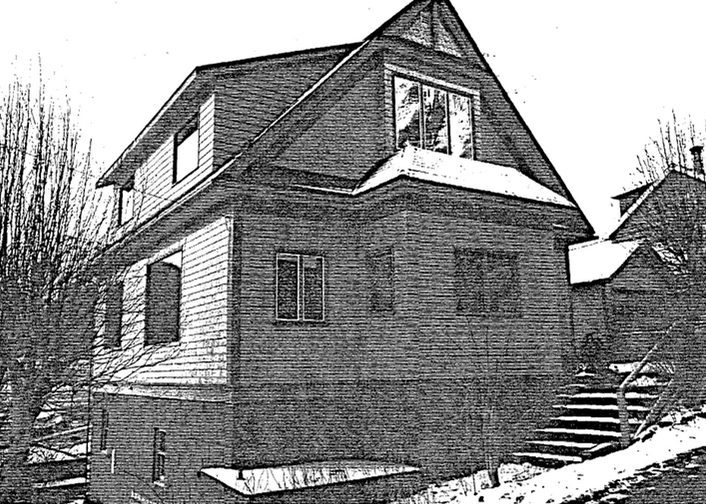 The William Bosch House at 214 Dixon Street sits on the west slope of Telephone Hill. It was constructed between 1913-14 by William Bosch.
The 1894 plat map of the Juneau Townsite shows Charles W. Garside owning Lots 3 and 4 at the turn of the century. Charles and his brother, George Garside, came to Juneau in 1884.
They were mining engineers and early surveyors of the Juneau Townsite. George Garside was one of the original developers of the Perseverance, Atla and Jumbo lodes in the Silver Bow Basin (Stone 1980; DeArmond 1967).
City tax records show that Charles Garside sold the two lots to William Bosch in 1912. Bosch owned the Old Stand Saloon on Front Street, located next to the 20th Century Market in 1983. The estate of William Bosch sold Lots 3 and 4 to Joseph Stocker in the 1950s.
Ownership was transferred to the Nordales in 1967, and to Roy and Verna Carrigan in 1969. (Carrigan 1983; City of Juneau 1965-1983).
Verna Carrigan is the granddaughter of of Edward and Anna Webster, the founders of Juneau-Douglas Telephone Company. She vice-president and chief operator during the 1960s (DeArmond 1967).
This l½-story, rectangular, 28'x34' dwelling is representative of the Decorated Pioneer Farmhouse style. Its identifying characteristics include a steeply pitched gable roof, boxed cornices and detailed ornamentation consisting of scalloped/fish scale siding on the gable ends. The rest of the house is clad with cedar shingles.
A shed dormer is situated on both gable slopes, and the original brick chimney adorns the ridgeline. The windows are double-hung sash, multi-lite, fixed-sash, large picture and casement. A few windows exhibit a diagonal , leaded-glass pattern.
The extended front entry was originally an open porch. It was enclosed in the 1930s with numerous multi-lite windows (Carrigan 1983). The Carrigans reconstructed the extension in the 1970s. Fixed-sash windows replaced the multi-lites. The original single leaf, three-paneled door to the 5'x12' front entry and the inner door to the house were retained. The inner door has beveled glass with fir trim and beveled-glass side panels.
Pre-1984 structural alterations include a shed-roof dormer on the south facade with clapboard siding and two picture windows. A decorative bay window on the south facade's first floor was replaced with a picture window.
Several other fixed-sash windows were installed on the front and rear facades, and a wood deck and concrete walkway were placed along the north and east facades. A small, enclosed rear entry stoop was reconstructed by the Carrigans. The above-grade concrete block basement was completed in the 1970s.
The interior consists of a living room, dining room, kitchen, small sewing room, vestibule and bath. The kitchen and bath, with acoustic-tile ceilings, underwent extensive remodeling pre-1984.
Original features include an ornate sideboard or "pass-through" with leaded-glass windows located between the living and dining rooms. A partial wall divider between the living and dining rooms displays book shelves and leaded glass. An original stairwell leads to a second floor landing.
The second floor has a remodeled bath, and its two bedrooms were enlarged when the south facade dormer was constructed. Adjacent to the north facade sits a wood-framed, ll' x20', one-bay garage with a vertical sliding door. The structure has a medium-pitched gable roof, extended eaves and verges with exposed rafter ends and cedar shingle siding.
Telephone Hill Historic Site and Structures Survey, 1984 found this well-maintained residence to be is one of the most architecturally significant structures in the study area and a contributing member of the Telephone Hill Historic Neighborhood.
A fine example of the Decorated Pioneer Farmhouse style, this building was constructed with a greater concern for detail and embellishments than was the basic Pioneer house. The structure's steeply pitched gable roof, boxed cornices and meticulous trim reflect this distinctive design. Ornamentation consists of scalloped/fish scale siding on gable ends, leaded-glass windows and a beveled-glass front door with beveled-glass side panels. Many interior decorative features were retained, reflecting fine carpentry work and preserving the ambience of the era in which it was constructed.
Although the house has undergone several ,..structural alterations, they are not severe enough to compromise the building's architectural integrity. Unfortunately, a fair number of the original double-hung sash and multi-lite windows were replaced with single-sash types. A shed dormer was added on the south facade; there had always been a dormer on the north facade. The enclosed front entry, recently reconstructed, was originally an open porch. The entry's original outer door, however, was retained, as was the beveled-glass door to the main house.
-
Peterson, Margaret
Primary Name: Peterson, Margaret
Filed as: Peterson, Margaret
Also known as: Margaret Peterson
Occupation / Association: Member of the Peterson mining family
Associated places: Juneau, Alaska; Telephone Hill, Juneau, Alaska; Peterson Lake, Alaska; Tee Harbor, Alaska; Prairie Basin, Alaska
Keywords: Margaret Peterson Juneau Alaska, Peterson family Juneau Alaska, Peterson Lake mining history, Cheechako Creek claim, Prairie Basin Alaska mining, Tee Harbor mining district, Telephone Hill Peterson Kasnick House, Marie Jensen Peterson, John G Peterson miners
Biography
Margaret Peterson was born in the late nineteenth or early twentieth century to John G. Peterson and Marie Jensen Peterson, along with her sister Irma Peterson.
The family lived on Telephone Hill in Juneau in the Peterson-Kasnick House, which they built at 203 West Third Street.
In April 1899, John G. Peterson staked a placer claim on the creek that now bears his name. He called it Cheechako Creek and named one of its tributaries Goose Creek, while the surrounding valley became known as Prairie Basin. Later that same year, the lake appeared in mining records as Reservoir Lake, and by 1905, it had become known as Peterson Lake.
Peterson later sold his store to devote all of his time to mining. His principal lode claim was about half a mile east of the lake and was first reached by trail from Tee Harbor.
He later built a home at Pearl Harbor and cut a wagon road from there to the mine, where he installed a three-stamp mill. Peterson operated the mine until shortly before his death on August 20, 1916.
After his death, Marie Jensen Peterson continued operating the mine for several years with the assistance of her daughters Irma and Margaret.
The present Peterson Lake Trail follows the route of the old wagon road, leaving Glacier Highway at Mile 24. Peterson Lake lies on the mainland about sixteen miles northwest of Juneau and roughly one mile from tidewater at Tee Harbor.
Sources
Local historical records and mining reports related to the Peterson Lake area.
-
Peterson, Irma
Primary Name: Peterson, Irma
Filed as: Peterson, Irma
Also known as: Irma Peterson
Occupation / Association: Member of the Peterson mining family
Associated places: Juneau, Alaska; Telephone Hill, Juneau, Alaska; Peterson Lake, Alaska; Tee Harbor, Alaska; Prairie Basin, Alaska
Keywords: Irma Peterson Juneau Alaska, Peterson family Juneau Alaska, Peterson Lake Juneau history, Cheechako Creek mining claim, Prairie Basin Alaska mining, Tee Harbor mining history, Telephone Hill Peterson Kasnick House, Marie Jensen Peterson, John G Peterson miners
Biography
Irma Peterson was born in the late nineteenth or early twentieth century to John G. Peterson and Marie Jensen Peterson. She had a sister, Margaret Peterson. The family lived on Telephone Hill in Juneau in the Peterson-Kasnick House, which they built at 203 West Third Street.
In April 1899, John G. Peterson staked a placer mining claim on the creek that now bears his name. He called it Cheechako Creek and named one of its tributaries Goose Creek, while the surrounding valley became known as Prairie Basin. Later in the same year, the lake associated with the claim appeared in mining records as Reservoir Lake. By 1905, it had become known as Peterson Lake.
Peterson eventually sold his store in order to devote his full attention to mining. His principal lode claim was located about half a mile east of the lake and was originally reached by a trail from Tee Harbor.
He later constructed a home at Pearl Harbor and cut a wagon road from there to the mine site, where he installed a three-stamp mill. Peterson operated the mine until shortly before his death on August 20, 1916.
After his death, Marie Jensen Peterson continued operating the mine for several years with the assistance of her daughters Irma and Margaret.
The present Peterson Lake Trail follows the route of the old wagon road, leaving Glacier Highway at Mile 24. Peterson Lake lies on the mainland approximately sixteen miles northwest of Juneau and about one mile from tidewater at Tee Harbor.
Sources
Local historical records and mining reports related to the Peterson Lake area.
-
Peterson, Marie
Primary Name: Peterson, Marie Jensen
Filed as: Peterson, Marie Jensen
Also known as: Marie Jensen Peterson
Occupation / Association: Early Juneau resident; mining operator
Associated places: Hamburg, Germany; Juneau, Alaska; Telephone Hill, Juneau; Peterson Lake, Alaska; Tee Harbor, Alaska; Pearl Harbor, Alaska
Keywords: Marie Jensen Peterson, John G Peterson, Peterson Lake Juneau Alaska history, Peterson Lake Trail Juneau, Cheechako Creek mining claims, Prairie Basin mining history, Telephone Hill Juneau residents, Peterson Kasnick House Juneau
Biography
Marie Jensen married John G. Peterson in 1893 in Hamburg, Germany. The couple later moved to Juneau, Alaska, where they established their home on Telephone Hill in the Peterson-Kasnick House, which they built at 203 West Third Street.
In April 1899 Peterson staked a placer claim on the creek which now bears his name. He called the stream Cheechako Creek and named one of its tributaries Goose Creek. The surrounding valley he referred to as Prairie Basin. Later in 1899, the nearby lake appeared in mining records as Reservoir Lake, but by 1905, it had become known as Peterson Lake.
Peterson eventually sold his store in order to devote his full attention to mining. His principal lode claim was located about half a mile east of Peterson Lake and was first reached by trail from Tee Harbor.
Later he constructed a home at Pearl Harbor and cut a wagon road from there to the mine, where he installed a three-stamp mill. He operated the mine until shortly before his death on August 20, 1916.
After his death, Marie Jensen Peterson continued operating the mine for several years with the assistance of their daughters, Irma Peterson and Margaret Peterson.
The present Peterson Lake Trail follows the route of Peterson’s original wagon road, leaving Glacier Highway at Mile 24. Peterson Lake is located on the mainland sixteen miles northwest of Juneau and about one mile from tidewater at Tee Harbor.
Sources
Juneau local historical records and mining accounts relating to Peterson Lake and the Peterson family.
-
Peterson-Kasnick House
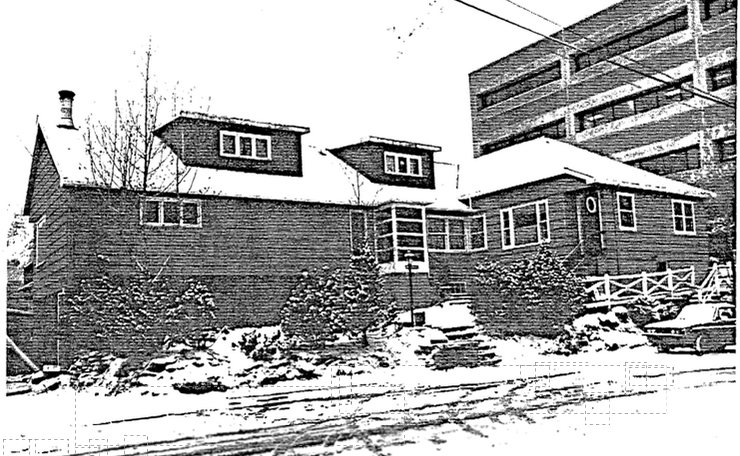 The John Peterson House at 203 West Third Street appears in 1898 panoramas of Juneau. The rectangular, single-story structure was built by a miner and Charter Member of the Juneau Igloo of the Pioneers of Alaska, John G. Peterson and Marie Jensen Peterson. Records indicate Peterson purchased Lots 5 and 6 in 1891.
Peterson arrived in Juneau in April, 1888, and bought a small shop where he operated a tin, stove, and hardware store for thirteen years while devoting his spare time to prospecting.
He established 11 mining claims in the Eagle River District and owned a tin-metal shop on Front Street from 1915 to 1916. Tax rolls from 1901 to 1917 list Peterson as owner of the lots and a building.
Peterson sold his store to devote all of his time to mining. His principal lode claim was half a mile east of the lake and was first reached by trail from Tee Harbor. Later Peterson built his home at Pearl Harbor and hewed out a wagon road from there to the mine, where he installed a three-stamp mill.
Their two daughters, Irma Peterson and Margaret Peterson. After John's death on August 20, 1916, his wife owned the property until 1944.
William and Dorothy Johnson gained possession in 1944 and retained ownership for the next twenty years. The building was scheduled to be destroyed in 1946, according to city tax records. Two years later tax assessor notes said the building was greatly improved.
During that period the Johnsons upgraded the original 20'x24' structure and began building an addition which gave the house an L-shape. William, a Frigidaire dealer, and Dorothy, a teacher, continued the extensive alterations until they sold the house in 1965.
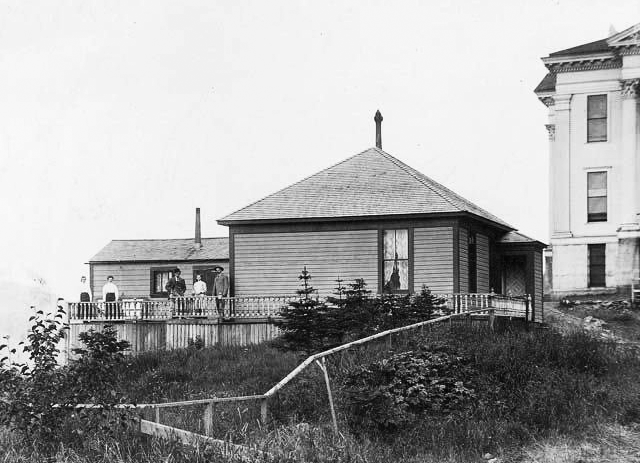 Joe and Aletha Henri owned the house from 1965 to 1971. Joe Henri first served as Juneau's city attorney and later as city manager. Henri was also Commissioner of Administration under Governor Egan from 1971 to 1974. Aletha Henri worked at home providing child care for handicapped students. They later moved to Anchorage.
The Henris extended the L-shaped portion of the building in 1968 to its current size, 26' x68'. Records indicate the child care center was housed in the basement.
The Peterson House's eclectic appearance is caused by numerous additions to the original structure. The northern portion of the residence encloses John Peterson's original building. This portion displays a hip roof intersecting with the gable roof of a later addition. A shake roof covers the entire structure; shakes cover the main level of the building.
The south facade of the northern portion has a picture window with sidelites which allow a sweeping view of Gastineau Channel. Two double-hung sash windows are located on all three facades of the original structure. Poured concrete stairs lead to the apartment entry. The wooden front door has a porthole window, and an original door remains on the small porch on the north facade.
Building additions are not compatible with the original design. The shingled gable roof of the main addition has shed-style dormers facing east and west. Poured concrete steps lead up to a glassed-in porch on the east facade. The wooden door and yellow, fixed-pane window to the left of the porch were made pre-1984. Windows on the addition are a mixture of double-hung sash, casement and fixed single-pane.
A deck was constructed on the west facade which is accessible from the main floor, and a brick chimney extends the full 1½-story height of the west facade. Wood siding covers the main level to the roofline, and plywood siding covers the addition's poured concrete basement. The three basement entrances are located on the east, south and west facades.
Additional buildings on the property include a rectangular, single-story garage with shingle siding and a flat roof, and a fiberglass greenhouse. Both buildings are visible in 1970 tax record photographs.
-
Dorene Lorenz published Gold Discovered, Juneau Founded in Historical Events 2024-01-07 20:11:47 -0900
Gold Discovered, Juneau Founded
https://poajuneau.nationbuilder.com/garside_charleshttps://poajuneau.nationbuilder.com/degroff_edEuro-American presence in southeast Alaska began in·the latter part of the 18th century when explorers visited the area in search of highly prized furs, particularly the sea otter, for trade purposes. The survey for Alaskan resources included the search for precious minerals and the hope of discovering the famed Northwest Passage (State of Alaska 1982).
Countries involved in exploring the northwest coast of North America included Spain, England, Russia, France and Japan. Russian explorers are recorded as the first to encounter Native groups in southeastern Alaska. The first published account of exploration in Gastineau Channel was written by Captain George Vancouver, describing his journeys in 1793 and 1794. Seventy years later, the name Gastineau Channel was included on the 1867 Humphrey manuscript furnished to Western Telegraph Company (Werner 1925).
John Muir, a well-known naturalist, visited Lynn Canal in 1879. Upon his return to Sitka after interacting with Chilkat Tlingits, Muir noted that gold might be found in the area lying between Windham Bay and Sullivan Island in northern Lynn Canal.
Chief Kowee of the Auk Tlingit brought ore samples to George Pilz, a mining engineer residing in Sitka in 1880. These samples confirmed Muir's statements of potential gold reserves in southeast Alaska ( DeArmond 1967).
Read more
-
Dorene Lorenz published Tlinglit settle Juneau Indian Village in Historical Events 2024-01-07 20:01:49 -0900
Auk Tlinglit settle Juneau Indian Village
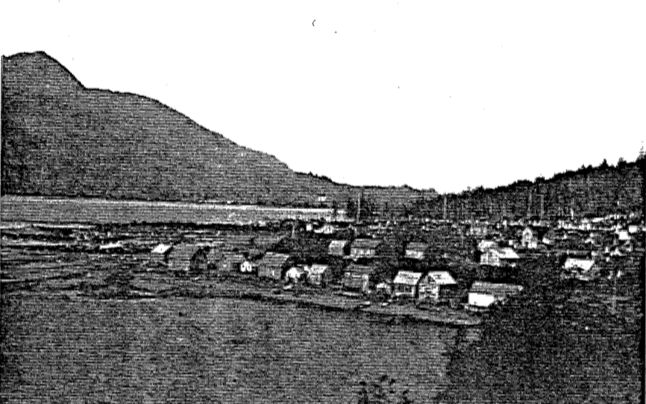 The earliest documented Native American group to inhabit the Juneau area was the Auk Tlingits (Goldschmidt and Haas 1946). There was no permanent Native American habitation in the region until the establishment of the Juneau townsite.
 Prior to Euro-American settlement, the main villages of the Auks were on Stephen's Passage at Auke Bay (Point Louisa), on the north end of Admiralty Island and on Douglas Island (Petroff 1880; Krause 1956).
On the mainland the Auks occupied the shoreline from Berner's Bay south to Thane on Gastineau Channel (Goldschmidt and Haas 1946). The local Taku Tlingits had settlements at the entrance of Taku Inlet, at the mouth of Taku River and on Douglas Island (Goldschmidt and Haas 1946).
Read more
-
Edward Webster House
The Edward Webster House, 135-139 West Second Street, sits on the east ridge of Telephone Hill Historic Neighborhood overlooking downtown Juneau. Photographs of Juneau during the 1880s confirm that the Webster House was one of the early homes in the area. Robert E. Hurley, the grandson of Edward Webster and Anna Faulkner-Scott-Knutson-Websterr, owned the home when the 1984 Telephone Hill Historic Site and Structures Survey was conducted in 1984.
Edward began construction of his house in 1882, and numerous extensions were added during the next 70 years (Hurley, Carrigan 1983). District Recorder records and the 1894 plat map of Juneau Townsite show Edward Webster and his business partner, Frank Bach, owning Lots 7 and 8 in Block 1.
The Webster family owned and operated the Juneau & Douglas Telephone Company from 1893 to 1968, the first commercial telephone service in Alaska. The phone company offices were located in the Webster home from 1915 to 1958 (DeArmond 1967; Hurley, Carrigan 1983).
Telephone Hill Historic Site and Structures Survey, 1984, evaluated the structure's architectural significance and concluded that with its numerous additions and alterations, the house was been altered beyond recognition of its original Classic Box design. These modifications contribute to its loss of architectural integrity, and was deemed a non-contributing structure to the Telephone Hill Historic Neighborhood.
The Webster House is listed on the Alaska Heritage Resources Survey (AHRS JUN 070).
2025-2026 Chairman, 2024 Commissioner, Alaska State Commission for Human Rights. 2025 United Nations Geneva Human Rights Crisis State & Local Panelist. 2024 Alaska State Delegate, America 250 Convening of the States. 2023-2024 Commissioner, Alaska Historical Commission. 2025-2026 Chairman, 2019-2024 Committee Member, City & Borough of Juneau Historic Resources Advisory Committee. 2024-2025-2026 Sons of Norway Svalbard Lodge Juneau Historian. 2024-2025-2026 Filcom Member. 2018-2020 Committee Member, City & Borough of Juneau Sister Cities Committee. 2019-2020 Member, AVTEC Institutional Advisory Committee. 2006-2020, President & COB, Friends of Jesse Lee Home. 2012 Member, Anchorage Arts Advisory Commission. Anchorage International Film Festival Features Committee Chair/Host/Award Presenter. Balto Film Fest Founder.
2004 Seward City Council. 2002-2006, Seward Centennial Legacy Committee, Seward Economic Development Committee, Seward Waterfront Committee, Seward Alternate Energy Committee, Seward Long-term Care Replacement Facility Committee, and Seward Historic Preservation Commission.