-
Norvell, Fred
Primary Name: Dalton Trail Company
Filed as: Dalton Trail Company
Also known as: Dalton Trail freighting partnership
Occupation / Association: Yukon freight and transportation company
Associated places: Yukon River region; Dalton Trail; Alaska; Yukon Territory, Canada
Keywords: Dalton Trail Company, Jack Dalton freighting, John Malony Yukon freighting, EB Hanley Yukon trade, Fred Norvell Yukon freighting, Henry Bratnober Alaska mining investors, Dalton Trail history
Biography
The Dalton Trail Company was formed in 1895 to provide reliable freight transportation into the Yukon region during the early years of northern gold exploration.
Observing the growing pre-Klondike mining activity in the Circle and Forty-Mile Districts and the resulting need for dependable supply routes into the interior, John Malony and Jack Dalton organized the partnership. They were joined by investors and associates E. B. Hanley, Fred Norvell, and Henry Bratnober.
The company operated along the route that became known as the Dalton Trail, a major overland route used by miners, prospectors, and freight outfits traveling between the coast and the Yukon interior before and during the Klondike gold rush.
Through their freight operations, the Dalton Trail Company played an early role in developing transportation infrastructure supporting the mining districts of Alaska and the Yukon.
Sources
Alaska Mining Hall of Fame
-
Hanley, E. B.
Primary Name: Dalton Trail Company
Filed as: dalton_trail_company
Also known as: Dalton Trail freighting partnership
Occupation / Association: Freighting company serving Yukon mining districts
Born: 1895 (formation)
Died:
Parents:
Spouse:
Children:
Associated places: Circle District, Alaska; Forty-Mile District, Yukon; Dalton Trail; Yukon River region
Keywords: Dalton Trail Company, Dalton Trail freighting, John Malony, Jack Dalton, E B Hanley, Fred Norvell, Henry Bratnober, Yukon freighting companies
Biography
Observing the pre-Klondike gold activity in the Circle and Forty-Mile Districts and the resulting need for reliable freighting in the Yukon region, John Malony and Jack Dalton organized a partnership in 1895 to operate the Dalton Trail Company.
The company was formed with additional partners E. B. Hanley, Fred Norvell, and Henry Bratnober. The enterprise provided freighting services along the Dalton Trail and into the Yukon mining districts, supporting prospectors and miners working in the region before the Klondike gold rush.
Sources
Tags: Dalton Trail Company, John Malony, Jack Dalton, E B Hanley, Fred Norvell, Henry Bratnober, Yukon freighting companies
-
McGinnis, Dennis
Primary Name: McGinnis, Dennis
Filed as: McGinnis, Dennis
Also known as: Dennis McGinnis
Associated places: Sitka, Alaska
Keywords: Dennis McGinnis, Sitka murder case, Jack Dalton Alaska, John Mahony attorney Alaska, Sitka Alaska history
Biography
Dennis McGinnis was murdered in Sitka, Alaska. Jack Dalton was charged with the crime. Dalton was defended by John Mahony and was ultimately acquitted.
Sources
-
Mahony III, John F.
Primary Name: Mahony, John F. III
Filed as: Mahony, John F. III
Also known as: John F. Mahony III
Born: December 29, 1899, Juneau, Alaska
Parents: John F. Mahony Jr.; Cora Cleveland Mahony
Associated places: Juneau, Alaska
Keywords: John F Mahony III, Mahony family Juneau Alaska, Cora Cleveland Mahony, John F Mahony Jr, Juneau Alaska pioneers
Biography
John F. Mahony III was born in Juneau, Alaska, on December 29, 1899, to Cora Cleveland Mahony and John F. Mahony Jr.
Sources
Historical records of Juneau families
-
Malony, Cora Cleveland
Primary Name: Malony, Cora Cleveland
Filed as: Malony, Cora Cleveland
Also known as: Cora Cleveland Malony
Occupation / Association: Milliner; Juneau business owner
Associated places: Bryan, Ohio; Bellingham, Washington; Juneau, Alaska
Keywords: Cora Cleveland Malony, Cora Malony Juneau, Juneau hat shop owner, Malony family Juneau Alaska, Wickersham House history, Alaska Gastineau Mine community
Biography
Cora Cleveland Malony moved to Juneau, Alaska, in 1895. She had previously lived in Bryan, Ohio, and Bellingham, Washington.
Cora, some twenty-five years younger than John Malony, had an independent streak of her own and established a hat shop in Juneau.
She married John Malony in Juneau, and on December 29, 1899, she gave birth to their son, John Malony, Jr.
A residence was later constructed in downtown Juneau for Bart Thane’s Alaska Gastineau mine. Much to Cora’s disappointment, as she had hoped to live in the house, it was sold. The residence later became known as the Wickersham House.
Cora Cleveland Malony died in 1967 at the age of eighty-five.
Sources
Alaska Mining Hall of Fame.
-
Mahony, Joseph
Mahony, Josephy
Biography
Joseph Mahony was the son of John F. Mahony, Jr., and was likely born in Montana.
In 1895, he moved to Juneau, Alaska, with his father during the early years of mining development in Southeast Alaska. Many families were drawn to the region during this period as mining and related industries expanded in the Juneau and Douglas area.
The Mahony family became part of the early community associated with Alaska’s mining frontier.
Sources
- Alaska Mining Hall of Fame
-
Dalton, Jack

Primary Name: Dalton, Jack
Filed as: dalton_jack
Also known as: Jack Dalton, Jack Miller
Occupation / Association: Freighter, Explorer, Entrepreneur, Klondike Transportation Pioneer
Born: June 25, 1856, Michigan (most probable)
Died: December 16, 1944, San Francisco, California
Parents: Unknown
Spouse: Anna Krippeahne Dalton; earlier unnamed spouse
Children: Jack Dalton Jr., Margaret Dalton, James W. Dalton, Josephine Dalton
Associated places: Juneau Alaska, Haines Alaska, Pyramid Harbor Alaska, Porcupine Mining District Alaska, Cordova Alaska, Yakutat Alaska, Chickaloon Alaska, Klondike Yukon
Keywords: Jack Dalton, Dalton Trail, Klondike freighting, Dalton Trail Company, Porcupine Mining District, Copper River Northwestern Railway
Biography
Jack Dalton's life of nearly ninety years spanned an era of extraordinary change in Alaska and the Yukon. As Alaska's premier freighter during the Gold Rush era, he witnessed the transition from pack animals and human labor to the mechanized age of railroads and aircraft.
Accounts of Dalton's early life are inconsistent. His birthplace has been listed as Oklahoma, Kansas, or the Cherokee Strip, but his California death certificate records that he was most likely born in Michigan on June 25, 1856.
Dalton had only a limited formal education but became largely self-educated through reading and writing. He possessed a wide range of practical frontier skills and developed a reputation as a formidable and capable man with a quick temper. He was known as a skilled horseman, hunter, cook, and boatman.
As a young man, he traveled widely across the American West, at one time using the name Jack Miller. By the early 1880s, he had moved to Burns, Oregon, where he operated a logging business. A violent altercation there resulted in the fatal shooting of a cook during a struggle, prompting Dalton to leave the area.
Dalton eventually traveled to San Francisco and joined a sealing ship bound for the Arctic coast. The crew was arrested for illegal sealing and jailed in Sitka. After gaining his freedom in the mid-1880s, Dalton remained in Alaska and quickly developed a reputation as a skilled wilderness guide and negotiator with Indigenous communities. He learned Chinook Jargon, the regional trade language of the Pacific Northwest.
In 1886, Dalton joined the Schwatka–New York Times expedition attempting to climb Mount St. Elias. The expedition reached approximately 5,700 feet before being forced to retreat due to illness. Dalton remained in the Yakutat region afterward, prospecting and exploring coastal areas around Disenchantment Bay.
In 1890, Dalton participated in the Frank Leslie Newspaper Expedition led by E. Hazard Wells with explorer E. J. Glave. The expedition crossed Chilkat Pass and explored interior river systems, including the Alsek River. Dalton and Glave became the first known non-Native explorers to descend the lower Alsek River by canoe.
During the early 1890s, Dalton pioneered the use of pack horses for transportation between the Alaska coast and the Yukon interior. He developed what became known as the Dalton Trail, running from Pyramid Harbor near present-day Haines across the coastal mountains toward the Yukon River.
The trail was completed before the Klondike Gold Rush of 1897 and quickly became a major transportation route. At its peak, trains of more than 250 horses carried freight and livestock to the goldfields. Dalton received permission from the U.S. government to collect tolls along portions of the trail while allowing Chilkat people to travel freely.
Dalton was closely associated with Juneau attorney John F. Malony, who frequently partnered with him in business ventures. Together, they operated the Dalton Trail Company, the Dalton Trading and Transportation Company, and the Dalton Pony Express Company.
Dalton also played a role in the development of the Porcupine mining district near Haines after gold was discovered there in 1898 by prospectors he had grubstaked. Dalton and partners established the Porcupine Trading Company to support mining operations.
Later, Dalton assisted with survey efforts for the construction of the Copper River and Northwestern Railway. His reconnaissance helped demonstrate that a rail route up the Copper River was feasible, eventually leading to the construction of a railroad to the Kennecott copper mines.
Dalton continued to work as a freighter and transportation contractor into the early twentieth century. In 1913, he undertook a difficult contract hauling 900 tons of coal from the Chickaloon mine to Cook Inlet for testing by the U.S. Navy. The expedition required constructing over forty miles of winter road and hauling coal by horse-drawn sleds.
Dalton later moved operations to Cordova, where he ran sawmills and transportation companies. In 1915, many of his Cordova holdings were purchased by interests associated with the Kennecott Copper Corporation.
Dalton married twice and had four children, including James W. Dalton, an engineer whose name was later given to the Dalton Highway on Alaska's North Slope.
After leaving Alaska, Dalton lived in the Seattle and San Francisco areas and even prospected for diamonds in British Guiana in the early 1920s.
Jack Dalton died in San Francisco on December 16, 1944, at the age of eighty-nine.
In 1942, the United States Army reopened portions of the historic Dalton Trail while constructing the Alaska-Canada Highway.
Sources
Berton, Pierre. Klondike: The Last Great Gold Rush 1896-1899. Coutts, R. C. Yukon Places and Names. Blakemore, F. B. Grit and Gold. Cracraft & Cole. A History of Coal Mining in the Sutton-Chickaloon Area. DeArmond, R. N. “Miners and Cattle Used Dalton's Trail.” DeLaguna, Frederica. Under Mt. St. Elias. Glave, E. J. “Our Alaska Expedition,” Frank Leslie's Illustrated Newspaper. Hakkinen, Elizabeth. Haines, the First Century. Russell, Israel C. An Expedition to Mt. St. Elias. Wier, Gary. “The Man Behind the Dalton Trail.” Alaska State Library Malony Files.
Tags: Jack Dalton, Dalton Trail, Alaska freighters, Klondike Gold Rush transportation, Haines Alaska history, Porcupine mining district, Copper River Northwestern Railway, Alaska pioneers, Alaska Mining Hall of Fame
-
Behrend, B. M.
Primary Name: Behrends, Bernard M.
Filed as: behrends_bernard_m
Also known as: B. M. Behrends; Bernard Behrends
Occupation / Association: Merchant; Owner of B. M. Behrends Company
Born:
Died:
Parents:
Spouse:
Children:
Associated places: Juneau, Alaska
Keywords: Bernard M Behrends, B M Behrends, Behrends store Juneau
Biography
Bernard M. Behrends was a merchant in Juneau, Alaska, and the owner of the B. M. Behrends store, one of the early retail establishments serving the community.
Sources
Local historical references to the B. M. Behrends store in Juneau.
Tags: Bernard M Behrends, B M Behrends Company, Juneau merchants, Juneau businesses
-
Feldon, Sam
Primary Name: Feldon, Sam
Filed as: Feldon, Sam
Also known as: Sam Feldon
Occupation / Association: Property owner; early Juneau resident
Associated places: Juneau, Alaska; Telephone Hill, Juneau, Alaska
Keywords: Sam Feldon, Feldon family, Telephone Hill, Juneau historic homes, Anita Kodzoff House, early Juneau residents, Juneau property owners
Biography
Sam Feldon was an early resident of Juneau associated with the historic residential neighborhood on the southeastern slope of Telephone Hill. Feldon owned the house located at 107 West First Street, commonly known as the Anita Kodzoff House, until 1945.
The residence formed part of the hillside community that developed during the early decades of Juneau’s growth as a mining town and later as the territorial capital of Alaska. Telephone Hill became one of the city’s earliest residential districts, housing miners, merchants, laborers, and families who worked along the nearby waterfront and in the commercial core of downtown Juneau.
Homes on the southeast face of Telephone Hill were typically modest wooden structures built on steep terrain overlooking Gastineau Channel. These houses reflected the practical architecture of early Southeast Alaska communities, where limited flat land required creative building methods and compact residential layouts.
The structure at 107 West First Street later became associated with Anita Kodzoff, whose name is now commonly used to identify the house in historical surveys of the neighborhood. The building was one of many residences documented during preservation studies examining the historic resources of Telephone Hill.
Although relatively little biographical information survives about Sam Feldon, his ownership of the property represents one of the many individuals and families who contributed to the development of the Telephone Hill neighborhood during Juneau’s formative years.
Sources
- Telephone Hill Historic Site and Structures Survey, 1984.
-
Johnson, Richard
Primary Name: Johnson, Richard
Filed as: johnson_richard
Also known as: Richard Johnson
Occupation / Association: Property owner, Telephone Hill
Born:
Died:
Parents:
Spouse:
Children:
Associated places: Juneau, Alaska; Telephone Hill, Juneau, Alaska
Property / Address: Lot 6, Anita Kodzoff House, 107 West First Street, Telephone Hill, Juneau, Alaska
Keywords: Richard Johnson, Johnson Richard, Telephone Hill property owners, Anita Kodzoff House, 107 West First Street Juneau
Biography
Richard Johnson owned Lot 6 on the southeast face of Telephone Hill in Juneau, Alaska, from 1901 to 1914. The property is the site of the Anita Kodzoff House, located at 107 West First Street.
The property underwent improvements during Johnson’s ownership.
Sources
Telephone Hill Historic Site and Structures Survey
-
Nelson, William
William Nelson possessed the site of the Anita Kodzoff House, a duplex, which sits at 107 West First Street on the southeast face of Telephone Hill, sometime between 1885 and 1895.
-
Jackson, John
Primary Name: Jackson, John
Filed as: john_jackson
Also known as:
Occupation / Association: Early Telephone Hill property holder
Born:
Died:
Parents:
Spouse:
Children:
Property / Address: Anita Kodzoff House, 107 West First Street, Telephone Hill, Juneau, Alaska
Associated places: Juneau, Alaska; Telephone Hill
Keywords: John Jackson, Jackson John, Anita Kodzoff House, 107 West First Street Juneau, Telephone Hill residents, early Juneau property holders
Biography
John Jackson possessed the site later occupied by the Anita Kodzoff House, a duplex at 107 West First Street on the southeast face of Telephone Hill in Juneau, Alaska, in Juneau, Alaska.
Jackson held the property sometime between 1885 and 1895 during the early development of the Telephone Hill neighborhood.
Sources
Telephone Hill Historic Site and Structures Survey
Tags: John Jackson, Jackson John, Anita Kodzoff House, 107 West First Street Juneau, Telephone Hill residents, early Juneau property holders
-
Anita Kodzoff House
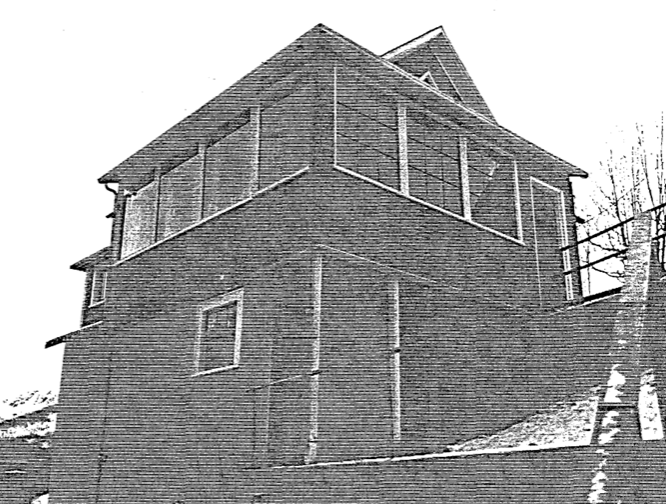
The Anita Kodzoff House, a duplex, sits at 107 West First Street on the southeast face of Telephone Hill.
City tax records date the Kodzoff House from 1896, with possession of the site passing among a number of early settlers. Names affiliated with the property between 1885 and 1895 include: French Pete Erussand, John Jackson, William Nelson, John McKinnon and John Malony.
 In 1901, Lot 5 was owned and developed by the Pacific Coast Steamship Company. The company provided terminal and business space for local professionals during its 30-year existence.
Lot 6 underwent property improvements during Richard Johnson's ownership from 1901 to 1914. By 1916 two "shacks" were recorded on the site. A succession of individuals owned the property from 1915 until Anita Grace Garnick-Kodzoff-Olsen, President of the Juneau Women's Igloo in 1949 and 1950, purchased the property in 1945 from Sam Feldon.
The polygonal, wood-frame building is located off the southern stairwell, a Juneau landmark, on Main Street. This Pioneer Bungalow is clad with asphalt composition siding with the exception of the wood-shingled south facade. Composition roofing covers the intersecting gable roofs, and a shed roof covers the glassed-in porch on the front facade. Extended eaves with boxed cornices are visible. The building stands two stories high on its east facade; the opposite side isl½ stories.
A variety of windows appear on the building: fixed-pane, multi-lite, double-hung sash and diamond-shaped. Soon after the Kodzoff purchase in 1945, the sun porch on the north facade was converted to an enclosed entry. Original doors remain on the east and west facades. The duplex's lower level is the poured concrete partial basement. The wooden apartment door is comprised of a small, leaded-glass window with multi-lites.
-
Campbell, Malcom
Primary Name: Campbell, Malcolm
Filed as: campbell_malcolm
Also known as: Malcom Campbell
Occupation / Association: Property Owner
Born:
Died:
Parents:
Spouse:
Children:
Associated places: Juneau Alaska; Telegraph Hill Juneau
Keywords: Malcolm Campbell, Malcom Campbell, Campbell Malcolm, Telegraph Hill Juneau property owners
Biography
Malcolm Campbell purchased Block 1, Lot 2 on Telegraph Hill in 1894. The property later became the site of the Percy Reynolds House, located at 116 West First Street in Juneau.
Campbell sold the property to Martha McKinnon in 1915.
Sources
Telephone Hill Historic Site and Structures Survey, 1984
Telephone Hill Historic Site and Structures Survey, 1984
Tags: Malcolm Campbell, Malcom Campbell, Campbell Malcolm, Telegraph Hill Juneau, Percy Reynolds House, Property Address 116 West First Street, Telephone Hill property owners
-
Reynolds, Percy
Primary Name: Reynolds, Percy
Filed as: Reynolds, Percy
Also known as: Percy Reynolds
Occupation / Association: Chef; restaurant and liquor store proprietor
Associated places: Ketchikan, Alaska; Juneau, Alaska; Telephone Hill, Juneau, Alaska
Keywords: Percy Reynolds, Percy Reynolds House Juneau, Telephone Hill historic homes, Front Street Juneau restaurants, early Juneau business owners
Biography
Percy Reynolds was a chef and early Juneau businessman who came to the city from Ketchikan, Alaska. After arriving in Juneau, he opened a liquor store and restaurant on Front Street, serving the growing community in the capital city during the early twentieth century.
Reynolds also built the Percy Reynolds House at 116 West First Street on Telephone Hill. The residence faced south, overlooking Gastineau Channel and Douglas Island, and became one of the homes associated with the early residential development of Telephone Hill.
Sources
Telephone Hill Historic Site and Structures Survey, 1984
-
Percy Reynolds House
The Percy Reynolds House is located on Block 1; Lot 2 on Telegraph Hill at 116 West First Street.
Captain Charles Tibbets owned the property and transferred it to Malcom Campbell in 1894. Campbell retained ownership until Martha McKinnon obtained the property in 1915. In 1936 Percy Reynolds purchased the lot from the McKinnon Investment .Company.
Throughout the site's recorded history, no buildings nor improvements were listed on Lot 2 until Reynolds constructed the current building in 1936 (City of Juneau 1901-1951).
Percy Reynolds, a chef, came to Juneau from Ketchikan and opened a liquor store and restaurant on Front Street (Reynolds 1983). Today, Southeastern Newspaper Corporation owns the Percy Reynolds House.
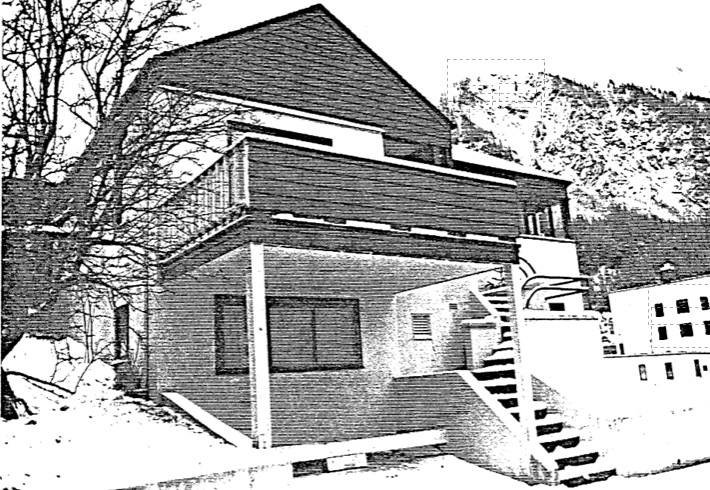 This two-story, cream stucco, 30'x35.5 1 structure with brown siding and trim has an intersecting gable composition roof with minimal eaves. Stucco siding covers the lower two-thirds of the house; painted siding covers the upper one-third. Poured concrete steps lead to an open entry porch. The former basement garage was converted to living area.
The house's main entry is on the south facade with older casement window on the lower level. A tall, multi-lite window is located near the front entry The east facade's upper level displays symmetrically arranged, new caseme, windows; the lower level displays older, multi-lite casement windows with descending wood fireplace. An original rear door with a cut-glass handle is located on the north facade. Single-sash windows and one set of casement windows appear on the west facade.
The interior of the structure contains many original features: a multi-lite glass door with cut-glass handle, stained oak paneling and woodwork, light fixtures, cabinetry and tile trim in the bathrooms and kitchen. Throughout the house, shag carpets cover the floors. The basement contains a modern recreation room with fireplace, a bedroom and utility room. The upper floor has a single bedroom under the roof eaves.
A wood deck was built onto the south facade, and a poured concrete retaining wall surrounds the front of the property.
-
Tibbets, Charles
Tibbets, Captain Charles
Occupation: Mariner, ferry operator, later merchant
Associated Places: Juneau, Alaska; Douglas, Alaska; Telephone Hill
Biography
Captain Charles Tibbets was an early mariner and transportation operator in the Juneau–Douglas area during the territorial period. He was associated with the ownership and operation of the first ferry service connecting the communities of Juneau and Douglas.
Tibbets and his wife owned the site of what later became known as the Judge George Alexander House on the southeast face of Telephone Hill from 1889 until the property was sold by his estate in 1931.
As a mariner, Captain Tibbets was involved with the ownership and operation of the first Juneau–Douglas ferry boat company (Davis, 1893). For a number of years, he served as skipper of vessels for the Juneau Ferry and Navigation Company, which later assumed the ferry operations between Juneau and Douglas. These early ferry routes were an essential transportation link between the mining town of Douglas and the growing community of Juneau.
Later in his career, Tibbets commanded vessels for the United States Bureau of Fisheries, reflecting the continued importance of maritime work in the region’s economy.
Toward the end of his life, he operated a candy store located at Main and Third Streets in Juneau, a business mentioned in the Daily Alaska Empire in 1931.
Sources
- Telephone Hill Historic Site and Structures Survey, 1984
- Davis, 1893
- Daily Alaska Empire, 1931
-
Alexander, George Forest
Primary Name: Alexander, George Forest
Filed as: alexander_george_forest
Also known as: Judge George F. Alexander; George F. Alexander
Occupation / Association: U.S. District Judge, First Judicial District of Alaska
Born: Unknown
Died: Unknown
Parents: Unknown
Spouse: Unknown
Children: Unknown
Associated places: Juneau, Alaska; Telephone Hill, Juneau, Alaska
Property / Address: Judge George Alexander House, 120 West First Street, Telephone Hill, Juneau, Alaska
Keywords: George Forest Alexander, George F Alexander, Judge George Alexander, U.S. District Judge Alaska First Judicial District, Telephone Hill house 120 West First Street
Biography
Judge George Forest Alexander purchased Block 1, Lot 1 on Telephone Hill in 1938 and constructed the Judge George Alexander House in 1939 at 120 West First Street in Juneau.
Alexander served as the United States District Judge for the First Judicial District of Alaska at Juneau from 1933 to 1947.
The residence remained a notable Telephone Hill structure associated with the territorial judiciary. By 1984, the property was owned by the Southeastern Newspaper Corporation.
Sources
City of Juneau, 1901–1951; Atwood, DeArmond, 1967; Telephone Hill Historic Site and Structures Survey, 1984
Tags: George Forest Alexander, Judge George Alexander, U.S. District Judge Alaska, Telephone Hill residents, 120 West First Street Juneau, Judge George Alexander House, Southeastern Newspaper Corporation
-
Dorene Lorenz published Judge George Alexander House in Historic Properties 2024-01-09 04:04:41 -0900
Judge George Alexander House
The Judge George Alexander House at 120 West First Street, is on Block l; Lot 1 on Telephone Hill, adjacent to the Percy Reynolds House. Both structures face south and overlook Gastineau Channel and Douglas Island.
Captain Charles Tibbets and his wife owned the site from 1889 until it was sold by his estate in 1931. Tibbets, a mariner, was associated with the ownership and operation of the first Juneau-Douglas ferry boat company (Davis 1893). For a number of years he was skipper of crafts for the Juneau Ferry and Navigation Company, which took over the ferry operation between Juneau and Douglas. Later he was in command of crafts for the United States Bureau of Fisheries. Toward the end of his life he operated a candy store on Main and Third Streets (Daily Alaskan Empire 1931).
Judge George Forest Alexander purchased the site in 1938 and constructed a house in 1939 (City of Juneau 1901-1951). He was the U. S. District Judge, First Judicial District, Juneau from 1933 to 1947 (Atwood, DeArmond 1967). The structure owned by the Southeastern Newspaper Corporation in 1984.
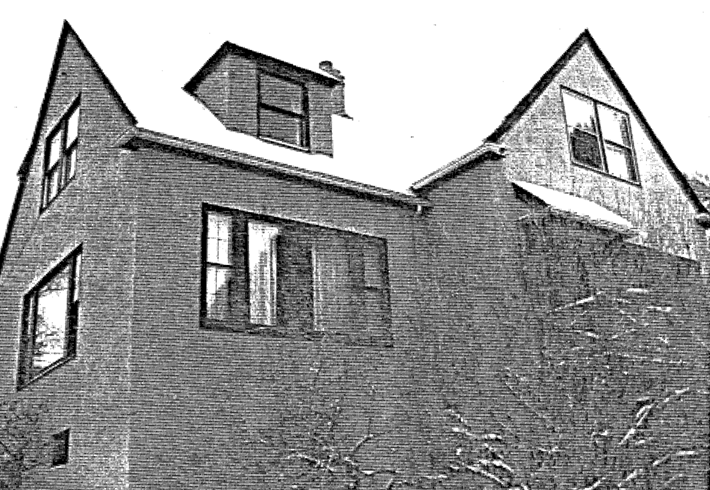 This bungalow-style, l½ story, 24'x36' structure, encompasses 1,028 square feet. It has a green stucco exterior and an inters ecting cedar-shingle gable roof with minimal eaves and original chimney. Wood steps lead up to the front entry located on the south facade. The entry is sheltered by a shed-roofed open canopy.
The single, shed-roof, front dormer contains a double-hung sash window. The front gable has two double-hung sash windows with new exterior storm panes. There are two double-hung sash windows on the east and west gable ends. The front facade's main level has fixed-sash windows with double-hung sash sidelites. A shed roof covers the front entrance.
The Judge George Alexander House's interior retains many original features: polished oak floors, arched entry into the living and dining areas with stained oak moldings, wainscoting, brick fireplace, tile and cabinets in the kitchen and bathroom, dumbwaiter and many built-in cabinets, storage areas and brass door fittings. All closets on the upper floor are cedar-lined, and wall paper, a newer addition, is evident throughout the house. All the windows are original and tightly constructed.
A rectangular garage has shiplap siding, corrugated-metal roofing on a low-pitch gable roof. There are two fixed-sash windows. A stone and mortar wall surrounds the property.
Telephone Hill Historic Site and Structures Survey, 1984
-
Augustus Brown House
The Augustus Brown House is located at 124 Dixon Street on the west side of Telephone Hill.
Augustus Brown acquired the property, an area of partial tidelands, in the late 1880s. Brown reportedly was on his way to the Klondike gold fields when he arrived in Juneau, but readily became a permanent fixture in town.
Records state the land had little or no value until 1901, when a building was listed on Lot 4. Improvements recorded in 1913, however, substantially increased its value. By 1914, three houses stood on Brown's waterfront lots as shown on the Sanborn map.
He is remembered for his row of neat cottages on Willoughby. Stories indicate he lived off his rental income and an estate allowance from England. Brown retained possession of this site for 50 years. When Brown died in 1949, he left $30,000 for the construction of the indoor pool which bears his name today.
 Between 1941 and 1943 three separate parties bought and sold the property. Southeastern Newspaper Corporation currently owned the property in 1984.
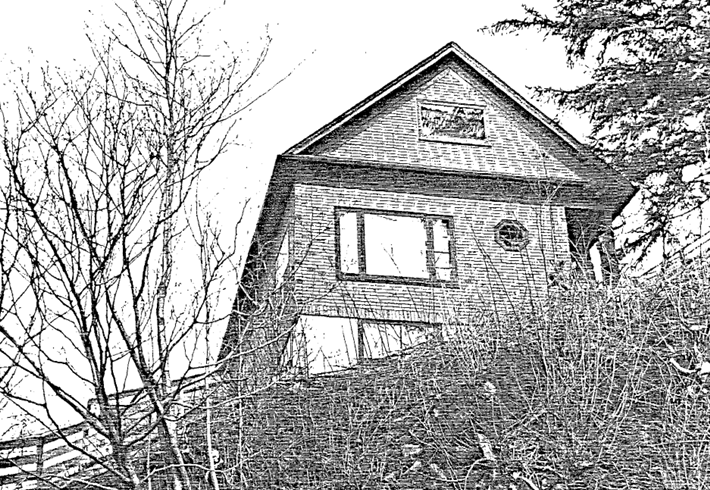
The Augustus Brown House is a rectangular, 1½-story building. From the street above, stairways lead to two entrances on the east facade. The wood-frame, 33 1 x231 building has a steeply pitched, composition shingle-covered gable roof and a cinder-block chimney on the ridgeline.
Asphalt composition siding on the exterior covers the original wood siding. The partial basement has a stucco finish. Fixed-sash windows with sidelites are located under the gable eaves on the north and south facades. Two double-hung sash windows are located on the main
2025-2026 Chairman, 2024 Commissioner, Alaska State Commission for Human Rights. 2025 United Nations Geneva Human Rights Crisis State & Local Panelist. 2024 Alaska State Delegate, America 250 Convening of the States. 2023-2024 Commissioner, Alaska Historical Commission. 2025-2026 Chairman, 2019-2024 Committee Member, City & Borough of Juneau Historic Resources Advisory Committee. 2024-2025-2026 Sons of Norway Svalbard Lodge Juneau Historian. 2024-2025-2026 Filcom Member. 2018-2020 Committee Member, City & Borough of Juneau Sister Cities Committee. 2019-2020 Member, AVTEC Institutional Advisory Committee. 2006-2020, President & COB, Friends of Jesse Lee Home. 2012 Member, Anchorage Arts Advisory Commission. Anchorage International Film Festival Features Committee Chair/Host/Award Presenter. Balto Film Fest Founder.
2004 Seward City Council. 2002-2006, Seward Centennial Legacy Committee, Seward Economic Development Committee, Seward Waterfront Committee, Seward Alternate Energy Committee, Seward Long-term Care Replacement Facility Committee, and Seward Historic Preservation Commission.