
Harlampy Sokolof was a charter member of the Juneau Men's Igloo.
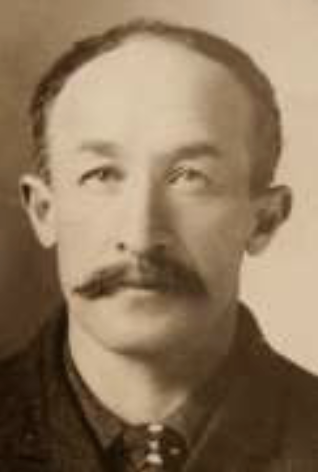
Primary Name: Sokolof, Harlampy
Filed as: Sokolof, Harlampy
Also known as: Harlampy Sokoloff; Harlampy Sokolof
Occupation / Association: Russian missionary; interpreter; member of the 1887 Pioneers
Associated places: Sitka, Alaska; Juneau, Alaska; Killisnoo, Alaska; Dyea, Alaska; Skagway, Alaska
Keywords: Harlampy Sokolof, Harlampy Sokoloff, Russian Seminary Sitka, Alaska Russian missionaries, Alaska interpreters Tlingit Russian Slovenian, Pioneers of 1887 Alaska, Sitka Alaska pioneers, early Juneau interpreters, Alaska Native relations history
Biography
Harlampy Sokolof was born in Sitka, Alaska, on February 22, 1863. He graduated from the Russian Seminary in Sitka.
On May 29, 1881, he was hired in Sitka as an interpreter aboard the U.S. Navy vessel Wachusetts, commanded by Captain Glass. The vessel cruised throughout the waters of Southeast Alaska enforcing federal law, including efforts to suppress the illegal manufacture of alcohol and to intervene in practices the federal authorities considered unlawful. The patrols visited communities including Sitka, Juneau, Hoonah, Killisnoo, Klawock, Shakan, Wrangell, and Chilkoot.
Sokolof also recalled an earlier experience in 1878, when the Canadian gunboat H.M.S. Osprey arrived at Sitka amid tension with local Native groups. He and his father stood watch to help protect the town’s residents.
During his career, he also worked as a survey assistant on a quartz claim for A. P. Swineford. While on that expedition with companions identified as Russell and Alex Toles, he was attacked by a brown bear and suffered severe injuries, including a broken arm and leg.
Sokolof later served as a court interpreter in both Sitka and Juneau. He spoke several languages and worked in Tlingit, Slovenian, and Russian.
He married Mary Danilova Kobochef in Sitka on November 11, 1884. The couple had two children.
Over the course of his life, Sokolof lived in several Southeast Alaska communities, including Sitka, Juneau, Killisnoo, Dyea, and Skagway. He worked as a Russian missionary and interpreter and was recognized as a member of the Alaska “Pioneers of 1887.”
Sources
Pioneers of Alaska Men’s Igloo No. 6 Biographical Sketch.