
Silva, Mix
Primary Name: Porcupine Mining District
Filed as: Porcupine Mining District
Also known as: Porcupine Creek Gold Discovery
Occupation / Association: Placer gold mining district
Associated places: Porcupine Creek, Alaska; Haines, Alaska; Dalton Trail; Rainy Hollow District, Canada
Keywords: Porcupine Mining District Alaska, Porcupine Creek gold discovery, Jack Dalton, Mix Silva, Edward Findley, Perry Wiley, EB Hanley, John Malony, Porcupine Trading Company, Dalton Trail mining, Haines Alaska mining history, Rainy Hollow mining district, Alaska placer mining, hydraulic mining Alaska, Alaska gold rush mining districts
Biography
In 1898 prospectors Mix Silva, Edward Findley, and Perry Wiley, who had been grubstaked by Jack Dalton, discovered placer gold on Porcupine Creek north of Haines along the Dalton Trail. The discovery quickly attracted attention and the Porcupine Mining District was formally organized on October 22, 1898.
On November 5, 1898, Dalton and the three prospectors located the Discovery Claim. Additional claims were soon located by Dalton and his business partners E. B. Hanley and John Malony. The district experienced a mining rush in 1899 as prospectors arrived and began working nearby creeks and surrounding areas.
Prospectors soon discovered gold in nearby creeks and both gold and copper deposits in areas as much as sixty miles distant, including the Rainy Hollow district in Canada. First-year production from the Porcupine district was reported to be worth approximately $50,000, with about $40,000 coming from Dalton’s Discovery Claim.
The gold deposits in the district were rich but fairly deep, requiring significant infrastructure to mine profitably. Miners constructed miles of ditches and flumes to deliver water to hydraulic mining systems. Hydraulic lifts, sometimes called gravel elevators, were used to raise gold-bearing gravel for processing.
Commercial support for the mining district came from the Porcupine Trading Company, organized by Dalton, Hanley, and Malony on August 1, 1899. The company imported mining equipment and provided supplies and credit to miners working in the district.
In 1900 Dalton and his partners shipped approximately 300 tons of mining equipment and supplies into the area. Mining operations continued profitably until around 1905, when a major flood destroyed much of the mining infrastructure. Recognizing that much of the easily recovered gold had been extracted, Dalton, Hanley, and Malony sold their interests in the district in 1907.
Sources
Alaska Mining Hall of Fame.
Malony, John F.
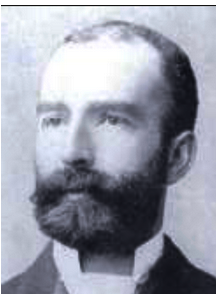
Primary Name: Malony, John F., Jr.
Filed as: Malony, John F., Jr.
Also known as: John F. Malony; John Mahony
Occupation / Association: Lawyer; businessman; mining investor; mayor of Juneau; charter member, Pioneers of Alaska Juneau Men's Igloo; President, Alaska Electric Light and Power Company
Associated places: Juneau, Alaska; Shieldsville Township, Rice County, Minnesota; Glendive, Montana; Dawson County, Montana; Porcupine District, Alaska; Windham Bay, Alaska; Rainy Hollow, British Columbia; Palo Alto, California
Keywords: John F Malony Juneau Alaska, Juneau mayor early Alaska, Dalton Trail Company partners, Jack Dalton Alaska Pathfinder associate, Porcupine Mining District Alaska, Alaska Electric Light and Power Company history, Chicken Ridge Juneau development, Alaska pioneers business leaders
Biography
John F. Malony, Jr. was a charter member of the Pioneers of Alaska, Juneau Men's Igloo, and one of the most influential early civic and business leaders in Juneau. Pioneer banker and businessman B. M. Behrends once remarked that Malony had “probably done more for Juneau than any other man.”
Malony was born in 1857 in Shieldsville Township, Rice County, Minnesota, to Francis and Mary Donahue Malony, Irish immigrants who had earlier settled in New Brunswick, Canada. He was educated at Shattuck School in Faribault and at St. John’s College in St. Cloud, Minnesota. After reading law under Minnesota Attorney General Gordon E. Coles, he passed the bar and practiced law for nearly twenty years.
In 1881, he moved to Glendive, Montana, during the rapid development of the mining frontier. His career advanced quickly: he was appointed Probate Judge in 1882, elected to the Montana legislature later that year, and served as a delegate to the Montana Constitutional Convention in 1884.
Following an assassination attempt during a speech in Montana, Malony eventually left the territory and moved north to Alaska in the mid-1890s, bringing with him his son Joseph Mahony.
In Juneau, he met Cora Cleveland, a milliner who had established a hat shop in the city in 1895. They married in Juneau, and on December 29, 1899, their son John F. Malony III was born.
Malony worked closely with Alaska Pathfinder Jack Dalton. In 1893, he successfully defended Dalton in the controversial trial involving the death of Don (or Dennis) McGinnis. Malony and Dalton later partnered in several ventures, including the Dalton Trail Company and the Dalton Pony Express Company, which served miners traveling to the Yukon prior to the construction of the White Pass and Yukon Railway.
Malony also participated in early mining investments throughout Southeast Alaska. He was involved in placer claims on Chicken Ridge in 1890 and later in mining ventures in the Porcupine district near Haines with partners including E. B. Hanley. The group also operated the Porcupine Trading Company.
Beyond mining, Malony invested in fisheries and canneries near Wrangell and Petersburg and became a principal stockholder in the Juneau Ferry & Navigation Company.
Malony was deeply involved in civic affairs. He served on Juneau’s first city council around 1900 and was elected mayor in 1907. He also helped lead the Alaska Electric Light and Power Company, serving as its president while J. P. Corbus served as treasurer. Their leadership expanded electrical power generation in Juneau during the early twentieth century.
Among Malony’s real estate projects were the Gold Belt residential development and the Malony Block commercial buildings in downtown Juneau. One house constructed in association with mining entrepreneur Bart Thane later became the well-known Wickersham House.
Malony’s health declined around 1915, and he moved to California while continuing to manage his Alaska investments. He died in Palo Alto, California in early June 1919. He was survived by his wife, Cora Cleveland Malony, and three children.
Sources
Alaska Mining Hall of Fame.
Gastineau Channel Historical Society, Winter 1986.
Malony Collection, Alaska State Library, MS 40.
Alaska Daily Empire, June 2, 1919.