
Hackett., Charley
Primary Name: Hackett, Charley
Filed as: hackett_charley
Also known as: Charlie Hackett
Occupation / Association: Hotel manager; Hotel Haines
Born:
Died:
Parents:
Spouse:
Children:
Associated places: Haines, Alaska
Keywords: Charley Hackett, Charlie Hackett, Hackett Charley, Hotel Haines manager, Jack Dalton freighting operations, Haines Alaska early residents
Biography
Charley Hackett managed the Hotel Haines in Haines, Alaska during the late nineteenth century.
In 1894, Jack Dalton, with the financial backing of John Maloney, acquired land from the widow of George Dickinson, the first trader in the area. Dalton constructed a warehouse, a store, and later the Hotel Haines on the Dickinson tract.
Dalton continued his freighting business while leaving the management of the hotel to Hackett.
Sources
Tags: Charley Hackett, Charlie Hackett, Hackett Charley, Hotel Haines manager, Jack Dalton, John Maloney, George Dickinson, Haines Alaska history
Lindsay , Jack
Primary Name: Dalton, Jack
Filed as: dalton_jack
Also known as: Jack Dalton
Occupation / Association: Freighter; Trader; Hotel Proprietor
Born:
Died:
Parents:
Spouse:
Children:
Associated places: Haines, Alaska
Keywords: Jack Dalton, Dalton Jack, Dalton Trail freighter, Haines Alaska trader, Hotel Haines proprietor
Biography
Jack Dalton was a freighter and trader active in the Haines area of Alaska. In 1894, with backing from John Maloney, Dalton acquired land from the widow of George Dickinson, the first trader in the area.
Dalton built a warehouse and a store on the Dickinson tract and later constructed the Hotel Haines. He continued operating his freight business while leaving hotel management to Jack Lindsay.
Sources
Tags: Jack Dalton, Dalton Jack, John Maloney, George Dickinson, Haines Alaska pioneers, Alaska freighters
Dickinson, George
Primary Name: Dickinson, George
Filed as: dickinson_george
Also known as: George Dickinson
Occupation / Association: Trader; Early Haines Resident
Born:
Died:
Parents:
Spouse:
Children:
Associated places: Haines, Alaska
Keywords: George Dickinson, Dickinson George, Haines trader, first trader in Haines, Hotel Haines property, Jack Dalton, John Maloney
Biography
George Dickinson was identified as the first trader in the Haines area.
Jack Dalton and John Maloney were notably successful in the Haines area. In 1894, Dalton, with Maloney's backing, acquired land from the widow of George Dickinson, the first trader in the area. Dalton built a warehouse, a store, and later the Hotel Haines on the Dickinson tract.
Sources
Alaska Mining Hall of Fame; Haines area historical records
Tags: George Dickinson, Dickinson George, Haines Alaska residents, Haines traders, Jack Dalton, John Maloney, Hotel Haines
Charter Members
Malony, John F.
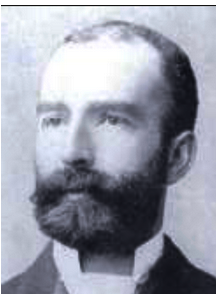
Primary Name: Malony, John F., Jr.
Filed as: Malony, John F., Jr.
Also known as: John F. Malony; John Mahony
Occupation / Association: Lawyer; businessman; mining investor; mayor of Juneau; charter member, Pioneers of Alaska Juneau Men's Igloo; President, Alaska Electric Light and Power Company
Associated places: Juneau, Alaska; Shieldsville Township, Rice County, Minnesota; Glendive, Montana; Dawson County, Montana; Porcupine District, Alaska; Windham Bay, Alaska; Rainy Hollow, British Columbia; Palo Alto, California
Keywords: John F Malony Juneau Alaska, Juneau mayor early Alaska, Dalton Trail Company partners, Jack Dalton Alaska Pathfinder associate, Porcupine Mining District Alaska, Alaska Electric Light and Power Company history, Chicken Ridge Juneau development, Alaska pioneers business leaders
Biography
John F. Malony, Jr. was a charter member of the Pioneers of Alaska, Juneau Men's Igloo, and one of the most influential early civic and business leaders in Juneau. Pioneer banker and businessman B. M. Behrends once remarked that Malony had “probably done more for Juneau than any other man.”
Malony was born in 1857 in Shieldsville Township, Rice County, Minnesota, to Francis and Mary Donahue Malony, Irish immigrants who had earlier settled in New Brunswick, Canada. He was educated at Shattuck School in Faribault and at St. John’s College in St. Cloud, Minnesota. After reading law under Minnesota Attorney General Gordon E. Coles, he passed the bar and practiced law for nearly twenty years.
In 1881, he moved to Glendive, Montana, during the rapid development of the mining frontier. His career advanced quickly: he was appointed Probate Judge in 1882, elected to the Montana legislature later that year, and served as a delegate to the Montana Constitutional Convention in 1884.
Following an assassination attempt during a speech in Montana, Malony eventually left the territory and moved north to Alaska in the mid-1890s, bringing with him his son Joseph Mahony.
In Juneau, he met Cora Cleveland, a milliner who had established a hat shop in the city in 1895. They married in Juneau, and on December 29, 1899, their son John F. Malony III was born.
Malony worked closely with Alaska Pathfinder Jack Dalton. In 1893, he successfully defended Dalton in the controversial trial involving the death of Don (or Dennis) McGinnis. Malony and Dalton later partnered in several ventures, including the Dalton Trail Company and the Dalton Pony Express Company, which served miners traveling to the Yukon prior to the construction of the White Pass and Yukon Railway.
Malony also participated in early mining investments throughout Southeast Alaska. He was involved in placer claims on Chicken Ridge in 1890 and later in mining ventures in the Porcupine district near Haines with partners including E. B. Hanley. The group also operated the Porcupine Trading Company.
Beyond mining, Malony invested in fisheries and canneries near Wrangell and Petersburg and became a principal stockholder in the Juneau Ferry & Navigation Company.
Malony was deeply involved in civic affairs. He served on Juneau’s first city council around 1900 and was elected mayor in 1907. He also helped lead the Alaska Electric Light and Power Company, serving as its president while J. P. Corbus served as treasurer. Their leadership expanded electrical power generation in Juneau during the early twentieth century.
Among Malony’s real estate projects were the Gold Belt residential development and the Malony Block commercial buildings in downtown Juneau. One house constructed in association with mining entrepreneur Bart Thane later became the well-known Wickersham House.
Malony’s health declined around 1915, and he moved to California while continuing to manage his Alaska investments. He died in Palo Alto, California in early June 1919. He was survived by his wife, Cora Cleveland Malony, and three children.
Sources
Alaska Mining Hall of Fame.
Gastineau Channel Historical Society, Winter 1986.
Malony Collection, Alaska State Library, MS 40.
Alaska Daily Empire, June 2, 1919.
Chicken Ridge Historic District
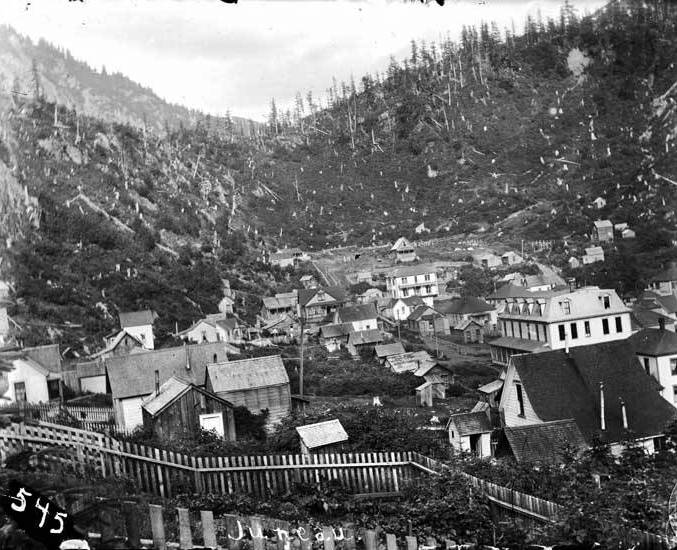 The Chicken Ridge Historic District neighborhood includes properties along Basin Road, past Seventh Street, all properties along Seventh Street, most properties on Main Street above Sixth Street, all properties on Goldbelt Avenue, and all properties on Dixon Street as well as a few properties on Calhoun Avenue.
Neighborhood growth was engendered by the large mining companies and the government alike and areas such as Chicken Ridge began to be settled. The area known as the Chicken Ridge Neighborhood, which overlooks the city of Juneau, was so named by miners because of the abundance of ptarmigan in the area.
The Chicken Ridge area was staked as a placer claim in May of 1890 by five men, one of whom was John F. Maloney, who was to eventually make his home on the ridge. The neighborhood which developed on Chicken Ridge was first settled in 1893.
During this period of gold mining expansion in the form of large mining companies and the subsequent expansion of Juneau’s role in territorial government, the need for living space increased the pressure to extend settlement in Juneau. An affluent socio-economic class comprised of Juneau’s attorneys, doctors, business owners, mining executives, government employees, and politicians settled the Chicken Ridge neighborhood.
Because of the location of the city, building materials were scarce and so were skilled craftsmen to do the work. Most buildings were modest interpretations of national stylistic trends which varied only according to the amount of detailing and square footage which could be afforded by the individual owner - ranging from craftsman and colonial revival to prairie school.
Listed contributing homes: Hammond-Wickersham House, McCloskey Mansion, Rustgard House, Norton House, Walker House, Jenne House, Thornton House, Cole/Carter House, Cole House, Mize House/Weather Bureau Station, Geyer House, Perelle House, Bradford House, Johnstone-Radelet House, and the Creese House.
Listed non-contributing homes include: Mullen/Hebert House, Hermann House, Torvinin House, and the Longenbaugh House.