
Garnick-Kodzoff-Olsen, Anita
Primary Name: Olsen, Anita Grace Garnick Kodzoff
Filed as: olsen_anita_grace_garnick_kodzoff
Also known as: Anita Grace Garnick; Anita Garnick-Kodzoff; Anita Kodzoff; Anita Olsen
Occupation / Association: President, Juneau Women’s Igloo (1949, 1950); Alaska Territorial House of Representatives member; Alaska Territorial Senator; bailiff and law librarian, Superior Court; grocer
Born: March 18, 1904, Fort Collins, Colorado
Died: March 30, 1987, Seattle, Washington
Parents: Frank Louis Garnick; Clara Ella Herner Garnick
Spouse: George Val Dimer Kodzoff; Harland D. Olsen
Children:
Associated places: Fort Collins, Colorado; Juneau, Alaska; Mendenhall Valley, Alaska; Seattle, Washington
Keywords: Anita Grace Garnick Kodzoff Olsen, Anita Garnick Kodzoff Olsen, Alaska Territorial Senate first woman, Juneau Women’s Igloo President 1949, Alaska Territorial House member 1947, Garnick's Grocery Juneau, Kodzoff Acres Trailer Park
Biography

Anita Grace Garnick Kodzoff Olsen served as President of the Juneau Women’s Igloo in 1949 and 1950.
She was born on March 18, 1904, in Fort Collins, Colorado, to Frank Louis Garnick and Clara Ella Herner Garnick. Anita grew up in Juneau and graduated from Juneau High School in 1922. She later attended the Alaska Territorial Normal School.
Her father purchased the Consumer’s Market on Seward Street in 1923 and renamed it Garnick’s Grocery. Anita worked in the store, and after her mother’s death in 1938, she took over management of the market. She operated the business until closing the grocery store in 1955.
Anita served as Secretary–Treasurer for the American Federation of Musicians, Local 672, AFL-CIO.
She entered public service and became the second woman elected to the Alaska Territorial House of Representatives, serving from 1947 to 1949. In 1949, she was elected to the Alaska Territorial Senate, serving until 1953. She was the first woman to serve in the Alaska Territorial Senate, although another woman had previously been elected but did not take office.
Anita later worked as a bailiff and law librarian for the Superior Court in Juneau from 1959 to 1969.
She married George Val Dimer Kodzoff on December 3. Together, they established Kodzoff Acres Trailer Park in the Mendenhall Valley. George died in March 1979. Anita later married Harland D. Olsen on September 25, 1982.
She was active in numerous organizations, including the Order of Eastern Star, American Legion Auxiliary, Women of the Moose, the Emblem Club, and the Alaska Native Sisterhood.
Anita received the American Legion Citizenship Award in 1963.
She died in Seattle, Washington, on March 30, 1987.
Sources
1910 U.S. Federal Census, Juneau; 1930 U.S. Federal Census, Juneau; Who's Who in the West, 19th Edition, p. 453; Daily Sitka Sentinel, April 3, 1987
Tags: Anita Grace Garnick Kodzoff Olsen, Anita Garnick, Anita Kodzoff, Juneau Women’s Igloo President, Alaska Territorial Senate, Alaska Territorial House, Garnick's Grocery Juneau, Kodzoff Acres Trailer Park
Sweeney, Dora M. Lundstrom
Sweeney, Dorothy "Dora" M. Lundstrom
Association: Pioneers of Alaska, Juneau Women's Igloo
Role: President
Years: 1939, 1940, 1953
Biography
Dorothy “Dora” M. Lundstrom Sweeney was a prominent Juneau civic leader, legislator, and a three-time President of the Pioneers of Alaska Juneau Women's Igloo, serving in 1939, 1940, and 1953.
She was born on June 19, 1907, in Biwabik, Minnesota, to Alfred E. Lundstrom and Mae S. “Maki” Lundstrom. As an infant, she moved with her parents to Juneau, Alaska, where she was raised and educated. After graduating from Juneau High School, she attended business college in Seattle and returned to Juneau to work for the law firm of Hellenthal & Hellenthal.
Dora married Edward Charles Sweeney on December 17, 1927. During the early years of her career, she held several public service positions in Juneau, including work with the Bureau of Indian Affairs from 1930 to 1940, the Territorial Health Department from 1940 to 1942, and the Shattuck Insurance Agency from 1942 to 1952. Beginning in 1958, she also worked part-time for Sommers Construction Company for approximately twenty-six years.
Her career in public service expanded significantly during Alaska's territorial and early statehood years. In 1953, she served as Secretary of the Alaska Territorial Senate. She later served in the final two legislatures of the Territory of Alaska and was elected as a delegate to the Alaska Constitutional Convention of 1955–1956. At the convention, she served on the Committee on the Legislative Branch and was one of the fifty-five delegates who signed the Alaska State Constitution.
Sweeney was one of only six women among the constitutional convention delegates, a group sometimes referred to as the “Fifty-Five Club.” She later served three terms in the Alaska House of Representatives and concluded her legislative career in 1965.
Following her legislative service, she continued working in government and public history. From 1965 to 1970, she served as Legislative Historian for the Alaska Legislative Council. In 1966, she became the first woman to serve as Sergeant-at-Arms of the Alaska State House of Representatives.
Throughout her career, Dora Sweeney was widely respected for her dedication to public service during Alaska’s transition from territorial government to statehood. She also served as one of Alaska’s commissioners to the Western Interstate Commission on Higher Education, was a charter member of the Juneau Community College Advisory Council, and served on the Juneau City Charter Commission.
Her civic leadership was recognized with numerous honors. The Juneau Rotary Club named her the first recipient of its “Woman of the Year” award in 1957. The Alaska Press Club presented her with its “Outstanding Citizen Award” in 1964, 1965, and 1966. She was also listed in the first edition of Who’s Who of American Women. Later, Governor Jay Hammond honored her with recognition from the Joe Kappler Senior Citizens’ Hall of Fame for her many years of service to Alaskans.
Sources
- Alaska legislative and constitutional convention historical records
- Pioneers of Alaska, Juneau Women's Igloo records
- Juneau historical archives
Roden, Henry

Roden, Henry
Association: Pioneers of Alaska, Juneau Men's Igloo
Role: President, Juneau Men's Igloo; Grand Igloo President
Year: 1943
Biography
Henry Roden served as President of the Juneau Men's Igloo of the Pioneers of Alaska and later as Grand Igloo President in 1943.
He was born on August 8, 1874, in Basel, Switzerland. Roden came north during the Klondike gold rush, reaching Dawson in 1898, where he joined the stampeders and worked as a prospector, miner, and wood cutter supplying riverboats.
In 1902, he began studying law independently. Over the next four years, he memorized two law books and successfully passed the Alaska Bar examination in 1906. As he later recalled, “Alaska, the land of opportunity, here I come. I learned later it was a do-it-yourself deal.”
Roden established a law practice in Fairbanks and later served as an Assistant U.S. Attorney in Fairbanks and Iditarod, and as City Attorney of Iditarod. He became widely known throughout Alaska and was affectionately called “our Heine.”
In 1913, he was elected to the First Alaska Territorial Legislature as a senator and was reelected three additional times.
He married Margaret Kaapcke in Tacoma, Washington, on January 22, 1917. The couple later lived in Juneau, where Roden practiced law and also became involved in the fishing industry. He served as manager of the Republic Fisheries Company, which operated floating fish traps in Chatham Strait, and owned the gas fishing vessel Jugoslav. He was also president of Pelican Cold Storage Company and a co-founder of the city of Pelican, Alaska.
In 1940, Roden was elected Attorney General of Alaska and served in that position for four years. In 1944, he was a candidate for the United States Congress as a territorial delegate.
In 1949, he was called back from retirement to serve as the territory's Treasurer and was elected to another term. He later served on the Board of Directors of the Pioneers' Home in Sitka until Alaska achieved statehood.
Roden and his wife moved to Seattle in 1958 due to Margaret’s declining health. She died there in 1961. Even in his late eighties, Roden remained active in the legal profession while living at the Savoy Hotel in Seattle, where he continued to advise former Alaskans without charging them fees.
Henry Roden died in Seattle on June 5, 1966.
Sources
- Ed Ferrell, Biographies of Alaska-Yukon Pioneers 1850–1950, Vol. 3, pp. 244–246
Tanner, Josias Martin
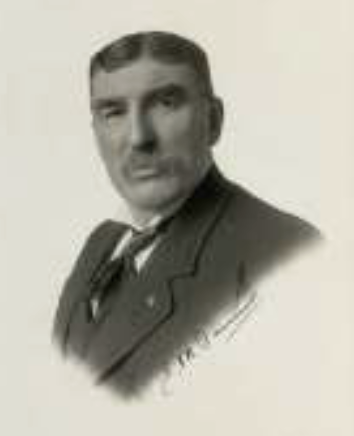 Primary Name: Tanner, Josias Martin
Filed as: Tanner, Josias Martin
Also known as: Josias Tanner; “Senator Si” Tanner
Occupation / Association: Charter Member, Juneau Men's Igloo; Alaska Territorial Senator; Mayor of Skagway; Deputy United States Marshal; merchant; miner
Associated places: Oakland County, Michigan; Central City, Colorado; Juneau, Alaska; Skagway, Alaska; Tacoma, Washington
Keywords: Josias Martin Tanner, Senator Si Tanner, Juneau Men's Igloo charter members, Skagway Alaska mayor, Soapy Smith era Skagway, Alaska Territorial Legislature, Skagway Vigilantes, Arctic Brotherhood members, Alaska-Yukon pioneers
Biography
Josias Martin Tanner was a charter member of the Juneau Men's Igloo of the Pioneers of Alaska and one of the prominent early civic leaders of Skagway during Alaska’s gold rush era.
Tanner was born in Oakland County, Michigan, on February 22, 1850. His grandfather served in the Revolutionary War, having enlisted at the age of fifteen. A brother of Tanner’s grandfather, William Tanner, was reportedly a member of President George Washington's bodyguard when the British and Loyalists attempted to capture the first President.
Known throughout Alaska as “Senator Si,” Tanner served two terms in Alaska’s territorial lawmaking assembly.
As a young man, Tanner began his career in mining. At the age of twenty, he left Michigan and went to Central City, Colorado, one of the famous mining camps of Gilpin County. There he worked in the gold mines and mills of Colorado for four years.
In 1871, he married Juliette Valentine, the sister of Emery Valentine, who later served as mayor of Juneau. Three children were born to the couple: two daughters, who later lived in Tacoma, Washington, and a son, Fred Tanner, who eventually joined his father in business in Skagway.
The family later moved to Tacoma, where Tanner worked in the contracting business. In 1896, he accepted a position in Emery Valentine’s general store in Juneau.
During the Klondike Gold Rush, he moved to Skagway in July 1897 during the Dawson stampede and remained there for the rest of his life. In Skagway, he played an important role in maintaining order during the turbulent gold rush years.
Tanner helped organize and command the Skagway Vigilantes, a citizens’ group formed to preserve law and order during the period when the notorious outlaw Soapy Smith and his gang dominated the town. Organized lawlessness in Skagway culminated in Smith’s death on July 8, 1898.
Because of his leadership and composure during the effort to drive Smith’s gang from the city, Tanner was appointed Deputy United States Marshal by Marshal J. M. Shoup and served in that position for two years.
Tanner remained active in Skagway's civic affairs for many years. He served for five years on the Skagway City Council, was elected mayor three times, and also served for five years as municipal magistrate.
He was also active in fraternal organizations, including the Benevolent and Protective Order of Elks, the Independent Order of Odd Fellows, and the Arctic Brotherhood.
In addition to his political and civic career, Tanner operated a hardware store in Skagway and held business interests in the Home Power Company of Skagway.
Sources
Ferrell, Ed. Biographies of Alaska-Yukon Pioneers 1850–1950, Volume 2, pp. 321–322 (2009).
Alaska Digital Archives, James Joseph Connors Photograph Collection, PCA 457.