
Roden, Henry

Roden, Henry
Association: Pioneers of Alaska, Juneau Men's Igloo
Role: President, Juneau Men's Igloo; Grand Igloo President
Year: 1943
Biography
Henry Roden served as President of the Juneau Men's Igloo of the Pioneers of Alaska and later as Grand Igloo President in 1943.
He was born on August 8, 1874, in Basel, Switzerland. Roden came north during the Klondike gold rush, reaching Dawson in 1898, where he joined the stampeders and worked as a prospector, miner, and wood cutter supplying riverboats.
In 1902, he began studying law independently. Over the next four years, he memorized two law books and successfully passed the Alaska Bar examination in 1906. As he later recalled, “Alaska, the land of opportunity, here I come. I learned later it was a do-it-yourself deal.”
Roden established a law practice in Fairbanks and later served as an Assistant U.S. Attorney in Fairbanks and Iditarod, and as City Attorney of Iditarod. He became widely known throughout Alaska and was affectionately called “our Heine.”
In 1913, he was elected to the First Alaska Territorial Legislature as a senator and was reelected three additional times.
He married Margaret Kaapcke in Tacoma, Washington, on January 22, 1917. The couple later lived in Juneau, where Roden practiced law and also became involved in the fishing industry. He served as manager of the Republic Fisheries Company, which operated floating fish traps in Chatham Strait, and owned the gas fishing vessel Jugoslav. He was also president of Pelican Cold Storage Company and a co-founder of the city of Pelican, Alaska.
In 1940, Roden was elected Attorney General of Alaska and served in that position for four years. In 1944, he was a candidate for the United States Congress as a territorial delegate.
In 1949, he was called back from retirement to serve as the territory's Treasurer and was elected to another term. He later served on the Board of Directors of the Pioneers' Home in Sitka until Alaska achieved statehood.
Roden and his wife moved to Seattle in 1958 due to Margaret’s declining health. She died there in 1961. Even in his late eighties, Roden remained active in the legal profession while living at the Savoy Hotel in Seattle, where he continued to advise former Alaskans without charging them fees.
Henry Roden died in Seattle on June 5, 1966.
Sources
- Ed Ferrell, Biographies of Alaska-Yukon Pioneers 1850–1950, Vol. 3, pp. 244–246
Hunter, Earle Leslie
Primary Name: Hunter, Earle L.
Filed as: hunter_earle_l
Also known as: Earle L. Hunter
Occupation / Association: Charter Member, Juneau Men’s Igloo; mariner; Deputy Customs Collector; Juneau Postmaster; Territorial Legislator
Born: 1872, Mondovi, Wisconsin
Died: September 3, 1935
Parents:
Spouse: Emma Lulu Miller
Children:
Associated places: Mondovi, Wisconsin; Wrangell, Alaska; Juneau, Alaska; Douglas, Alaska
Keywords: Earle L Hunter, Hunter Earle L, Juneau Men’s Igloo charter member, Juneau postmaster 1912–1916, Alaska Territorial Legislature 1921, Bureau of Fisheries fleet
Biography
Earle L. Hunter was a charter member of the Juneau Men’s Igloo.
Hunter was born in Mondovi, Wisconsin, in 1872. He came to Wrangell, Alaska in March 1898 and moved to Juneau and Douglas in 1899.
During his time in Alaska, he held a number of public and maritime positions. He worked as a mariner and held Master’s papers for vessels operating in waters from Puget Sound to and including the southeastern and southwestern waters of Alaska.
Hunter served as a Deputy Customs Collector from 1898 to 1903, was a member of the Juneau City Council from 1905 to 1906, and served as Juneau postmaster from 1912 to 1916. In 1921, he was elected to the Alaska Territorial Legislature.
At the time of his death on September 3, 1935, he was in charge of the Bureau of Fisheries fleet.
He married Emma Lulu Miller, originally from Oregon, in 1899.
Sources
Gastineau Channel Memories 1880–1959, p. 233; Pioneers of Alaska Men’s Igloo 6 Biographical Sketch
Tags: Earle L Hunter, Hunter Earle L, Juneau Men’s Igloo, Alaska Territorial Legislature members, Juneau postmasters, Alaska mariners
Tanner, Josias Martin
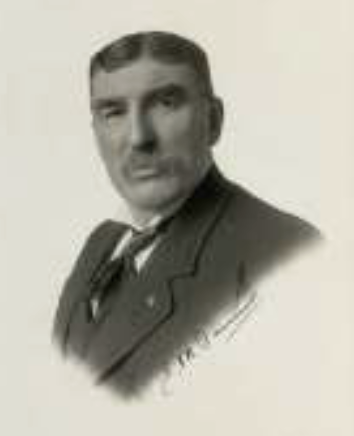 Primary Name: Tanner, Josias Martin
Filed as: Tanner, Josias Martin
Also known as: Josias Tanner; “Senator Si” Tanner
Occupation / Association: Charter Member, Juneau Men's Igloo; Alaska Territorial Senator; Mayor of Skagway; Deputy United States Marshal; merchant; miner
Associated places: Oakland County, Michigan; Central City, Colorado; Juneau, Alaska; Skagway, Alaska; Tacoma, Washington
Keywords: Josias Martin Tanner, Senator Si Tanner, Juneau Men's Igloo charter members, Skagway Alaska mayor, Soapy Smith era Skagway, Alaska Territorial Legislature, Skagway Vigilantes, Arctic Brotherhood members, Alaska-Yukon pioneers
Biography
Josias Martin Tanner was a charter member of the Juneau Men's Igloo of the Pioneers of Alaska and one of the prominent early civic leaders of Skagway during Alaska’s gold rush era.
Tanner was born in Oakland County, Michigan, on February 22, 1850. His grandfather served in the Revolutionary War, having enlisted at the age of fifteen. A brother of Tanner’s grandfather, William Tanner, was reportedly a member of President George Washington's bodyguard when the British and Loyalists attempted to capture the first President.
Known throughout Alaska as “Senator Si,” Tanner served two terms in Alaska’s territorial lawmaking assembly.
As a young man, Tanner began his career in mining. At the age of twenty, he left Michigan and went to Central City, Colorado, one of the famous mining camps of Gilpin County. There he worked in the gold mines and mills of Colorado for four years.
In 1871, he married Juliette Valentine, the sister of Emery Valentine, who later served as mayor of Juneau. Three children were born to the couple: two daughters, who later lived in Tacoma, Washington, and a son, Fred Tanner, who eventually joined his father in business in Skagway.
The family later moved to Tacoma, where Tanner worked in the contracting business. In 1896, he accepted a position in Emery Valentine’s general store in Juneau.
During the Klondike Gold Rush, he moved to Skagway in July 1897 during the Dawson stampede and remained there for the rest of his life. In Skagway, he played an important role in maintaining order during the turbulent gold rush years.
Tanner helped organize and command the Skagway Vigilantes, a citizens’ group formed to preserve law and order during the period when the notorious outlaw Soapy Smith and his gang dominated the town. Organized lawlessness in Skagway culminated in Smith’s death on July 8, 1898.
Because of his leadership and composure during the effort to drive Smith’s gang from the city, Tanner was appointed Deputy United States Marshal by Marshal J. M. Shoup and served in that position for two years.
Tanner remained active in Skagway's civic affairs for many years. He served for five years on the Skagway City Council, was elected mayor three times, and also served for five years as municipal magistrate.
He was also active in fraternal organizations, including the Benevolent and Protective Order of Elks, the Independent Order of Odd Fellows, and the Arctic Brotherhood.
In addition to his political and civic career, Tanner operated a hardware store in Skagway and held business interests in the Home Power Company of Skagway.
Sources
Ferrell, Ed. Biographies of Alaska-Yukon Pioneers 1850–1950, Volume 2, pp. 321–322 (2009).
Alaska Digital Archives, James Joseph Connors Photograph Collection, PCA 457.