
Douglas City Founded
When Dick Harris and Joe Juneau returned to Sitka with news of their find and the rush was on. Prospectors flocked to the area and began staking claims. A French Canadian by the name of French Pete Errusard learned of a gold bearing outcrop on Douglas Island across the Gastineau Channel from the new town of Juneau.
He staked adjacent claims in 1881 that were eventually sold along with others to John Treadwell, who was representing California investors. The mining town of Treadwell was soon established along with the town of Douglas City. Juneau and Douglas grew along with the mines as more people came to the area not only to mine but to start businesses.
Read moreMartin, Ralph
Martin, Ralph
Associated Places: Juneau, Alaska; Telephone Hill
Property / Address: Martin Residence, Telephone Hill, Juneau, Alaska
Biography
Ralph Martin came to Juneau, Alaska, in 1917.
Ralph was married to Mildred Martin.
In 1931, local building contractor James Larson built a house for the couple on Telephone Hill. The ornate lighting fixtures installed throughout the house reflect Martin’s employment with the Alaska Electric Light and Power Company, where he worked for twenty-five years.
Ralph Martin died in 1947.
Sources
- Carrigan & Johnston, 1983
- Bayers Collection, 1947
- Telephone Hill Historic Site and Structures Survey, 1984
Martin House
The Ralph Martin House, 128 Dixon Street, sits on the west slope of Telephone Hill on Lots 5, 6 and 7. The 1894 plat map of the Juneau Townsite shows George Harkrader owning Lots 5, 6 and 7. City tax rolls indicate that Harkrader and his estate owned the property until 1920.
Harkrader was an early miner and Juneau settler. He staked a lode claim on Mount Roberts in December 1880 and the following year located a quartz and placer claim in the Silver Bow Basin (DeArmond 1967; Alaska Monthly 1907). The 1914 Sanborn map shows a home, possibly Harkrader's, on the north half of Lots 5, 6 and 7 next to the West Second Street right-of-way (Hurley 1983). The house was removed in the mid-1930s. Prior to his death in 1915, Harkrader ran unsuccessfully for the city council as a Socialist.
Local building contractor James Larson built the house for Ralph Martin and Mildred Martin in 1931 (Carrigan, Johnston 1983). Martin came to Juneau in 1917 and was employed by the Alaska Electric Light and Power Company for 25 years until his death in 1947 (Bayers Collection 1947). The ornate lighting fixtures installed throughout the house reflect Martin's employment with the utility.
The Johnstons purchased the house from Mildred Martin in 1950. Joe Johnston operated a hardware business in downtown Juneau while his wife was a federal employee for 25 years (Johnston 1983). In 1981 she sold the house to Homan-McDowell and moved into the basement apartment.
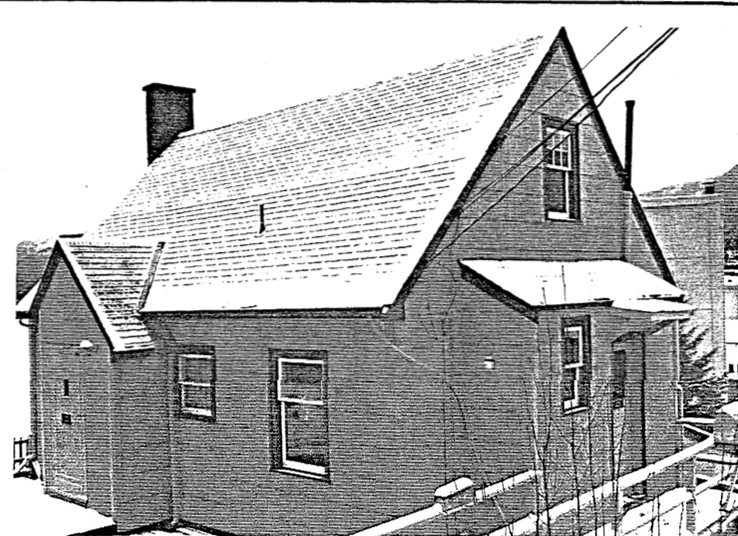
In 1984 it was owned and occupied by Homan-McDowell, economic and management consultants. Former owner, Edna Johnston, lives in a lower-level apartment.
The main section of the Martin-Johnston House is a l½-story, 31 1 x22.5 111 eclectic11 dwelling. Its steeply pitched, wood-shingled gable roof, with minimal eaves and verges and an overlapping front gable, is representative of the Tudor housing style introduced into Alaska during the 193Os and 194Os.
Other decorative features include an original linked-top, cement-block chimney built against the south facade. An original front door with ornate cast iron viewer is located on the extended east facade vestibule. The main entrance, however, is now accessed vi a a contemporary wood deck and steps on the north facade. Exterior siding consists of wood shingles. Windows are symmetrically placed and double-hung sash. The, foundation is reinforced concrete.
The interior was remodeled for office use, and the 8½-foot-high walls were replastered and painted white. The kitchen was converted into a reception and office area (McDowell 1983). The second floor bedroom was also converted into an office. Original features remaining include: fine hardwood floors, curved archways and ceilings, a brick fireplace and ornate lighting fixtures.
In 1943 a rectangular, 31 1 xl6.5', one-story, shed-roof apartment was constructed on the rear of the house.
Exterior siding is T-1-11. The windows are predominantly fixed-sash with transoms and double-hung sash. The interior consists of a low-ceiling kitchen, bedroom, bath and storage room. Front and rear entrances have original doors. Other original features include: decorative light fixtures, softwood floors, kitchen cabinets and cupboards, and plaster walls.
In 1962 a rectangular, 14.5'x24.5', flat-roof garage was constructed north of the house next to the West Second Street right-of-way. However, a 1981 wind storm destroyed the structure (Johnston 1983).
Telephone Hill Historic Site and Structures Survey, 1984
Malony, John F.
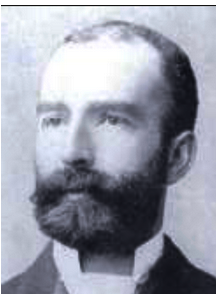
Primary Name: Malony, John F., Jr.
Filed as: Malony, John F., Jr.
Also known as: John F. Malony; John Mahony
Occupation / Association: Lawyer; businessman; mining investor; mayor of Juneau; charter member, Pioneers of Alaska Juneau Men's Igloo; President, Alaska Electric Light and Power Company
Associated places: Juneau, Alaska; Shieldsville Township, Rice County, Minnesota; Glendive, Montana; Dawson County, Montana; Porcupine District, Alaska; Windham Bay, Alaska; Rainy Hollow, British Columbia; Palo Alto, California
Keywords: John F Malony Juneau Alaska, Juneau mayor early Alaska, Dalton Trail Company partners, Jack Dalton Alaska Pathfinder associate, Porcupine Mining District Alaska, Alaska Electric Light and Power Company history, Chicken Ridge Juneau development, Alaska pioneers business leaders
Biography
John F. Malony, Jr. was a charter member of the Pioneers of Alaska, Juneau Men's Igloo, and one of the most influential early civic and business leaders in Juneau. Pioneer banker and businessman B. M. Behrends once remarked that Malony had “probably done more for Juneau than any other man.”
Malony was born in 1857 in Shieldsville Township, Rice County, Minnesota, to Francis and Mary Donahue Malony, Irish immigrants who had earlier settled in New Brunswick, Canada. He was educated at Shattuck School in Faribault and at St. John’s College in St. Cloud, Minnesota. After reading law under Minnesota Attorney General Gordon E. Coles, he passed the bar and practiced law for nearly twenty years.
In 1881, he moved to Glendive, Montana, during the rapid development of the mining frontier. His career advanced quickly: he was appointed Probate Judge in 1882, elected to the Montana legislature later that year, and served as a delegate to the Montana Constitutional Convention in 1884.
Following an assassination attempt during a speech in Montana, Malony eventually left the territory and moved north to Alaska in the mid-1890s, bringing with him his son Joseph Mahony.
In Juneau, he met Cora Cleveland, a milliner who had established a hat shop in the city in 1895. They married in Juneau, and on December 29, 1899, their son John F. Malony III was born.
Malony worked closely with Alaska Pathfinder Jack Dalton. In 1893, he successfully defended Dalton in the controversial trial involving the death of Don (or Dennis) McGinnis. Malony and Dalton later partnered in several ventures, including the Dalton Trail Company and the Dalton Pony Express Company, which served miners traveling to the Yukon prior to the construction of the White Pass and Yukon Railway.
Malony also participated in early mining investments throughout Southeast Alaska. He was involved in placer claims on Chicken Ridge in 1890 and later in mining ventures in the Porcupine district near Haines with partners including E. B. Hanley. The group also operated the Porcupine Trading Company.
Beyond mining, Malony invested in fisheries and canneries near Wrangell and Petersburg and became a principal stockholder in the Juneau Ferry & Navigation Company.
Malony was deeply involved in civic affairs. He served on Juneau’s first city council around 1900 and was elected mayor in 1907. He also helped lead the Alaska Electric Light and Power Company, serving as its president while J. P. Corbus served as treasurer. Their leadership expanded electrical power generation in Juneau during the early twentieth century.
Among Malony’s real estate projects were the Gold Belt residential development and the Malony Block commercial buildings in downtown Juneau. One house constructed in association with mining entrepreneur Bart Thane later became the well-known Wickersham House.
Malony’s health declined around 1915, and he moved to California while continuing to manage his Alaska investments. He died in Palo Alto, California in early June 1919. He was survived by his wife, Cora Cleveland Malony, and three children.
Sources
Alaska Mining Hall of Fame.
Gastineau Channel Historical Society, Winter 1986.
Malony Collection, Alaska State Library, MS 40.
Alaska Daily Empire, June 2, 1919.
Margarie, E.J.
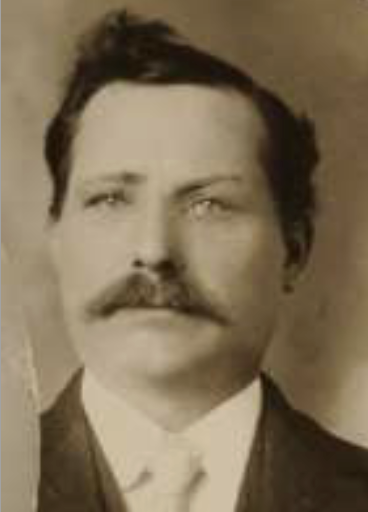
Primary Name: Margarie, E. J.
Filed as: margarie_e_j
Also known as: E. J. Margarie
Occupation / Association: Charter member, Juneau Men’s Igloo; electrician; utility manager; transportation manager
Born: 1870, England
Died: Early September 1930, Oakland, California
Parents:
Spouse:
Children:
Associated places: England; Juneau, Alaska; Douglas, Alaska; Oakland, California
Keywords: E. J. Margarie, Margarie, Juneau Men’s Igloo, charter member, Alaska Treadwell Gold Mining Company, Alaska Electric Light and Power Company, Juneau Ferry and Navigation Company, Douglas Alaska, Juneau Alaska
Biography
E. J. Margarie was a charter member of the Juneau Men’s Igloo.
Margarie was born in England in 1870 and came to Juneau in the 1880s.
For some time, he was chief electrician for the Alaska Treadwell Gold Mining Company at Douglas. Afterwards, for 20 years, he was the manager of the Alaska Electric Light and Power Company and, for a considerable time, of the Juneau Ferry and Navigation Company, which provided boat service between Juneau and Douglas.
He left Juneau with his family in July 1917 to make his home in California. He died in early September 1930 in Oakland, California, at the age of 65.
Sources
Daily Alaska Empire, September 11, 1930
Tags: E. J. Margarie, Margarie, Juneau Men’s Igloo, Juneau pioneers, Douglas Alaska, Alaska Treadwell Gold Mining Company, Alaska Electric Light and Power Company, Juneau Ferry and Navigation Company, Oakland California